
Reviewed · KEUKENHOF & TULIP GARDENS
Discover Holland’s Beautiful Tulip Fields with an Expert Guide
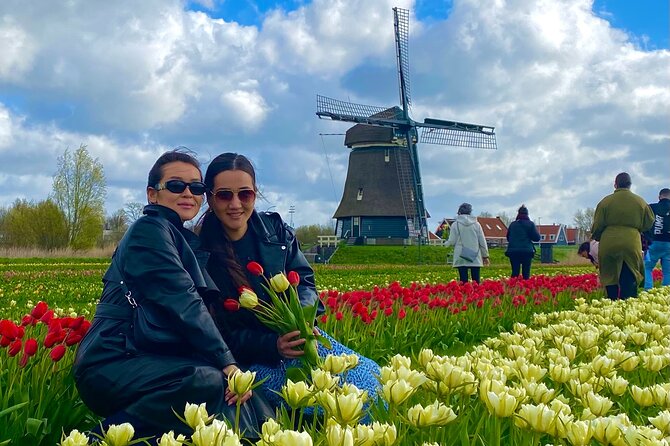
Tulips without the Keukenhof circus. This is a smart, small-group trip that takes you off the main tourist route for farm fields and a real windmill stop—plus the drive through UNESCO-protected Dutch water engineering.
Two things I really liked: the crowd-free tulip fields (you get time to photograph without shoulder-to-shoulder chaos), and the chance to step inside an operating windmill at Museummolen Schermer. The main drawback to plan around is seasonal timing—if you go late, some fields may already be cut down.
In This Review
- Key Points Before You Go
- Why This Amsterdam Tulip Day Trip Works
- Beemster Polder: UNESCO Water Engineering Before the Blooms
- Twisk and Venhuizen Tulip Fields: Photography Time Without the Crush
- Onderdijk Lunch and the 1929 Geradus Majella Church
- Museummolen Schermer Windmill: More Than a Photo Stop
- Transfers, Timing, and What “Six Hours” Really Means
- Price and Value: Is $163.27 a Good Deal?
- Season Advice: When Tulips Look Best
- Small-Group Comfort and the Guide’s Role (Mike and Roel)
- Getting There Without Stress (and One Caution)
- What to Pack for a Muddy, Photo-Heavy Day
- Who This Tour Is Best For
- Should You Book This Tulip Tour?
- FAQ
- What time is the tour, and how long does it last?
- Do I get round-trip transport from Amsterdam?
- Is the tour in English?
- What’s included with lunch?
- Can I enter the windmill?
- Is this a large group?
- What if the weather is bad?
Key Points Before You Go
- Beemster Polder (UNESCO): You start with Dutch water-management history before the flowers.
- Small group, up to 30: This feels calmer than big-bus tours, with less time wasted waiting.
- Three tulip field stops: Short drives, frequent photo moments, and fields you don’t usually access.
- Onderdijk lunch: A relaxed countryside meal with juice and water included, plus a standout 1929 church.
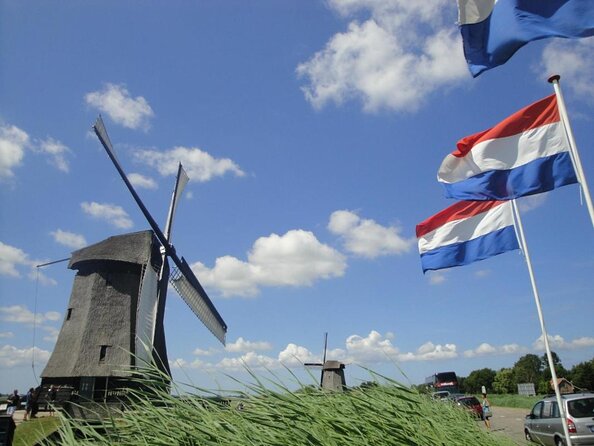
- Museummolen Schermer windmill: Entrance included, and you can go inside to see how it works.
- Season matters: If you’re late in May, you may see fewer blooms than you hoped.
More tulip season: other Keukenhof trips
- Amsterdam: Keukenhof Entry & Shuttlebus with Flexible Return
★ 4.7 · 11,891 reviews - From Amsterdam: Keukenhof Ticket with Transfer
★ 4.4 · 4,089 reviews - From Amsterdam: Keukenhof Gardens Ticket and Transfer
★ 4.5 · 2,741 reviews - Amsterdam: Day Tour Keukenhof and Zaanse Schans Windmills
★ 4.5 · 1,549 reviews
Why This Amsterdam Tulip Day Trip Works
If you’ve ever done a tulip day that felt like a giant photo scavenger hunt, you’ll appreciate how this one is built. You’re in the countryside long enough to enjoy the rows and colors, yet the tour keeps moving so you don’t feel stuck in one field that’s mostly green.
The vibe is part countryside stroll, part guided route-finding. The guides (Mike and Roel are two names that come up again and again) focus on where tulips are still looking good and how bulb farming actually works. That turns it from I’m-gawking-at-flowers into, oh—this is why the fields look the way they do.
And yes, you get time to take pictures. Not just a quick stop for the tour photo.
Beemster Polder: UNESCO Water Engineering Before the Blooms

Before you even reach the first tulip field, you drive through the Beemster Polder, a reclaimed landscape above Amsterdam. This area is part of the Defense Line of Amsterdam (Stelling van Amsterdam), a UNESCO World Heritage Site. It’s Dutch ingenuity you can literally see: the land was reclaimed from a lake in the early 17th century, so the fields and drainage patterns aren’t random—they’re engineered.
Why I like this start: it gives you context. Tulips don’t just happen because spring is nice. They thrive because this country has spent centuries shaping land and water. Once you notice that, the whole day feels more meaningful, even if you just came for the photos.
It’s also a good way to settle in. You’re fresh off the Amsterdam transfer, and the bus ride includes a “we’re going somewhere real” feeling right away.
Twisk and Venhuizen Tulip Fields: Photography Time Without the Crush
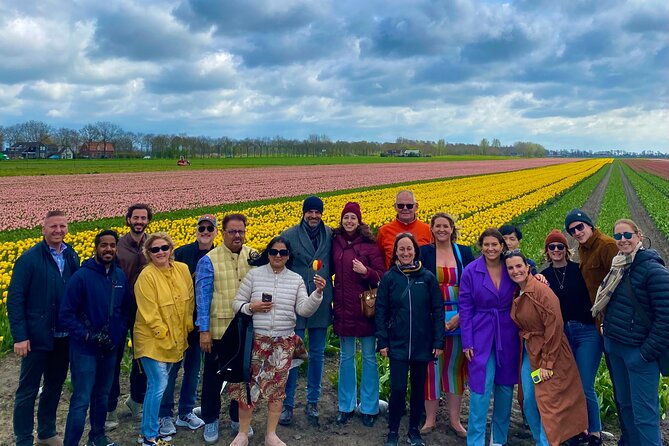
The heart of the day is simple: tulip farms where you can actually walk the edges of the fields and look across long rows. You’ll visit tulip fields near Twisk and Venhuizen—each stop timed so you can wander and take pictures, not just stand at a fence.
A big win here is the crowd level. The tour is set up to visit fields that are normally inaccessible to most public visitors, so you’re not stuck in a line of people chasing the exact same view. You still get “Dutch spring” visuals, but with breathing room.
A practical note: tulips are seasonal and fields change fast. One of the themes from real-world timing is that some visits later in the season can mean more cutting down already done. You might still see color, just not the full, “everywhere is a rainbow” effect you imagined. Your guide’s job is to mitigate that by finding the best pockets of color while you’re out there.
More trips where a local runs the whole day



Onderdijk Lunch and the 1929 Geradus Majella Church
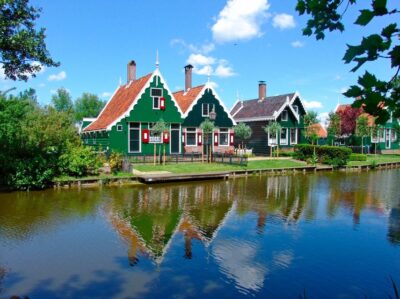
Between field stops, the tour shifts from farm roads to a proper Dutch village break. In Onderdijk, you get lunch at a local spot with juice and water included, and bottled water is also provided. Time is about 45 minutes here, so you can eat without rushing.
What makes Onderdijk extra interesting is the church stop. You’ll admire the historic Geradus Majella church, a 1929 architectural gem. Even if you’re not a church person, it’s a solid contrast to the flat, open tulip farmland—another reminder that Dutch countryside towns have their own kind of character.
One small expectation to set: lunch alcohol isn’t included. If you want beer or wine, you’ll need to handle that on your own. For most people, that’s totally fine—the lunch includes enough basics to keep you comfortable on a long day.
Museummolen Schermer Windmill: More Than a Photo Stop
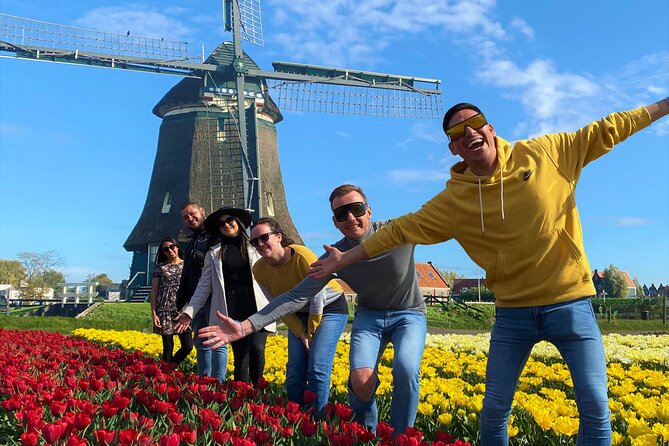
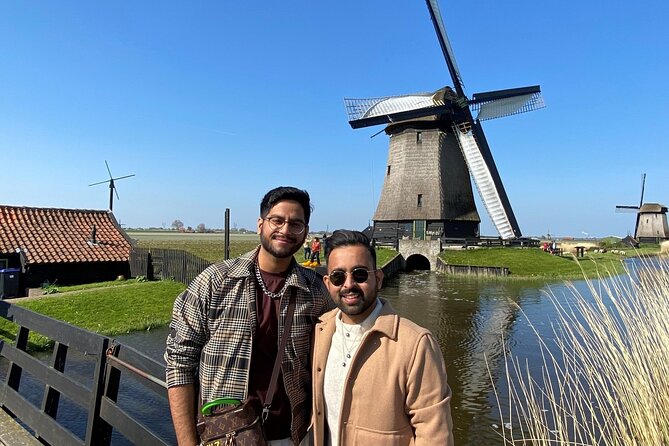
The windmill visit is one of the most loved parts of the day. You’ll go to Museummolen Schermer, described as one of the oldest windmills in the Netherlands, and entrance is included.
Here’s what I’d plan for: it’s not just a “look at the sails” moment. You can go inside the windmill and see how it works. There’s also an option to climb all the way to the top at your own risk. You don’t have to climb to enjoy it—just seeing the mechanics up close changes the whole experience.
Why this matters: windmills are iconic, but most visitors only get the postcard version. This stop helps you understand the practical purpose behind the structure—how wind power is used and how the machinery supports the Dutch relationship with water and land.
Also, the time is well measured. You’re there long enough to explore and actually absorb what you’re seeing, not sprint through it.
Transfers, Timing, and What “Six Hours” Really Means
This is a 6-hour tour, round-trip from Amsterdam with convenient transfers included. You start and end at the same meeting point in Amsterdam—Market 27, Termini 27, 1025 XM Amsterdam—and the tour finishes back there.
The big logistical benefit is that you don’t have to figure out regional transport, parking, or “how do we get between farms” puzzles. You just show up, hop on, and enjoy the ride.
One timing consideration: the field stops are shorter—about 25 minutes at each tulip field—so you’ll want to be ready to move. Wear shoes you don’t mind getting dusty or muddy. Tulip season can include muddy paths, especially with rainy weather, and you may be given help like shoe covers if conditions get messy.
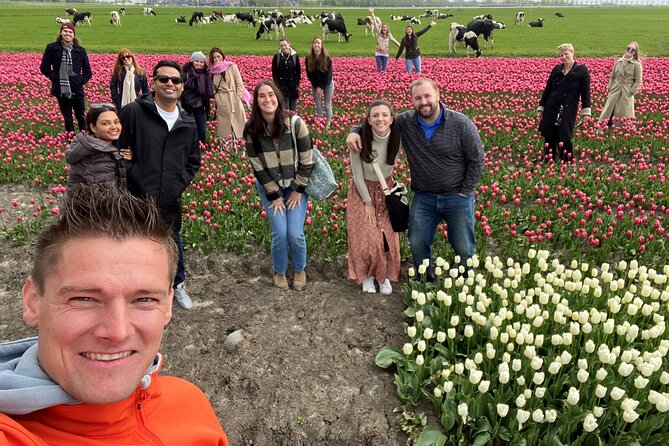
And yes, this is a small group—maximum 30. That tends to keep the day smoother: less waiting, fewer bottlenecks in narrow spots, and more freedom to take photos when your guide stops the bus.
Price and Value: Is $163.27 a Good Deal?

At $163.27 per person, this isn’t a bargain-basement outing. But it also isn’t just a generic bus-and-blink tour. You’re paying for a package that usually costs more if you piece it together yourself:
- Round-trip transport from Amsterdam
- Multiple tulip farm stops in areas that are harder to access
- Lunch in the countryside with juice and water included
- Entrance to the windmill, with the chance to go inside
The value part isn’t only the inclusions—it’s the efficiency. You get several different views of tulip fields in one day, plus a windmill stop that adds substance. If you’re staying in Amsterdam for a short time and want an authentic countryside day without wrestling with logistics, the price starts to feel fair.
Just be honest with yourself about season. If you’re booking very late and blooms are scarce, you’ll pay the same price but get less color. It’s not the tour’s fault—spring is spring—but it’s worth aligning your trip timing with your expectations.
Season Advice: When Tulips Look Best
This is the part you should plan around more than almost anything else. Tulips change quickly, and sometimes fields are already being cut down by the time you arrive.
Real-life timing advice from the season:
- Mid to late April is when you’re most likely to get strong blooms throughout the day.
- Early May can still be beautiful, but you should expect a higher chance that some fields are past peak.
- Even when it’s the final stretch, a good guide can often find workable pockets of color, and you may still get great photographs.
If you’re the type who wants maximum “wow” tulip color in every direction, aim earlier in the season. If you’re more into the countryside experience and learning about bulb farming, you can still have an excellent day even at the tail end.
Small-Group Comfort and the Guide’s Role (Mike and Roel)
The guides are a big part of why this tour tends to get high marks. Mike and Roel are repeatedly described as welcoming, patient, and focused on the details that matter during tulip season.
In practical terms, that means:
- They know where tulips are in different stages.
- They help you find better angles for photos.
- They explain how the tulip/bulb cycle works, which makes the fields feel less random.
It also means you’ll usually spend less time wandering with no clue where the best views are. That matters when you only have short windows at each farm.
One more practical touch: on rainy days, you might get shoe covers so you don’t spend the day slipping around. It’s the kind of small support that makes a long countryside walk easier.
Getting There Without Stress (and One Caution)
Most of the day is smooth sailing once you meet the group. The meeting point is in central Amsterdam (Market 27, Termini 27, 1025 XM), and it’s near public transportation.
Still, I’d treat the first five minutes like it’s a hunt. Some people find the meeting spot confusing because tour buses can look similar. If you have WhatsApp access, follow whatever message you get from the guide so you can identify the right group fast.
And here’s the caution I actually care about: double-check your jacket before you step off the bus. There’s at least one documented case of a lost item that couldn’t be retrieved later, even after the operator tried to help. That’s not something you want to gamble on while on vacation.
What to Pack for a Muddy, Photo-Heavy Day
You’ll be outside for field time and walking around the windmill area. Keep your kit simple but smart:
- Closed-toe shoes you can get a little muddy
- A rain layer, even if the forecast seems promising
- A small towel or something to wipe off damp shoes
- Your camera and a phone charged up
You’ll get bottled water and lunch drinks included, but it never hurts to have a small backup bottle in your own bag. Weather changes fast, and you’ll feel better if you’re not relying on supplies.
If you’re planning to climb in the windmill, make sure you’re comfortable with that option and follow staff guidance.
Who This Tour Is Best For
This tour fits best if you:
- Want a countryside tulip day without big crowds
- Like guided context (bulb farming, why fields look the way they do)
- Care about photos and want time to wander
- Prefer a day plan that blends tulips with another attraction (windmill + village)
It’s also a good choice for visitors who want to see tulip fields but don’t want to make the trip to the well-known garden complex. This outing is farm-based, more rural, and more about the working side of tulip growing.
If you only care about the most famous tulip spectacle at the biggest garden, this may not match your fantasy. But if your dream is to stand in real fields and understand how it works, you’re in the right place.
Should You Book This Tulip Tour?
My honest take: book it if you want a small-group, farm-first Amsterdam tulip experience with a working windmill and a real lunch stop. The mix of crowd-free fields plus an included windmill entrance is a strong “you’ll remember this” combination.
Don’t book it expecting every field to be at peak bloom late in the season. If your trip window is late April vs. mid-May, adjust your expectations and lean on the guide’s ability to steer you to the best available color.
If you can, aim for earlier rather than later for maximum flower density. If your schedule is fixed, still go—you’ll get a solid countryside day, and the windmill stop adds a lot more value than a tulip-only tour.
FAQ
What time is the tour, and how long does it last?
It runs about 6 hours. The activity starts at the Amsterdam meeting point and returns you back to the same location.
Do I get round-trip transport from Amsterdam?
Yes. Round-trip transfers from Amsterdam are included.
Is the tour in English?
Yes. The tour is offered in English.
What’s included with lunch?
Lunch includes juice and water, and bottled water is also included. Alcoholic beverages are not included.
Can I enter the windmill?
Yes. At Museummolen Schermer, you can go inside the windmill, and the windmill visit is included.
Is this a large group?
No. The tour has a maximum of 30 travelers.
What if the weather is bad?
The tour requires good weather. If it’s canceled due to poor weather, you’ll be offered a different date or a full refund. You can also cancel for a full refund if you do so at least 24 hours in advance.
Let a Local Run the Day






More Tour Reviews in Amsterdam






Tulip Season: More Keukenhof Trips





Just added: fresh Amsterdam tour reviews





Keukenhof & Tulip Gardens, compared.
 ★ 4.7Keukenhof Entry & Shuttlebus with Flexible ReturnFrom $4111,891 reviews
 ★ 4.4From Amsterdam: Keukenhof Ticket with TransferFrom $414,089 reviews
 ★ 4.5Tour to Keukenhof Gardens with Windmill CruiseFrom $642,819 reviews
 ★ 4.5From Amsterdam: Keukenhof Gardens Ticket and TransferFrom $412,741 reviews
 ★ 4.5Day Tour Keukenhof and Zaanse Schans WindmillsFrom $721,549 reviews
 ★ 4.6Keukenhof and Zaanse Schans Live Guided Day TourFrom $711,089 reviews
 ★ 4.5Keukenhof and Zaanse Schans Windmills Guided Day TripFrom $1061,063 reviews
 ★ 4.5Keukenhof Entry & Shuttle Bus with Flexible ReturnFrom $42754 reviews
Browse the lists this tour appears in