

Reviewed · MUSEUMS
Discover Amsterdam’s top Art Galleries
Art hides in plain sight in Amsterdam. This 2-hour gallery walk puts you in front of contemporary works and gives you the talk-track that makes the art easier to read.
I love the small group size (up to 8 people), because it leaves room for real questions instead of being shuffled along. I also like the curator or gallerist context at key stops, so you see the art with the artist’s intent in mind, not just your first impression.
One thing to consider: galleries can feel chilly and quiet, so bring comfortable layers and expect some standing time and looking.
In This Review
- Key highlights you’ll care about
- Pulitzer-area start: you’re close to the art, fast
- The guide makes the difference: Geneviève’s art conversations
- Stop 1: contemporary art with curator-level context
- Stop 2: concept-led installations and the questions they trigger
- Stop 3: internationally recognized artists and gallerist insights
- Café finish: the best part might be the talk
- Price and value: is $142.97 fair for 2 hours?
- Who this tour fits best (and who might pause)
- Should you book Studio Vieve’s Amsterdam gallery tour?
- FAQ
- How long is the tour?
- What language is the tour offered in?
- Where does the tour start?
- How many people are in the group?
- Is admission included?
- Is a mobile ticket used?
- Is free cancellation available?
Key highlights you’ll care about

- Up to 8 people, so your questions actually get answered
- English tour with a guide, Geneviève, who turns art talk into something you can use
- Three gallery stops spanning contemporary painting, concept-led work, and boundary-pushing artists
- Conversations at each stop, including chances to speak with curators or resident experts
- A cozy café finish with time for a warm drink and more discussion
More gallery time in Amsterdam
- Amsterdam: Red Light Secrets Museum Entry Ticket
★ 4.2 · 5,722 reviews - Amsterdam’s Weirdest Museum: Ripley’s Believe It or Not!
★ 4.5 · 4,920 reviews - Amsterdam: Van Gogh Museum Ticket and City Canal Cruise
★ 4.6 · 3,899 reviews - Amsterdam: Van Gogh Museum Ticket & Canal Cruise
★ 4.5 · 3,304 reviews
Pulitzer-area start: you’re close to the art, fast
The tour begins at Pulitzer Amsterdam on the Prinsengracht (Prinsengracht 323). That’s a good setup. You start in central Amsterdam where you can reach things quickly, and you’re not wasting time in long transit loops just to begin looking at art.
You’re also not stuck with a stiff plan. The format is short—about 2 hours—which works well if you want culture without turning your day into museum marathons. The meeting point is easy to spot, and the tour operates near public transportation, so you should be able to get there without a complicated route.
You’ll be issued a mobile ticket, which is practical if you’re already juggling phone maps, tickets for other sights, and maybe a museum card. And because the activity ends back at the same meeting point, you don’t need to figure out a last-minute “how do I get home” problem.
The guide makes the difference: Geneviève’s art conversations
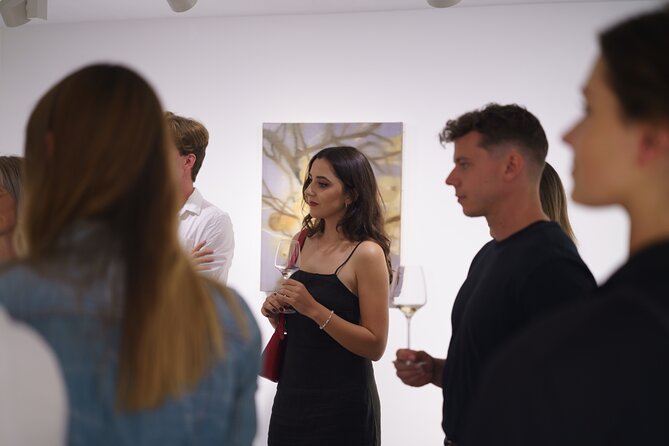
A gallery tour lives or dies on the guide, and this one leans hard into strong, friendly interpretation. Geneviève is described as warm and engaging, with a style that invites questions and keeps the group comfortable—even if you’re not an art expert.
What I find especially useful is how the explanations connect the dots. Instead of treating each stop like a separate lesson, the guide links historical and contemporary ideas so the works start to feel like part of one bigger conversation. That matters because modern art can look like it’s asking a question without giving you the answer keys. Good guiding gives you those keys.
You’ll also likely get photo help. One review notes that the guide offered to take a photo of you in front of a favorite piece, which is a small thing, but it turns gallery time into a real memory—not just blurry phone pictures of random walls.
Stop 1: contemporary art with curator-level context
The first gallery stop focuses on contemporary work from established artists. This is where the tour sets the tone: you’re not only looking at images; you’re learning what shapes the choices behind them—materials, composition, and the kinds of inspiration an artist is drawing on.
A standout detail is the chance to talk with a curator or resident expert. That changes the whole experience. You can ask questions that you might not even know how to form on your own. Instead of guessing what you’re seeing, you get a chance to hear how the gallery frames the work and what it wants you to notice.
There’s also a practical benefit to starting with a contemporary gallery. Even if you feel intimidated by art spaces, contemporary shows often welcome curiosity rather than demanding special background knowledge. You might not know the artist yet, but you can learn the vocabulary fast: theme, technique, intent, and how to read visual clues.
Possible drawback: if you dislike reading labels or standing close to artwork for a while, this first stop can feel a little like slowing down in a quiet library. Go at a pace that feels comfortable, and ask for the guide’s take instead of trying to decode everything alone.






Stop 2: concept-led installations and the questions they trigger
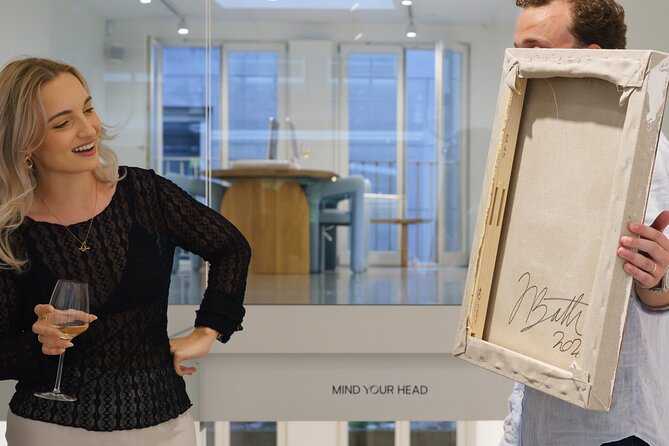
The second stop leans into work that’s thought-provoking and built as an experience. Here, you’re more likely to encounter concept-led or mixed-media pieces, and you may see work that uses digital elements or layered formats.
This stop is valuable because it pushes your brain in a useful way. Even if you don’t love every piece, you’ll come away with clearer questions to carry into the art. Instead of thinking only about what something looks like, you start thinking about what it’s doing: how it’s constructed, what it’s responding to, and why it’s presented the way it is.
If gallery art ever feels intimidating or too cold and quiet, this is the moment where good guiding helps most. The tour’s tone is friendly and discussion-friendly, which makes it easier to say things like, I don’t get it yet, or, what should I notice first?
Keep expectations realistic: this stop can feel more cerebral than visual. You’ll likely spend more time looking, standing, and thinking than you would in a typical sight-seeing stop. That’s not bad—it’s the point. But it does mean you should wear shoes you don’t mind breaking in slowly.
Stop 3: internationally recognized artists and gallerist insights
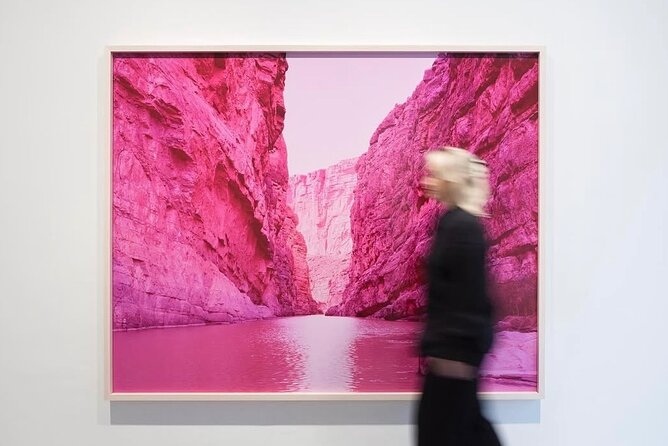
The final gallery stop shifts to internationally known contemporary artists. This is where you’re more likely to see bigger-name work and more boundary-pushing approaches—pieces that challenge assumptions about what modern art should be.
Another strong factor: you’re given insights from the people closest to the works, with gallerists providing exclusive perspectives. That matters for a simple reason. A work can look one way in a photo, but in person you see how scale, placement, and materials change the meaning. Gallerists can also explain why certain works are shown together, what buyers or collectors tend to focus on, and how the gallery interprets the artist’s creative arc.
This stop can be the most satisfying if you like hearing how the art world thinks. Not just what the artist says, but how the gallery ecosystem frames interpretation. And if you enjoy conversation, the guide’s style—patient and inviting—helps you ask follow-ups without feeling rushed.
A small consideration: because the tour is only about 2 hours total, you’re seeing fewer spaces than a full day gallery crawl. That’s part of the value, but it also means you should come in ready to enjoy a focused snapshot rather than trying to leave with a catalog of everything Amsterdam offers.
Café finish: the best part might be the talk

After the last gallery, you head to a cozy local café for a warm beverage. This isn’t just a feel-good ending. It’s a useful “learning wrap-up,” because it gives you a low-pressure space to compare impressions and ask more questions while everything is still fresh in your mind.
One of the most practical things about a café stop is that it turns abstract art discussion into something social. You can hear how another person is reacting to the same piece, and that often sharpens your own reading. Even if you came in with zero art background, you can walk away feeling like you have opinions you can explain.
It’s also a nice pacing trick. Galleries can feel like a sequence of still moments. A café adds movement and warmth, and it makes the whole experience feel more human than academic.
Price and value: is $142.97 fair for 2 hours?

At $142.97 per person for about 2 hours, this isn’t a bargain-basement activity. But the value makes sense if you care about guidance and interpretation.
Here’s what you’re paying for, based on what’s built into the experience:
- A small group (max 8), which usually costs more than large group tours.
- Multiple gallery stops with opportunities to speak with people connected to the exhibitions (curator/resident expert and gallerist insights).
- A guide with a track record of turning confusing modern art into understandable conversation.
- Admission ticket is listed as free, meaning you’re not paying entry fees on top of the tour price (at least for the included visits).
If your goal is simply to walk into random galleries, you could probably do that on your own for less. But if your goal is to understand what you’re seeing—and feel comfortable asking questions—this price starts to look reasonable.
Also, the time is tight. A 2-hour tour is often the sweet spot for visitors who want culture without eating the whole day. You get focused exposure, then you’re back near the center with plenty of time for other Amsterdam plans.
Who this tour fits best (and who might pause)
This tour fits best if you:
- Want a guided way to see contemporary art in Amsterdam without feeling lost
- Enjoy Q&A and conversation, not just quiet observation
- Like the idea of meeting people at the galleries, even briefly
- Prefer short, high-impact cultural stops
It may be less ideal if you:
- Need a very relaxed pace with lots of time per artwork (2 hours is focused)
- Dislike cold indoor spaces and long standing
- Want the kind of museum experience where you can wander freely for hours
On the good side, it’s positioned as doable for most people, and service animals are allowed. It’s also offered in English, which helps if you’re not traveling with a Dutch-speaking partner.
Should you book Studio Vieve’s Amsterdam gallery tour?
If you like modern art but worry you’ll miss the point, this is a smart choice. The biggest reason to book is the human element: Geneviève’s friendly, thoughtful guidance, plus the chance to get context from people connected to the exhibitions.
I’d book it if you want a confident way to experience contemporary galleries in a compact time window. I wouldn’t book it if you’re hunting for a long self-guided crawl with lots of free time inside each space.
In short: this is for people who want art to make sense—and who enjoy conversation as much as looking.
FAQ
How long is the tour?
It runs for about 2 hours.
What language is the tour offered in?
The tour is offered in English.
Where does the tour start?
The meeting point is Pulitzer Amsterdam, Prinsengracht 323, 1016 GZ Amsterdam, Netherlands.
How many people are in the group?
The tour has a maximum group size of 8 travelers.
Is admission included?
The activity information lists admission as free, and it includes an admission ticket.
Is a mobile ticket used?
Yes, the tour uses a mobile ticket.
Is free cancellation available?
Yes. You can cancel up to 24 hours in advance for a full refund. If you cancel less than 24 hours before the start time, the amount paid is not refunded.
More Amsterdam Museums





More Tour Reviews in Amsterdam






Just added: fresh Amsterdam tour reviews





Museums, compared.
 ★ 4.2Red Light Secrets Museum Entry TicketFrom $175,722 reviews
 ★ 4.5Amsterdam’s Weirdest Museum: Ripley’s Believe It or Not!From $264,920 reviews
 ★ 4.6Van Gogh Museum Ticket and City Canal CruiseFrom $473,899 reviews
 ★ 4.5Van Gogh Museum Ticket & Canal CruiseFrom $473,304 reviews
 ★ 4.4NEMO Science Museum TicketFrom $252,979 reviews
 ★ 5.0Van Gogh Museum Amsterdam Exclusive Tour w/ Reserved EntryFrom $1731,760 reviews
 ★ 4.0Moco Museum Amsterdam Admission Ticket with Banksy and moreFrom $271,745 reviews
 ★ 5.0Van Gogh Museum Tour Reserved Entry Semi PrivateFrom $1731,437 reviews
Browse the lists this tour appears in