
Reviewed · BRUGES & BELGIUM DAY TRIPS
Bruges bus tour from Amsterdam
Bruges feels like a movie set, up close. This Amsterdam-to-Bruges day trip strings together the city’s best sights fast, with a Spanish-speaking guide and round-trip air-conditioned bus that gets you from the Netherlands to Belgium without hassles.
What I like most is the rhythm: quick story stops at iconic spots, then time to wander on your own. You’ll also benefit from guides who are praised by name in this operation, including Blanca and guides like Lorena, Pau, Eduardo, and Marta de Cádiz, with a focus on keeping you oriented so you do not get lost in the lanes. One thing to consider is that it is a long day (about 12 hours total), so the best experience depends on how you handle early starts and a limited free-time window.
In This Review
- Key things to know before you go
- Road-Trip Reality Check: Bruges by bus from Amsterdam
- Getting to Bruges: the 8:30 departure and what that means
- The Guided Bruges Circuit: from Bargeplein to the Grote Markt
- Bargeplein: your first regroup point
- Minnewater Lake: the Lake of Love story
- Begijnhof (Beguinario): women’s community since 1245
- Chocolalino: artisan chocolate and what to notice
- Walplein: Bruges beer history in one square
- Stoofstraat and the medieval house clues
- Saint John’s Hospital: how medieval healthcare worked
- Onze-Lieve-Vrouwekerk: Michelangelo’s sculpture detail
- Gruuthusemuseum: a powerful family connection
- St Bonifacius Bridge: legend and atmosphere
- Rozenhoedkaai: the most photographed corner
- Huidenvettersplein: tanners and working life
- Burg Square: the political heart and Holy Blood
- The Markt: your last guided stop and smart food/shopping tips
- The best part: two hours to wander Bruges your way
- Chocolates, beer lore, and “spot the medieval” skills
- Photo stops that actually make sense
- Logistics that can trip you up (and how to avoid it)
- Price and value: what $77.02 buys you
- Who should book this Bruges day trip
- Should you book this Bruges bus tour from Amsterdam?
- FAQ
- FAQ
- What time does the Bruges bus tour start from Amsterdam?
- Where does the tour end?
- Is a Spanish guide included?
- Do I need to bring headphones?
- Is food included?
- Is hotel pickup included?
- Is the tour suitable for reduced mobility?
- Can I cancel for a full refund?
Key things to know before you go
- Spanish guidance throughout the guided circuit, with city recommendations to help you eat and shop
- Photo-friendly route built around famous corners: Rozenhoedkaai, Burg Square, St Bonifacius Bridge, and more
- Fast, practical stops (most are short) plus about two hours free time to explore at your own pace
- Chocolat, beer, and medieval work life stories, including a stop at Chocolalino and tanners in Huidenvettersplein
- Radio guidance may be used in Bruges at times, so plan for wired audio (3.5 mm) or bring €1 headphones if offered
Across the border: more Bruges and Belgium day trips
- From Amsterdam: Bruges Day Trip in English with Boat Option
★ 4.4 · 1,989 reviews - From Amsterdam: Bruges Day Trip in Spanish with Boat Option
★ 4.6 · 1,866 reviews - Bruges Day Trip from Amsterdam
★ 4.0 · 1,517 reviews - Bruges Day Trip from Amsterdam
★ 4.0 · 647 reviews
Road-Trip Reality Check: Bruges by bus from Amsterdam
A Bruges day trip only works if you respect the clock. The pickup starts early, and you spend most of the day on the move. Still, for many people, the trade-off is worth it because you get a guided version of Bruges without the stress of trains, bus transfers, and figuring out where to start.
The tour begins at De Ruijterkade 151 in Amsterdam at 8:30 am, and you come back to the same meeting point at the end of the day. You’ll travel by air-conditioned bus, which is a big plus in warmer months when cobblestones and crowds can feel relentless.
This is also set up as a private tour/activity for your booking, meaning your group stays together rather than mixing randomly with strangers from other departures. That matters because the stops are time-boxed, and it is easier to move as one unit.
Getting to Bruges: the 8:30 departure and what that means
Starting at 8:30 am is not just a detail; it shapes the whole day. You’ll be ready for Bruges before the city fully stacks up with day-trippers, and your guided walk begins with short, easy segments. You also get a realistic window for the guided circuit plus free time to return to your favorite spots.
You travel with a mobile ticket and you meet near public transportation. That is useful if you are staying somewhere central in Amsterdam and you do not want to waste time hunting for a complicated pickup.
One practical note: you will not have hotel pickup or drop-off. Plan to arrive at the meeting point on your own and give yourself buffer time. If you are the type who hates being rushed, I’d rather you show up a bit early than sprint with your camera in your hand.
The Guided Bruges Circuit: from Bargeplein to the Grote Markt
The guided part is structured around a loop of iconic Bruges corners, mostly short walks and stops where the guide can explain what you are looking at. This is where the value of a guide shows up: you do not just see buildings, you learn why they matter and what to notice.
A typical cadence is that the bus pulls up, you get a brief window to regroup, you hear a story, and then you move on. Many of the stops are marked as free admission, so you are mostly paying for the guidance and transport rather than entry fees.
Bargeplein: your first regroup point
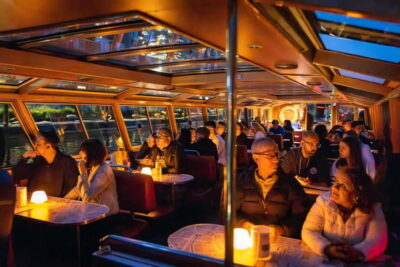
The first stop is Bargeplein, specifically the Katelijnparking area. You get about 10 minutes to handle a bathroom break and regroup before the city stories begin. The guide also explains what time to return to the bus, which sets the tone for the rest of the day.
Minnewater Lake: the Lake of Love story
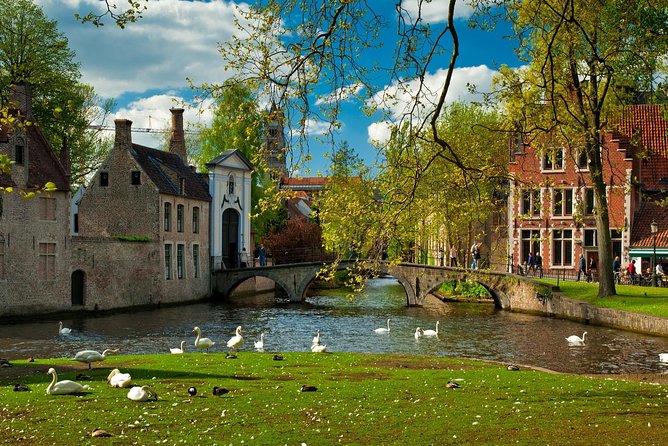
Next comes Minnewater Lake, often linked to a romance called the Lake of Love. Even if the legends are not your thing, the setting is worth it: the water and the backdrop give you a calm moment before the medieval streets kick in. The guide uses this moment to connect the scenery to Bruges’ past.
Begijnhof (Beguinario): women’s community since 1245
Then you reach the Beguinario, a women’s community founded in 1245. This stop is short, but it’s a great reminder that Bruges history is not only about rulers and guilds. It’s also about how ordinary life worked, and how communities were formed and protected.
Chocolalino: artisan chocolate and what to notice
At Chocolalino, you get the chance to try artisan chocolates. The guide also explains how to tell handmade chocolate from more industrial versions. That turns this from a sugar stop into a little lesson you can carry home.
If you are picky about what is included, keep your expectations flexible. There has been at least one complaint in the past about chocolate tasting details, but the operation stated that the stop with tasting happens as scheduled. My best advice: enjoy it as a planned chocolate stop, and only buy extra items if you want to.
Walplein: Bruges beer history in one square
Walplein is where the guide connects another local tradition: beer. It’s a quick stop, but it’s also a useful contrast to the more famous food focus in Bruges. If you like cultural context, you’ll enjoy hearing how products and daily life shaped the city.
Stoofstraat and the medieval house clues
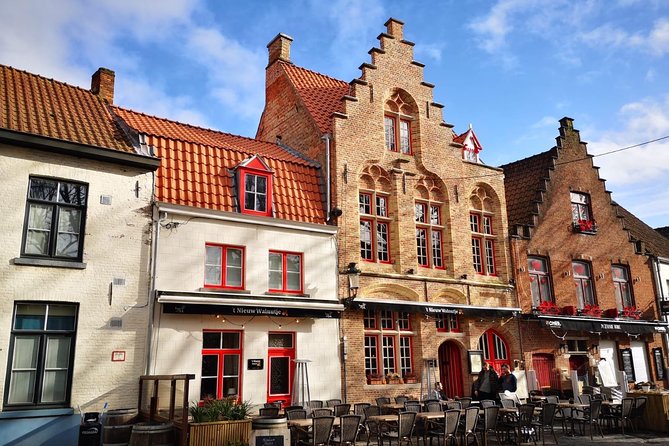
At Stoofstraat, you’ll learn how to identify original medieval houses. This is one of those “small stop, big payoff” moments. Once someone points out what to look for, you start seeing old craftsmanship everywhere on your free-walk later.
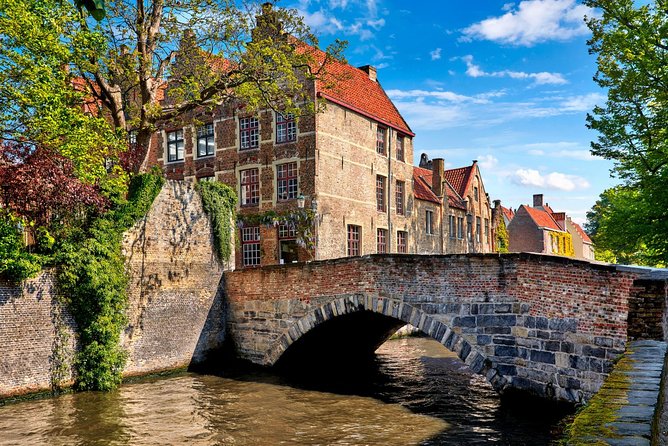
There’s also a brief photo opportunity from a small bridge. It’s quick, but if you take photos, this is the kind of spot you’ll want.
Saint John’s Hospital: how medieval healthcare worked
At Saint John’s Hospital, the guide explains how health systems functioned in medieval Bruges. This is a fascinating topic because you get beyond pretty facades and into how societies cared for people. Even in a short time window, it gives you a new way to look at the buildings.
Onze-Lieve-Vrouwekerk: Michelangelo’s sculpture detail
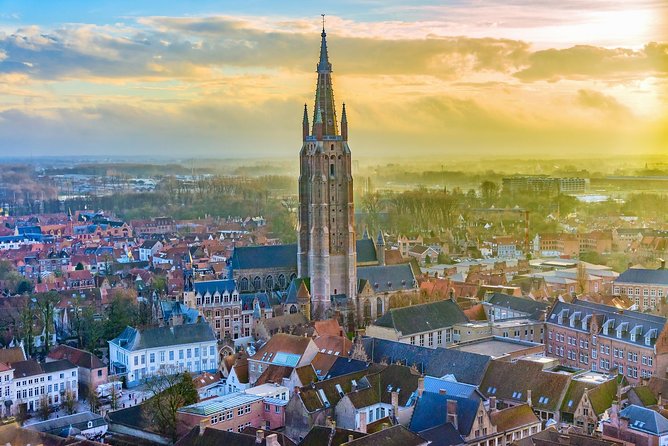
In front of Onze-Lieve-Vrouwekerk (Church of Our Lady), the guide highlights curiosities tied to the white marble Virgin and Child sculpture by Michelangelo found inside the church. You mostly see things from the outside on this leg, but that still helps you know what is worth looking for once you step inside at some later time.
Gruuthusemuseum: a powerful family connection
Then it’s the area in front of Gruuthuse, associated with one of Bruges’ most powerful families between the 17th and 18th centuries. This stop helps explain how wealth and influence shaped what you see today in the city’s architecture and institutions.
St Bonifacius Bridge: legend and atmosphere
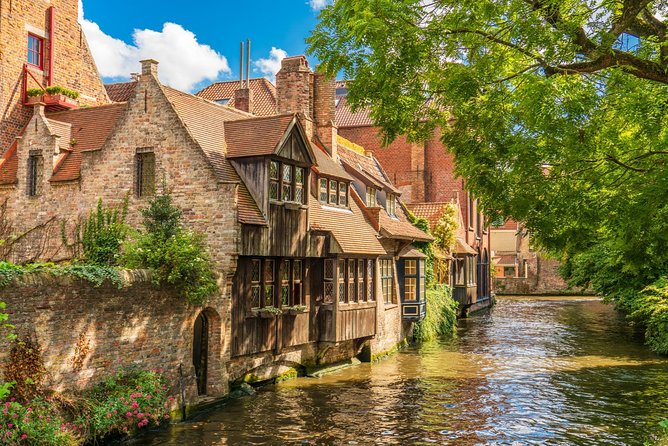
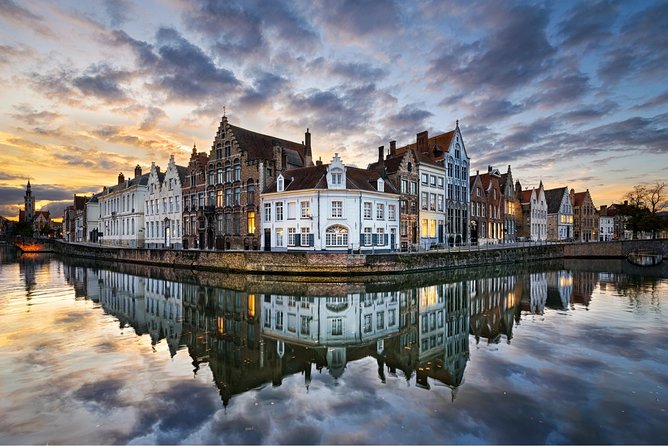
At St Bonifacius Bridge, the guide shares the legend tied to the bridge and gives you time for photos. This is a classic Bruges composition spot: water, reflections, and that aged-stone feel that looks good in any light.
Rozenhoedkaai: the most photographed corner
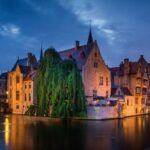
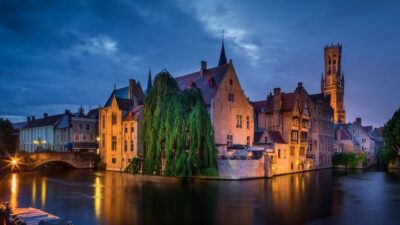
Rozenhoedkaai is likely why people call Bruges the Venice of the North. The guide talks about the history around the area known as the rose pier, and you get another focused photo window. If you want that postcard view, this is your moment.
Huidenvettersplein: tanners and working life
At Huidenvettersplein (Tanners Square), you learn how tanners worked in medieval Bruges. Again, it’s short, but it’s the kind of detail that makes the city feel real, not like a theme park. You’ll start picturing trades and daily smells and sounds that you never would from architecture alone.
Burg Square: the political heart and Holy Blood
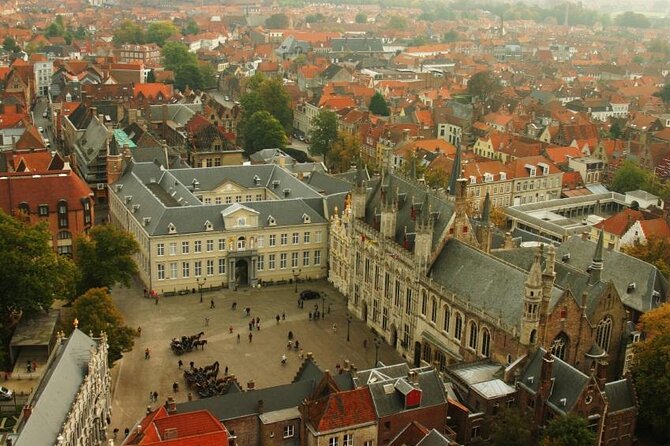
At Burg Square, you see the Gothic town hall area and also hear about the old courthouse. The guide also points you toward the Basilica of the Holy Blood, giving you context for what you are looking at in the center of the civic power.
The Markt: your last guided stop and smart food/shopping tips
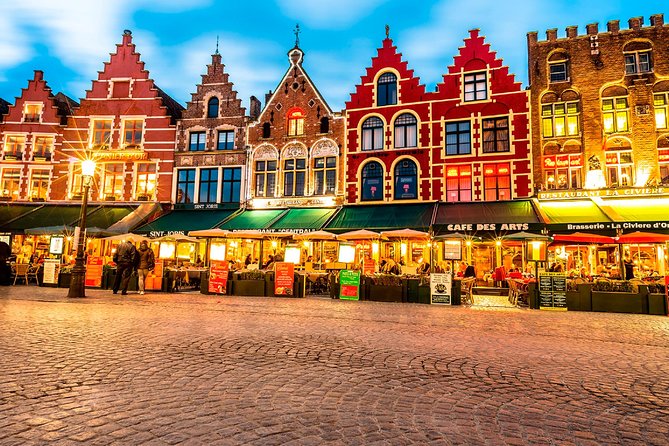
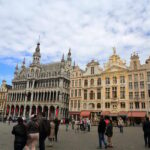
Finally comes the Markt and the Grote Markt area. The guide explains the buildings around the square and gives practical tips on where to eat and where to buy traditional chocolate. This is also when the guide reminds you when and where you need to be to catch the bus back to Bruges and then Amsterdam.
You get around 20 minutes here before the guided walk ends and you’re on your own.
The best part: two hours to wander Bruges your way
After the guided stops, you get about two hours of free time in Bruges (timing can shift depending on traffic and group pace). This window is the make-or-break moment. If you use it well, the entire day feels balanced: guided context first, then your own favorite streets after.
Here is how I’d spend that time without burning it on aimless wandering:
- Start by heading back toward one of the squares you liked most and give yourself a slow lap. Cobblestone lanes look the same fast. They do not feel the same after 20 minutes.
- If chocolate is your thing, use what the guide told you about distinguishing handmade chocolate and check labels carefully before you buy.
- If you want church interiors, plan a quick decision: either commit to a church stop or focus on street photos and canals. With only two hours, trying to do everything turns into rushing.
Also, keep an eye on your time. The day is built around being back at the pickup point when the group is called.
Chocolates, beer lore, and “spot the medieval” skills
One reason I think this tour works for people who usually say they do not like tours is that it teaches you to notice. At Chocolalino, you get chocolate tasting plus a mini guide to what handmade means. At Walplein, beer history shows you how local products shaped daily life. At Stoofstraat, the guide helps you identify medieval houses so the old architecture starts clicking in your brain.
These are not huge museum topics. That’s exactly why they’re useful. You can carry the skills with you during your free time.
And you’ll likely see the benefit of the “discount” idea that is advertised with the tour. The point is not chasing deals; it’s that the guide can direct you to shops and spots where it’s easier to do the right thing without guessing.
Photo stops that actually make sense
A lot of tours claim they are “photo friendly.” This one earns the label because the stops are placed at Bruges’ most recognizable compositions. You get targeted opportunities at St Bonifacius Bridge and Rozenhoedkaai, plus a small bridge photo moment earlier.
If you like photography, here’s the smartest move: treat the short photo windows as stand-and-shoot times. Do not spend them checking your settings for five minutes. Use the guided stop to get the shot, then enjoy lingering during free time.
Logistics that can trip you up (and how to avoid it)
Bruges has regulations that sometimes require radio guides. That is why you might hear the word radios and headphones during the day. You can use your own headphones if you have a 3.5 mm jack and you do not rely on wireless. If you do not have the right type, the tour offers headphones for €1.
This matters because it affects comfort. If you show up with wireless earbuds and the system requires wired audio, you might end up paying for the backup option. It takes almost no time to bring a wired adapter or wired headphones, and it can save you a little stress.
Next: walking shoes. Cobblestones look charming until hour four of standing and turning. If you want the day to feel easy, wear shoes you trust.
Price and value: what $77.02 buys you
At $77.02 per person, this tour is not trying to be the cheapest option. It is trying to be the least stressful. You’re paying for:
- round-trip transportation from Amsterdam by air-conditioned bus
- a professional Spanish-speaking guide who covers the story and keeps you moving
- a timed circuit through key locations, plus about two hours free time
For many travelers, that’s the real value: you get a structured day without needing to plan routes, decide where to go first, and worry about missing connections. You also get local recommendations right when you need them, like at the Grote Markt area.
Could you do Bruges independently for less? Probably, if you are confident with schedules and you do not mind self-guided wandering. But if your goal is “one day, maximum Bruges,” the cost usually makes sense.
Who should book this Bruges day trip
This fits you best if you:
- want a guided tour in Spanish, or you’re comfortable with the language support
- like “story stops” where someone points out what you are seeing
- prefer transport handled for you, especially for a day trip from Amsterdam
- want a fair amount of structure with a little freedom at the end
It might be less ideal if you:
- have trouble with long transit days or lots of walking on cobblestones
- need accessibility support, since it is not recommended for travelers with reduced mobility
- hate any chance of audio equipment requirements (radios may be used at times)
Should you book this Bruges bus tour from Amsterdam?
If your ideal day looks like this: early start, guided medieval walk, a chocolate stop, photo moments at the famous bridges, then a couple hours to wander and eat—then yes, I think it’s a solid choice. The combination of bus comfort, a clear timed circuit, and Spanish guidance makes the day feel “handled,” and the free-time window gives you room to personalize it.
If you are hoping for a slow, unhurried Bruges with tons of independent time, this will feel packed. Think of it as a guided highlight reel with enough freedom to fall in love with the streets on your own terms.
FAQ
FAQ
What time does the Bruges bus tour start from Amsterdam?
The tour starts at 8:30 am at De Ruijterkade 151, 1011 AC Amsterdam.
Where does the tour end?
The tour ends back at the same meeting point in Amsterdam.
Is a Spanish guide included?
Yes. You get a professional guide in Spanish and city recommendations during the guided portion.
Do I need to bring headphones?
Bruges regulations sometimes require radio guides with headphones. If you have 3.5 mm wired headphones, you can use them. If not, headphones are offered for €1.
Is food included?
No. Food and drink are not included, but the guide will point you to places to eat.
Is hotel pickup included?
No. There is no hotel pickup or drop-off. You’ll meet at the Amsterdam location provided.
Is the tour suitable for reduced mobility?
It is not recommended for travelers with reduced mobility.
Can I cancel for a full refund?
Yes. You can cancel for a full refund up to 24 hours before the experience’s start time.
More Tours in Amsterdam


More Tour Reviews in Amsterdam
Over the Border to Belgium

Just added: fresh Amsterdam tour reviews



Bruges & Belgium Day Trips, compared.
 ★ 4.4From Amsterdam: Bruges Day Trip in English with Boat OptionFrom $611,989 reviews
 ★ 4.6From Amsterdam: Bruges Day Trip in Spanish with Boat OptionFrom $611,866 reviews
 ★ 4.0Bruges Day Trip from AmsterdamFrom $701,517 reviews
★ 4.0Bruges Day Trip from AmsterdamFrom $70647 reviews
★ 4.0Bruges Day Trip from AmsterdamFrom $701,517 reviews
★ 4.0Bruges Day Trip from AmsterdamFrom $70647 reviews
 ★ 4.4From Amsterdam: Bruges Day Tour in Spanish or EnglishFrom $60575 reviews
 ★ 4.7Brussels & Bruges w/ Optional Chocolate TastingFrom $234389 reviews
 ★ 4.6From Amsterdam: Day Trip to Bruges in Spanish or EnglishFrom $55357 reviews
 ★ 5.0Charms of Brussels and Bruges Day Trip from AmsterdamFrom $204305 reviews
Browse the lists this tour appears in