
Reviewed · CITY TOURS
Amsterdam Urban Legend Scavenger City Game
Amsterdam has a special way of keeping secrets. This urban legend scavenger hunt turns the canal-house tale of mayor Coenraad van Beuningen into a puzzle-led city walk. I like how the story feels grounded in the location, and I also like the escape-room style challenges that keep you moving and thinking. One thing to consider: it’s mainly an outdoor activity, so if Amsterdam weather turns rough, you’ll want to plan for that.
You get a 2 hours 30 minutes adventure that ends back at the starting point, so it’s easy to slot into a day of canals and coffee. It also runs as a private group experience, which usually means the host can support your team with hints when you hit a snag. The only real drawback is the moderate physical fitness requirement—there is walking involved, even if the pace is manageable.
In This Review
- Key highlights you’ll actually care about
- What this Amsterdam scavenger game really is (and why it works)
- Story setup: the mayor, the canal house, and the box beneath the floorboards
- Meeting on the Amstel: quick start, easy to get oriented
- The pace: 2 hours 30 minutes that don’t feel like a slog
- How the puzzle progression keeps you interested
- Stop-by-stop feeling: how it plays like a guided city walk
- Value for money: is $29.50 per person worth it?
- Who this game suits best (and who might prefer something else)
- Practical tips so you get the best experience
- The Amsterdam payoff: how it feels afterward
- Should you book this Amsterdam urban legend scavenger game?
Key highlights you’ll actually care about

- Urban legend meets hands-on puzzles built around the House with the Bloodstains story
- A clear route starting and ending on the Amstel, making it simple to plan ahead
- Escape-room style moments outdoors, including trickier tasks like inkblot logic and hands-on challenges
- Host support with hints so you’re not stuck grinding your way through the whole game
- Private booking for your group, which makes it feel less like a big crowd activity
- Works for groups with different ages and pacing, with at least one family noting a buggy was workable
The bigger picture: more Amsterdam city tours
- Amsterdam: 75 Minute City Canal Cruise with Audio Guide
★ 4.4 · 19,938 reviews - Amsterdam: City Centre Canal Cruise including Audioguide
★ 4.3 · 16,901 reviews - Amsterdam: Smoke and Lounge City Boat Cruise
★ 4.7 · 8,572 reviews - Amsterdam: City Card with Free Entrance & Public Transport
★ 4.3 · 4,145 reviews
What this Amsterdam scavenger game really is (and why it works)
Think of this as a cross between a scavenger hunt and an escape room, played at street level. You’re not just collecting trivia. You’re solving problems that fit the story, then using what you learn to move to the next piece of the mystery. That format matters in Amsterdam, because the city already has layers of canals, houses, and history—so your brain stays engaged instead of wandering without a plan.
The premise ties to a specific canal-house legend along the Amstel river: a box found beneath floorboards in a historic house, plus a letter that points to mayor Coenraad van Beuningen. The building is known as the House with the Bloodstains after his final days, which gives the game a spooky edge without turning it into cartoon horror.
I also like that the company says they researched urban legends and myths first, then added an imaginative twist. That usually means the story doesn’t feel random. It gives you a reason to look closely at what’s around you, not just a reason to walk.
Story setup: the mayor, the canal house, and the box beneath the floorboards
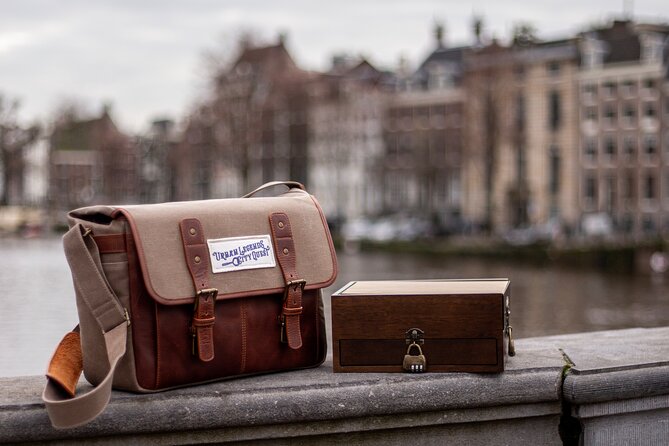
The game starts with a briefing that gives you the backstory fast, then pushes you into action. You’ll hear about the discovery of a mysterious box beneath the floorboards of a historic canal house on the Amstel. The accompanying letter links the box to former resident and mayor Coenraad van Beuningen—an anchor for the urban legend.
If you like mysteries, this is a strong hook because it’s specific. It’s not just Amsterdam is old. It’s a named person tied to a particular building nickname: the House with the Bloodstains. That label matters because it creates a clear mood for the puzzles. Even when the tasks get practical or weird, the story thread keeps pulling you forward.
And you’ll notice the game mixes imagination with tasks that feel physical—something you can work through step by step. One review highlighted challenges like lock picking and chemical-reaction style puzzles, plus a later moment involving inkblots. Those are the kinds of puzzle types that keep you from feeling like you’re doing a generic phone game on a loop.
Meeting on the Amstel: quick start, easy to get oriented
The meeting point is on the Amstel in Amsterdam, and the experience ends back at the meeting point. That sounds basic, but it’s a big deal for planning. When your activity finishes in the same area it starts, you’re not stuck guessing how to get back if you’re tired, or if you want to add a meal or canal walk afterward.
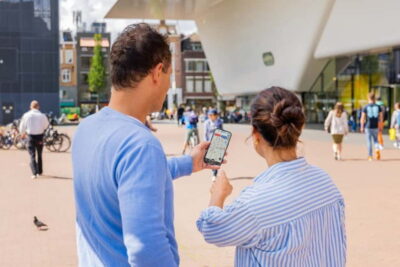
You’ll also want to treat the game like an organized activity even though you’re in open streets. You get confirmation at the time of booking, and the tour uses a mobile ticket. Bring your phone with enough battery to keep the ticket accessible.
The activity is also described as near public transportation. That’s helpful if you’re coming in from outside the center or you’ve already been out all morning. Amsterdam’s transit system can swallow time quickly, so being close to transit keeps your schedule intact.






The pace: 2 hours 30 minutes that don’t feel like a slog
The duration is about 2 hours 30 minutes. In practice, that length usually means you’ll get enough time for multiple puzzle types, but you’re unlikely to feel like you’re trapped in a maze. The reviews mention teams completing the quest in about two hours, with plenty of sightseeing along the way. That suggests the game is paced to keep you engaged rather than forcing constant stops.
It’s also “moderate physical fitness.” So yes, there’s walking, and you’ll be outside. At the same time, one family review mentioned a two-year-old in a buggy and that it still worked well, with not too much walking. So if you move at a slower pace, you’ll likely be okay as long as you can handle uneven old-city sidewalks and stand-and-walk moments.
My tip: wear comfortable shoes you’d actually use for a canal-side stroll. And if the weather looks questionable, bring a small umbrella or rain layer. One review said they had crappy weather and still had a lot of fun, but conditions always affect puzzle-solving when you’re outdoors.
How the puzzle progression keeps you interested
The best part of this kind of city game is variety. If every stop is just reading clues, it gets dull. Here, the puzzle mix keeps changing the way you think. Based on the puzzle types mentioned, you can expect tasks that range from pattern/logic challenges to more hands-on physical problems.
A few examples from what you might encounter:
- Inkblot-style puzzle logic, which can feel tricky at first and click once you see the intended approach
- Lock-picking style challenges, which add a tactile, escape-room vibe to the street setting
- Chemical reaction type puzzles, which means the solution isn’t just mental—it’s about following steps carefully
- A final puzzle described as brilliant, which is usually where the story and earlier clues pay off
The host also plays a practical role. Several people mentioned receiving hints when needed, which is ideal. You don’t want to spend an entire section stuck and frustrated, and you don’t want the answer spelled out so you miss the satisfaction. Good hinting is the difference between a fun challenge and a chore.
Stop-by-stop feeling: how it plays like a guided city walk
Even without exact addresses for each puzzle location, the structure is pretty clear from the format and the way people describe the experience. You’ll start at the Amstel and then move through the city center in a sequence that feels intentional. Each puzzle location gives you a small “mission,” and the outcome tells you what to do next.
What makes each stop special is the combo of:
1) a story reason for being there, and
2) a puzzle mechanism that makes you pay attention to details in the street setting.
In Amsterdam, that matters because you can walk past beautiful doorways, plaques, and canal-house details without noticing them. This game turns those quick glances into clues.
There’s also time built in for a more normal pace of city wandering. One review specifically mentioned sightseeing along the way, and another noted the opportunity to grab a terrace between problem-solving moments. That’s the sweet spot: structured enough to feel like an activity, flexible enough to still enjoy the streets.
Value for money: is $29.50 per person worth it?
At $29.50 per person, you’re paying for more than a walk. You’re paying for:
- a hosted story experience,
- puzzle materials and setups designed for the game,
- and the time structure that keeps you from wandering aimlessly.
For a game lasting about 2.5 hours, it’s not priced like a long museum day, but it’s also not just a free-style scavenger hunt. The reviews repeatedly mention the quality of materials and the care in puzzle design—set up where things are in order, not random. That’s what you want for value: the puzzles work the way they’re supposed to, and the experience feels thought through.
Also, group discounts can lower the per-person cost, which helps if you’re traveling with friends or family. And because it’s private, you’re not forced into a large crowd dynamic where the whole team can’t participate.
If your priority is maximum sightseeing with zero effort, you might feel this is “work.” But if you want something active that makes Amsterdam feel like a story you’re part of, it’s a fair trade.
Who this game suits best (and who might prefer something else)
This is a great fit if you like:
- escape-room style puzzles but prefer doing them in real streets,
- urban legend stories with specific characters like Coenraad van Beuningen,
- a city activity that gets you moving without demanding all-day walking,
- and teams who enjoy solving together.
It’s especially strong for puzzle lovers because multiple reviews called out how challenging, thoughtful, and puzzle-forward the experience felt. It’s also family-friendly in a practical sense: at least one family said it worked even with a very young child in a buggy, and another noted it was still fun during weather that wasn’t ideal.
Where it might not be ideal:
- If you hate outdoor activities or don’t want to walk at all, the moderate fitness requirement is a signal.
- If you need total independence with no host involvement, you might find the hint system and guided flow more “structured” than you want. (Still, hints are there to help, not to take over.)
Practical tips so you get the best experience
You’ll have the smoothest time if you treat it like a small mission:
- Charge your phone before you start. You’ll use a mobile ticket.
- Bring a layer for rain or wind. Amsterdam weather can change fast.
- Read instructions carefully at the start. City games depend on early clarity.
- If you’re stuck, ask for a hint sooner rather than later. The goal is progress, not endless guessing.
- If you’re traveling with kids or strollers, plan for uneven sidewalks and brief stops. The game seems compatible with slower pacing, but you’ll still be navigating real streets.
The Amsterdam payoff: how it feels afterward
When you finish and return to the Amstel, you’ll likely feel two things at once. First, you’ll get that satisfaction you normally get from solving a tough escape-room sequence—because the final part ties things together. Second, you’ll have a new mental map of central Amsterdam, not just a set of photos.
A lot of city activities tell you what to look at. This one makes you look while solving. And that’s why it works well as a change of pace from canals-only days.
Should you book this Amsterdam urban legend scavenger game?
Book it if you want an active, puzzle-led way to explore Amsterdam’s center for about 2.5 hours, and you like stories that point to a real-feeling legend around the Amstel. The mix of puzzle types—including hands-on challenges and logic moments—plus host support is a strong combo for value at $29.50.
Skip it if you want a fully indoor experience, or if walking outdoors (even at a moderate level) is a deal-breaker. If that’s you, there are plenty of Amsterdam activities that let you stay dry and seated.
If you’re on the fence, this is the kind of game that tends to reward curiosity. Give yourself a day where you can wander a bit, solve a bit, and still enjoy the streets in between.
Amsterdam Highlights in a Single Day






More Tour Reviews in Amsterdam






Just added: fresh Amsterdam tour reviews





City Tours, compared.
 ★ 4.475 Minute City Canal Cruise with Audio GuideFrom $1819,938 reviews
 ★ 4.3City Centre Canal Cruise including AudioguideFrom $1716,901 reviews
 ★ 4.7Smoke and Lounge City Boat CruiseFrom $278,572 reviews
 ★ 4.3City Card with Free Entrance & Public TransportFrom $794,145 reviews
 ★ 4.6Van Gogh Museum Ticket and City Canal CruiseFrom $473,899 reviews
 ★ 4.4City Canal Cruise and Heineken ExperienceFrom $443,133 reviews
 ★ 4.5City Canal Cruise and RijksmuseumFrom $472,226 reviews
 ★ 4.7Relaxed City Highlights Guided Bike TourFrom $341,069 reviews