
Reviewed · TOURS
Amsterdam: Spanish Tour Unmasking the Redlight District
Red lights, real context, and sharp Spanish facts. I like how this tour gives you clear, story-driven Spanish explanations that connect Amsterdam’s maritime past to the Red Light District, and I also enjoyed passing major landmarks like Oude Kerk while learning what changed over centuries. One caution: this is not listed for kids under 14, so keep expectations adult in tone.
You’ll move at a steady walking pace for about 2 hours, mostly outdoors, starting outside the Barbizon Palace Hotel on Prins Hendrikkade. The guides (there’s a lot of praise for their speed and clarity in Spanish, including one Chilean guide) make the subject easier to follow, but you’ll want comfortable shoes because you’re doing a proper stroll, not a sit-and-watch lesson.
In This Review
- Quick hits
- Why a Spanish walking tour for Amsterdam’s Red Light District works
- From St. Nicholas Basilica to Zeedijk: the port-to-people story
- Canal-side pauses at He Hua Tempel and a secret photo stop
- Nieuwmarkt Square and De Waag: where trade meets civic power
- Walking the Red Light District: Oudezijds Voorburgwal and Warmoesstraat
- Oude Kerk and the older layers that give the story weight
- Royal Palace finish near Dam Square: tying it back to how Amsterdam framed it
- Price and what you get for about $31
- What to expect on the ground: timing, photos, and the walking reality
- Who should book this tour (and who might skip it)
- FAQ
- Where does the tour start?
- How long is the walking tour?
- What language is the guide?
- How much does it cost?
- What is included in the ticket?
- Are there any entries to venues included?
- Can I take photos?
- Is alcohol allowed during the tour?
- Who is the tour not suitable for?
- Where does the tour end?
Quick hits
- Spanish-speaking guide who keeps the pace moving and explanations easy to follow
- Oude Kerk and other historic stops that turn the streets into a timeline
- St. Nicholas Basilica orientation near Central Station to frame Amsterdam’s maritime roots
- Zeedijk to Nieuwmarkt to see how port trade helped mix cultures and ideas
- Canal-side walking around Oudezijds Voorburgwal where the neighborhood’s story tightens
- Photo pauses at key viewpoints, plus camera guidance along the way
Weighing your options? Here is how a few other Amsterdam tours compare.
- Amsterdam: Heineken Experience Ticket including 2 Drinks
★ 4.6 · 36,014 reviews - Amsterdam Classic Saloon Boat Cruise with Drinks and Cheese
★ 5.0 · 31,825 reviews - Amsterdam Luxury Canal Cruise + Unlimited Drinks & Bites option
★ 5.0 · 30,518 reviews - Amsterdam: Rijksmuseum Entry Ticket
★ 4.7 · 29,512 reviews
Why a Spanish walking tour for Amsterdam’s Red Light District works
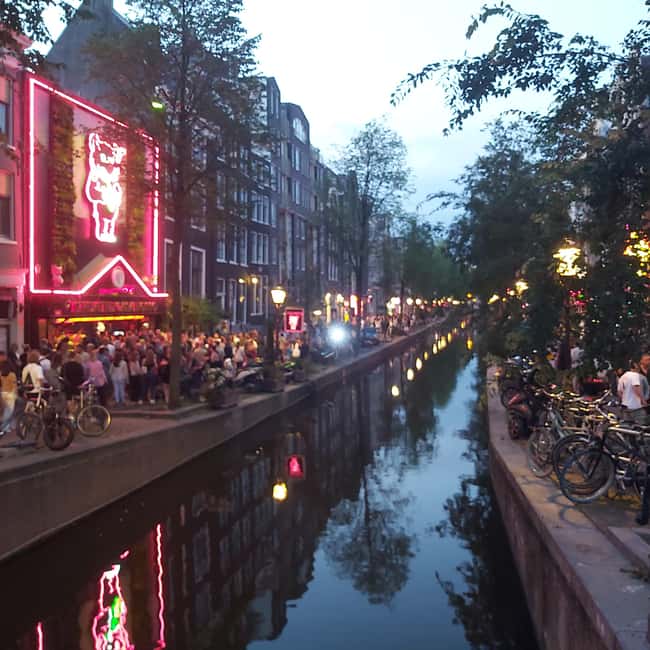
The Red Light District can feel like a theme park if you only look at what’s on the street. What I like about this tour is that it refuses that shortcut. You get the neighborhood’s origin story—how it grew from an earlier Amsterdam into the symbol people know today—while you’re standing right there among the buildings.
Also, choosing Spanish matters. When the guide is speaking your language, you don’t spend the whole time playing catch-up. In the feedback I saw from past groups, the guides were praised for being quick and good at explaining, which is exactly what you want on a two-hour walk where you’re covering several key corners.
The subject is also more complex than most people expect. You’ll hear how prosperity led to more people and more demand for entertainment and vice, and how that helped create the area’s reputation for prostitution and nightlife. You’re not just looking at signs and street life—you’re learning the pressures that helped shape it.
From St. Nicholas Basilica to Zeedijk: the port-to-people story
You start outside the Barbizon Palace Hotel, then head toward one of the best orientation points in central Amsterdam: St. Nicholas Basilica, opposite Central Station. The guide’s goal here is simple—set the stage with Amsterdam’s maritime heritage and early development, so the later neighborhood story doesn’t feel random.
From there, you’ll walk toward Zeedijk Street, a street known for its multicultural history and historic bars that once catered to sailors. This is where the tour starts making a key connection for you: a big port doesn’t just move goods. It attracts people, languages, money, and stories. When those groups overlap, the social life around the harbor tends to change fast.
Zeedijk also helps you understand why the Red Light District didn’t appear from nowhere. You’ll hear about the “melting pot” effect—how the port became a meeting point for cultures and ideas, setting the stage for the later emergence of the district’s reputation. It’s practical context, and it makes the next stops easier to read.
Canal-side pauses at He Hua Tempel and a secret photo stop
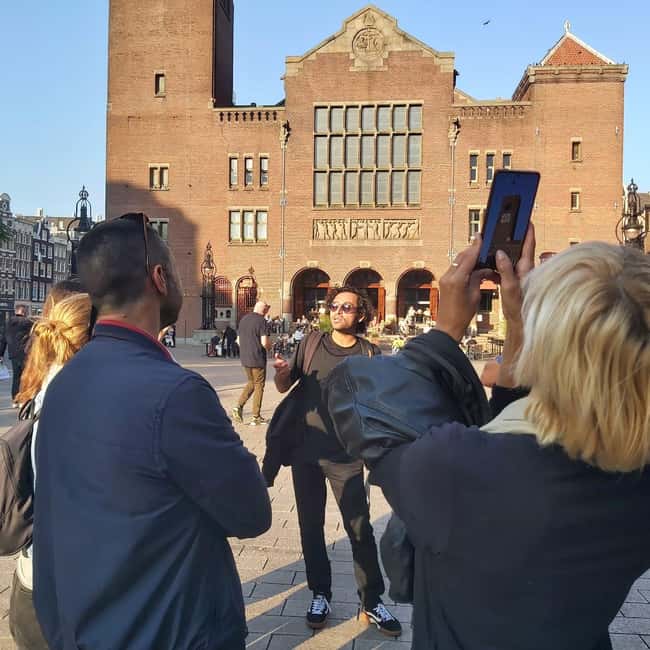
Between the bigger landmark moments, the route includes short photo stops that help you slow down just enough to see details in the streetscape. One stop is described as a secret stop for a photo pause, and it’s basically there to catch your eye before you move on again.
Next comes He Hua Tempel, another brief photo moment. Even without a long visit, it works as a reminder that this area is not only about one story. You’re moving through Amsterdam’s overlapping layers—religion, community, trade, and the everyday life around the canals.
This section is also a good time to think about tone. The tour’s focus is historical and contextual, but it’s still a walk through a neighborhood with adult associations. Short photo pauses help you step back, regroup, and keep the experience focused on what the guide is showing you.






Nieuwmarkt Square and De Waag: where trade meets civic power
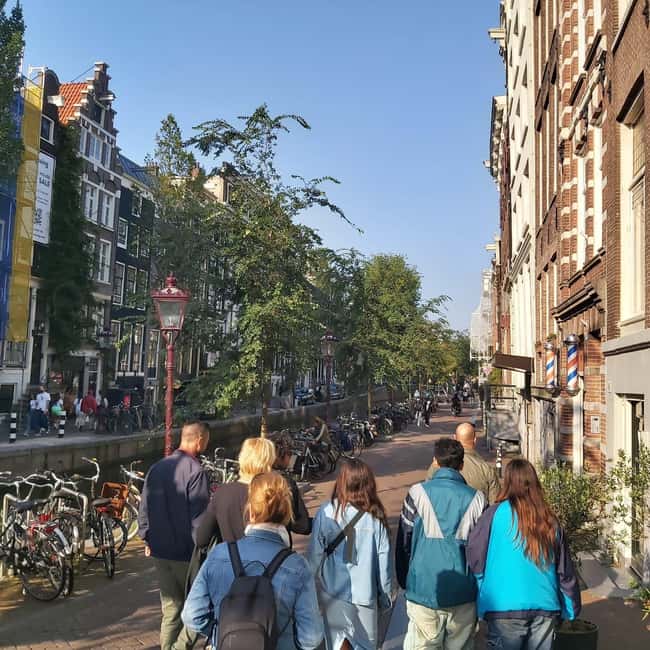
Then you reach Nieuwmarkt Square, and the route points you toward De Waag, a former city gate turned weighing house. That’s an important detail: weighing houses weren’t decorative. They were part of how a city taxed and managed goods coming through trade networks.
Looking at De Waag through this lens makes the neighborhood story more believable. When Amsterdam is growing as a port city, trade needs enforcement and infrastructure. Civic power sits right next to commerce, and that combination shapes what kinds of services and nightlife can spring up in the surrounding streets.
Nieuwmarkt is also a natural “breather” space in the walk. You can stand, orient yourself, and connect what you learned in the earlier maritime segment to how the city operated day to day. It’s a turning point where the tour’s themes shift from early development toward the forces that later fueled entertainment and vice.
Walking the Red Light District: Oudezijds Voorburgwal and Warmoesstraat
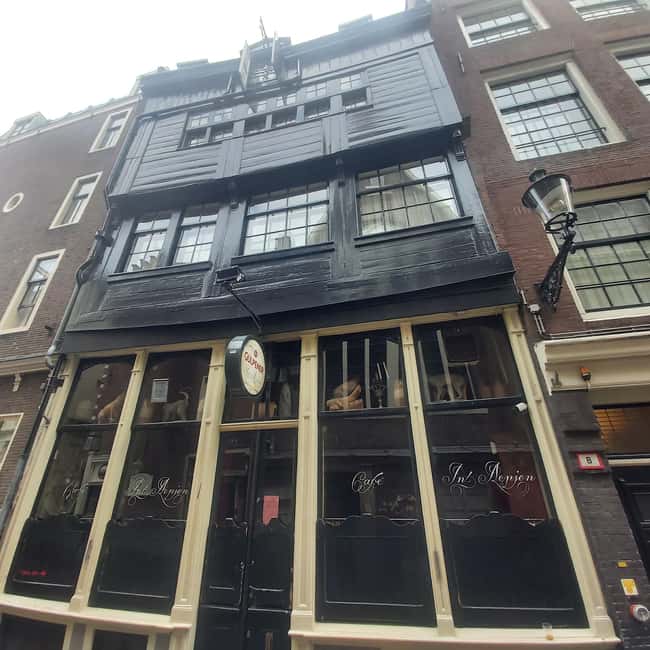
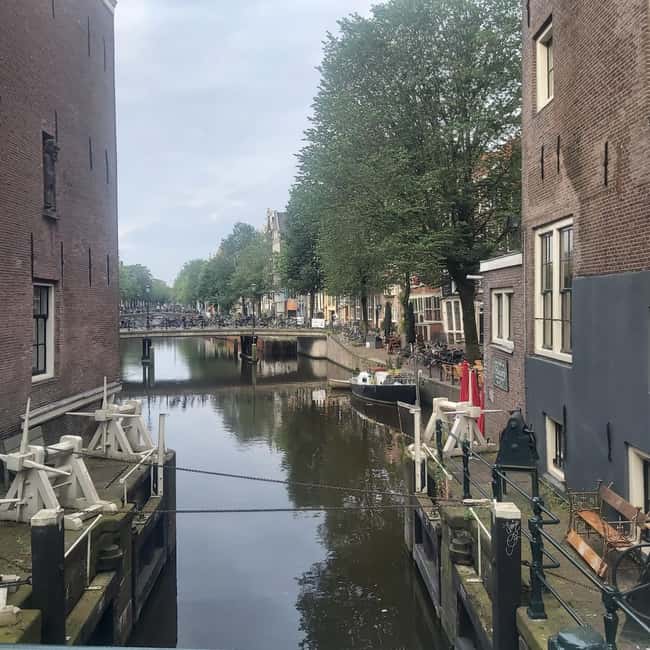
Now you get into the heart of the matter: walking through the Red Light District area along its canal network, including Oudezijds Voorburgwal. This is where the tour’s biggest value shows up—context in motion. You’re not treating the neighborhood like a single stereotype; you’re learning how prosperity and population growth increased demand for entertainment, and how that helped form the district’s identity.
You’ll also pass Warmoesstraat, another street that reinforces the idea that this isn’t hidden behind walls. It’s part of Amsterdam’s fabric—streets, canals, and older urban patterns that have been repurposed over time.
One practical note: the guide’s job here is to keep you oriented without turning it into shock-value sightseeing. If your goal is understanding how a complex city evolved, this section helps you see patterns instead of just scanning storefronts.
Oude Kerk and the older layers that give the story weight
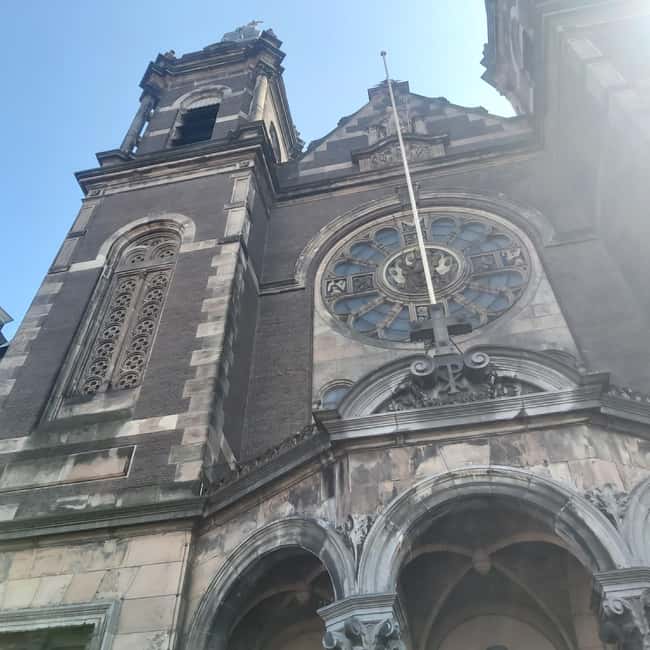
Next up is Oude Kerk, where you’ll have a visit time. It’s especially powerful because the tour isn’t just about the Red Light District’s adult reputation. It also uses the oldest urban landmarks to remind you you’re standing in a city that predates modern tourism.
Oude Kerk matters because it anchors the area in real history. When you stand near Amsterdam’s oldest building, you start thinking in longer timelines. The Red Light District wasn’t the same in every century, and seeing how old structures are still here makes it easier to grasp how the neighborhood could transform rather than simply start.
The route also includes another stop described as a visit to a “hidden gem.” Since the tour keeps details specific to what the guide will show you on the day, the best expectation to have is this: it’s a pause where the guide points out a smaller, quieter aspect of the streetscape—something you might miss if you were just walking on your own.
Royal Palace finish near Dam Square: tying it back to how Amsterdam framed it
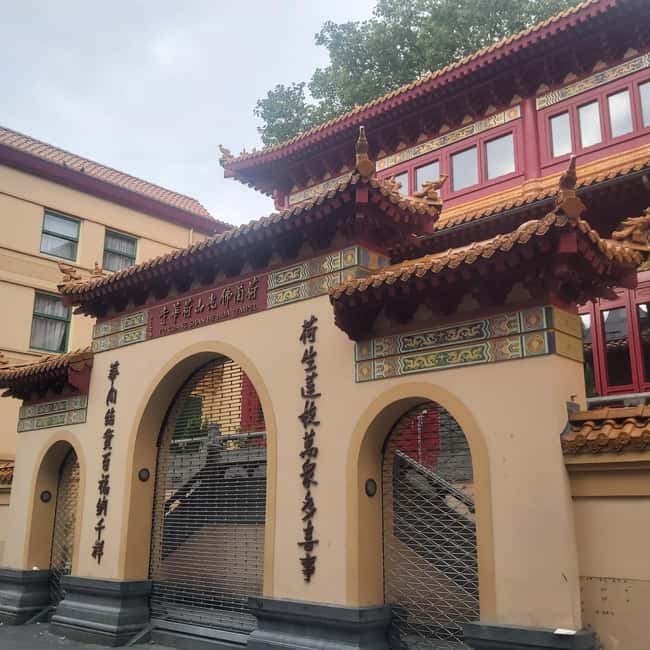
The tour wraps up with a connection to Dam Square and the Royal Palace area, where you’ll hear about its relationship to the Red Light District. This is a smart ending point because it forces the question: how does official Amsterdam connect to the neighborhood that became known for vice and nightlife?
Even if you’re not there for politics, this part helps you think like a city historian. Cities don’t separate their “respectable” spaces from their entertainment spaces as neatly as visitors often imagine. The guide’s explanation gives you the link, and then you’re done with the walk—ready to explore the rest of central Amsterdam with a clearer mind.
Price and what you get for about $31
At $31 per person for a roughly 2-hour walking tour, the value is mostly about what the ticket includes: a Spanish-speaking guide and a structured route through major landmarks tied to the story. You’re not paying for museum entry or an organized meal. So if you want a history explanation on your feet, this price can make sense.
Where the value really lands is time. You cover key points—St. Nicholas Basilica, Zeedijk, Nieuwmarkt Square and De Waag, the Red Light District canal area, Oude Kerk, and the Dam Square connection—without having to map it yourself or guess what order makes the most sense.
It also helps that the tour doesn’t try to stuff extra activities into the cost. You’ll keep a clean focus: walking + guidance + context. The trade-off is simple: if you want indoor ticketed experiences, you’ll need to plan those separately.
What to expect on the ground: timing, photos, and the walking reality
Plan for a straightforward outdoor walk. You’ll want comfortable shoes and weather-appropriate clothing, because this is an in-the-streets experience. The route includes several photo pauses, but it’s still mostly walking between stops.
Photography is allowed with limits. You can bring your camera, and the guide will tell you when to use it. The only firm rule given is that photography inside is not allowed. That’s a good reason to keep your phone and camera ready, but don’t expect to shoot freely everywhere.
Also, the tour lists no alcohol and drugs as allowed. Non-alcoholic drinks are permitted, which is helpful on a long-ish walk day. If you’re sensitive to adult themes, remember the tour is built around the district’s evolution and reputation, not a party atmosphere.
Who should book this tour (and who might skip it)
Book it if you want the Red Light District explained as a historical urban story: port trade, population growth, shifting demand for entertainment, and how that shaped the area’s reputation. You’ll like it if you’re comfortable walking and you prefer your Amsterdam facts spoken clearly in Spanish.
Skip it if any of the following apply: you need wheelchair access (it’s not listed as suitable), you’re traveling with a child under 14 (not suitable), or you’re someone who finds adult-associated neighborhoods stressful rather than informative. Also, if your main goal is nightlife or shopping, this tour will feel more like history guidance than experience hunting.
Should you book? If Spanish is your best language for learning, and you want a guided route through the district’s key anchors—St. Nicholas Basilica, De Waag, Oude Kerk, and the Dam Square tie-in—then this is a strong fit. Just go in expecting a serious explanation with a few photo pauses, not a casual stroll with zero context.
FAQ
Where does the tour start?
You meet your guide outside the Barbizon Palace Hotel on Prins Hendrikkade street in Amsterdam.
How long is the walking tour?
The tour duration is listed as 2 hours.
What language is the guide?
The tour has a live Spanish-speaking guide.
How much does it cost?
The price is listed as $31 per person.
What is included in the ticket?
It includes a Spanish-speaking guide and the walking tour.
Are there any entries to venues included?
No. The tour does not include entries to any venues.
Can I take photos?
You may bring a camera. The guide will advise you when you can use it, but photography inside is not allowed.
Is alcohol allowed during the tour?
Alcohol and drugs are not allowed. Non-alcoholic drinks are allowed.
Who is the tour not suitable for?
It’s not suitable for children under 14 years, wheelchair users, and people over 95 years.
Where does the tour end?
The activity ends back at the meeting point, and the route also lists the finish at Beursplein.
More Tours in Amsterdam






More Tour Reviews in Amsterdam






Just added: fresh Amsterdam tour reviews





Tours, compared.
 ★ 4.6Zaanse Schans, Edam, Volendam & Marken Bus TourFrom $3215,034 reviews
 ★ 4.8Amsterdam Anne Frank: Small-Group Walking Tour & Local GuideFrom $2912,789 reviews
 ★ 5.0Anne Frank’s Story – Guided Walking Tour through AmsterdamFrom $3911,619 reviews
 ★ 4.6Johan Cruijff ArenA Tour with Optional GuideFrom $328,954 reviews
 ★ 4.9Red Light District Tour in DE/EN/IT/ES/FRFrom $287,136 reviews
 ★ 4.7Big Bike tour Amsterdam – See all in 3 unforgettable hoursFrom $344,929 reviews
 ★ 4.4Guided Zaanse Schans, Windmills & Cheese TourFrom $224,826 reviews
 ★ 4.0Windmill Tour from Amsterdam, Including Volendam & MarkenFrom $374,572 reviews