
Reviewed · CITY TOURS
Amsterdam Pedicab City Tour (2 hours)
Amsterdam moves fast.
A private pedicab tour is one of the easiest ways to catch the highlights without walking yourself into a cranky mood. I like that you get local context and time for questions, and you also get built-in stops for pictures along the way. One thing to consider: it’s built around a fixed 2-hour ride, so you’ll want to decide early if you’d rather spend extra time somewhere (like the canal views) or keep a steady pace through many neighborhoods.
My favorite part is how the guide, Bram de Haan, frames each place with both practical history and street-level perspective. Expect frequent pull-overs so you can take photos and pause when something catches your eye, plus helpful visual materials like old maps and photographs. That said, the tour requires good weather, so if rain is heavy, you may be dealing with a schedule change.
If you want an eco-friendly ride with genuine local attention—just you and up to one other person—this is a strong option. Pickup is offered, it runs in English, and the pedicab is designed for comfortable sightseeing over shorter distances.
In This Review
- Key things that make this pedicab tour worth your time
- Why a private blue pedicab beats a bus for your first Amsterdam day
- Meet Bram de Haan: the local perspective that turns stops into stories
- Price and value: $237.65 per group makes sense if you’re budgeting for comfort
- The 2-hour route from Dam Square to Museumplein (with what to watch for)
- Dam Square: Amsterdam’s “start point” and its big contrasts
- Zeedijk: old dike streets and the kind of history you feel in the walls
- Chinatown: European mainland roots and real everyday street life
- Nieuwmarkt: citygate history in a square-sized footprint
- Montelbaanstoren and de oude Waal: a ship watchtower with canal views
- Rembrandt House Museum area: outside views, not an included ticket
- Jodenbuurt and surviving Jewish quarter streets
- Portuguese Synagogue area: 17th-century Jewish presence in Western Europe
- National Holocaust Names Monument: a quiet, powerful passage
- H’ART Museum pass-by: a major site with a layered identity
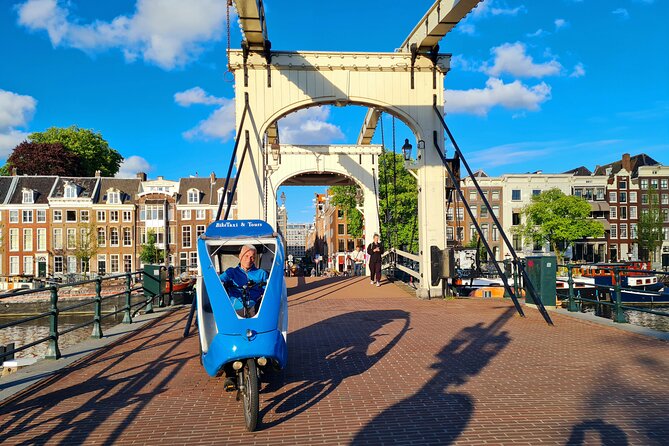
- Magere Brug and Amstel views: an easy photo win
- Canal Ring (Grachtengordel): the 17th-century half-circle of merchant power
- Museumplein and Rijksmuseum area: squares, big museums, and a classic photo perspective
- Pickup, tickets, and how to plan for your 2-hour window
- Comfort tips that make your ride go smoother
- Who should book this Amsterdam Pedicab City Tour?
- Should you book this Amsterdam pedicab tour?
- FAQ
- How long is the Amsterdam Pedicab City Tour?
- How much does the tour cost?
- Is this tour private?
- Where do we meet the guide and pedicab?
- What language is the tour offered in?
- What is included, and what is not included?
- Are museum entrances included?
- What happens if it rains?
- What are the weight limits and group limits?
- What is the cancellation policy?
Key things that make this pedicab tour worth your time
- Private group attention: up to 2 passengers, so you can ask questions and adjust the flow.
- Bram de Haan’s storytelling: old maps, photos, and personal connections to sites you’re passing.
- Short stops, big coverage: Dam Square, Chinatown, the Jewish quarter, canals, and Museumplein in about 2 hours.
- Photo-friendly pacing: the pedicab makes it easy to stop and shoot without a long walk.
- Rain readiness: waterproof blankets are provided if the weather turns.
- Comfort on two wheels: a low-effort way to see central Amsterdam, especially if you tire easily.
The bigger picture: more Amsterdam city tours
- Amsterdam: 75 Minute City Canal Cruise with Audio Guide
★ 4.4 · 19,938 reviews - Amsterdam: City Centre Canal Cruise including Audioguide
★ 4.3 · 16,901 reviews - Amsterdam: Smoke and Lounge City Boat Cruise
★ 4.7 · 8,572 reviews - Amsterdam: City Card with Free Entrance & Public Transport
★ 4.3 · 4,145 reviews
Why a private blue pedicab beats a bus for your first Amsterdam day
Central Amsterdam can feel like a test. You’re trying to line up squares, canals, bridges, and museums while crowds swell and your feet start bargaining with you. A pedicab changes the math. In a couple hours, you can cover a lot of ground while staying relaxed, close to the street, and able to look up at architecture that you’d miss at walking speed.
This tour is also a “no awkward sharing” kind of setup. It’s private for your group, and the ride is intended for a pair (maximum 2). That matters because the guide can slow down for your interests, point out details you’d never notice from a distance, and keep the pace moving when you’re ready to go.
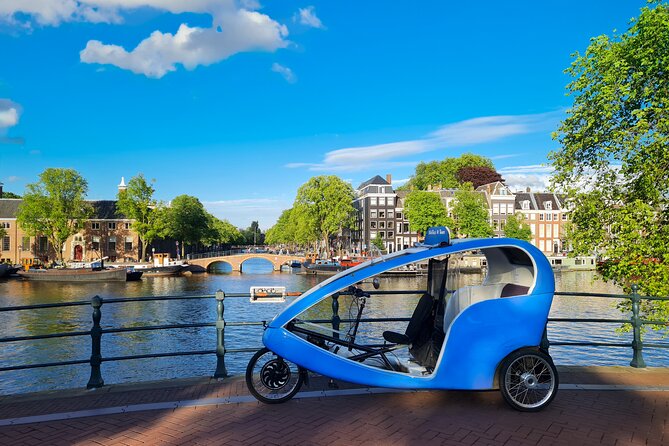
And yes, the pedicab matters. It’s easy to get on and off for quick photo stops, and the open feel helps you take in the city rather than just watching it through a window. If you’re the type who wants a guided orientation that still feels personal, this style works well.
Meet Bram de Haan: the local perspective that turns stops into stories
Bram de Haan runs the experience, and the way he teaches is part of the appeal. The tour doesn’t just list landmarks. It connects them to how Amsterdam grew and how neighborhoods changed over time. A big theme is seeing then-and-now comparisons using old maps and photographs, so the city doesn’t feel like a static postcard.
He also makes room for real-time questions. If you’re curious about what you’re seeing—why a street looks the way it does, or how a neighborhood shifted historically—you’re not stuck waiting for a group moment. That’s a quiet advantage of private tours: your pace and your questions can stay part of the schedule.
Another practical plus: the ride is designed for comfort in bad luck weather. If it rains, waterproof blankets are available so you’re not trapped in a soaked jacket for the rest of the tour.
Price and value: $237.65 per group makes sense if you’re budgeting for comfort
The price is $237.65 per group (up to 2) for about 2 hours. On paper, that can look pricey compared with big-group sightseeing. But private pedicab tours trade cost for time, comfort, and flexibility.
Here’s the value logic I’d use:
- If you and a friend (or partner) split the group price, you’re effectively paying for a guided, door-to-central-neighborhoods ride at a pace you control.
- You’re not spending that money on museum entry tickets (the tour’s stops are largely free to view from the outside).
- You’re paying for a guide who can explain what you’re looking at while the pedicab handles the walking distance.
If you’re traveling solo, you’re still getting private attention, but the “per person” value depends on how much you care about having a slower, low-stress introduction to the city.
My take: this is a good purchase when you want to see a lot quickly, avoid over-walking, and start your trip with a clear mental map of Amsterdam’s center.
Still deciding? A few more Amsterdam tours worth a look



The 2-hour route from Dam Square to Museumplein (with what to watch for)
The itinerary is a loop through the heart of old Amsterdam and a few surrounding landmarks. Most stops are quick photo-and-story moments rather than long museum-style visits. That’s intentional. It keeps the ride moving while still giving you context.
Below is what to expect stop by stop, plus how each one fits into the bigger picture.
Dam Square: Amsterdam’s “start point” and its big contrasts
You begin at Dam Square, the main square in the old center. This is where the city’s story is anchored, and you’ll pass major landmarks like the Royal Palace and the New Church (plus the National Monument area).
What to watch for: don’t only look at the buildings. Take a quick moment to notice how this square acts like a hub. It’s a good place to orient yourself for the rest of the ride, because you’ll be moving out from here into older neighborhood pockets.
Photo tip: Dam Square can be crowded in some conditions, so expect a quick but efficient stop rather than extended wandering.
Zeedijk: old dike streets and the kind of history you feel in the walls
Next up is Zeedijk, an old dike area near the center. This is where you’ll encounter the oldest café in Amsterdam, with an interior that’s meant to preserve an ancient-feeling vibe.
What makes it interesting on a pedicab: you’re close enough to get street-level context while still moving through the maze of central lanes. It also sets up the theme of Amsterdam as a city shaped by water management and trade routes.
Chinatown: European mainland roots and real everyday street life
Chinatown is next, and this neighborhood is described as the oldest Chinese area on the European mainland. You’ll pass restaurants, supermarkets, and a Chinese temple, which gives you a sense of how the district functions day to day.
How to get value from this stop: look for the mix. Don’t expect it to feel like a theme park. It’s part of the city’s everyday geography, which makes it a nice counterpoint to the grand squares.
Nieuwmarkt: citygate history in a square-sized footprint
At Nieuwmarkt, you’re in another key old-center square. The highlight here is the old city gate in the middle of the area, a reminder that Amsterdam was once walled and fortified before the major 17th-century expansion.
This stop is quick, but it’s the kind of place where a guide’s explanation really helps. Without context, it can read as just another lively square. With context, it turns into a timeline checkpoint: before expansion, before the canal district fully formed, before today’s layout.
Montelbaanstoren and de oude Waal: a ship watchtower with canal views
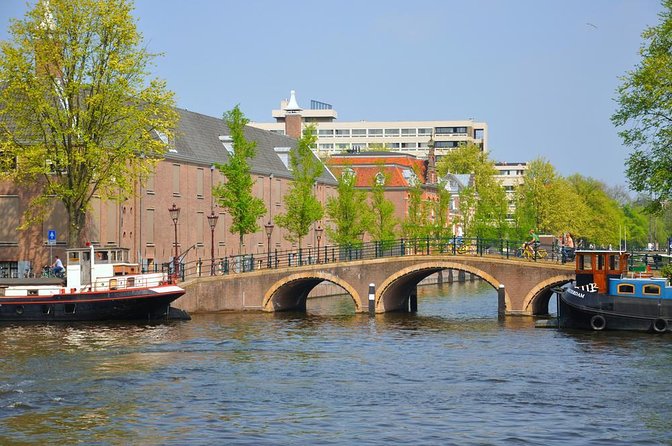
You then pass Montelbaanstoren, an old ship watch tower that belonged to the city’s early 16th-century defense line. The stop is also framed by views over de oude Waal, with 17th-century canal houses and houseboats along the water.
What I like about this portion: it’s a rare combination of defense-era architecture and waterfront scenery in one glance. If canals are your “must-see,” this angle helps you understand why Amsterdam’s water edges are so central to the city’s identity.
Rembrandt House Museum area: outside views, not an included ticket
You’ll see the Rembrandt House Museum from the outside. Entry into the museum isn’t included.
If you love art history, this is a smart teaser. You’ll get the sense of place without committing time to a museum stop during your 2-hour ride. If you want to add the museum later, this tour can help you decide if it’s worth your time.
Jodenbuurt and surviving Jewish quarter streets
Next is Jodenbuurt, the former Jewish neighborhood area. A lot of the old center was damaged and rebuilt after World War II, but key structures—streets, synagogues, and buildings—still remain.
This is a meaningful stop, and the pedicab format keeps it respectful. You don’t have to sprint through; you just pass by and let the guide’s context do the heavy lifting for understanding what you’re seeing.
Portuguese Synagogue area: 17th-century Jewish presence in Western Europe
You’ll pass the Portuguese Synagogue of Amsterdam, described as the largest synagogue and among the earliest Western European synagogues built in the second half of the 17th century (1675). You’ll also see other synagogues opposite it, which connect to the Jewish museum area.
Even with an outside-only view, this is one of those stops where details matter. Look for how the architecture signals community presence and long-term establishment rather than a brief visit-in-time.
National Holocaust Names Monument: a quiet, powerful passage
You pass the National Holocaust Names Monument, where 102,000 brick stones with names memorialize Dutch Jewish victims of the Second World War.
This stop is short, but it’s the kind of moment that sticks. If you’d like extra time here, you can ask your guide—just remember your overall ride time is still about 2 hours.
H’ART Museum pass-by: a major site with a layered identity
You’ll pass by H’ART Museum, mentioned here through its connection to the Hermitage Museum, which used to be a monumental house for a widow care house built in the 17th century. It’s part of the Russian Hermitage museum organization now.
If you’re the kind of traveler who likes buildings that have had multiple lives, you’ll probably enjoy this quick contextual pass.
Magere Brug and Amstel views: an easy photo win
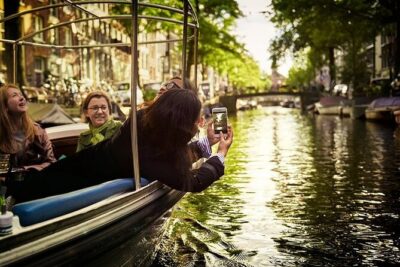
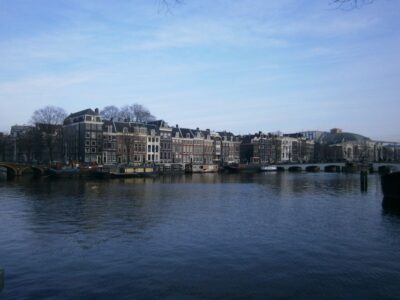
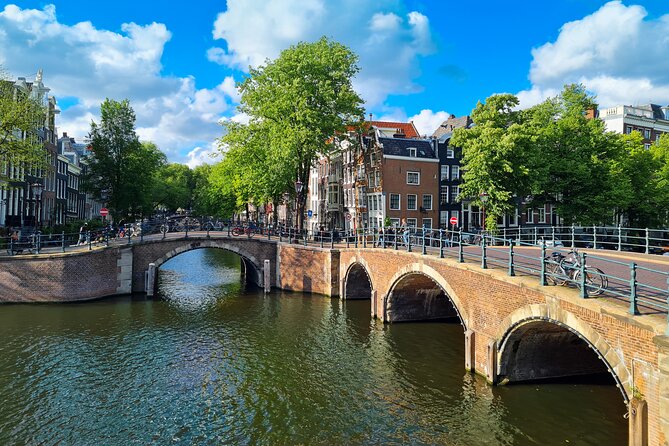
Then comes Magere Brug, the Skinny Bridge—one of Amsterdam’s iconic bridges. It’s especially noted for its night lighting, though during a day ride you still get a classic bridge-and-canal feel. From here, you have an overview over the canalised river Amstel.
This is one of the best moments to slow down. Even if you only stop briefly, the view helps connect the canal-ring visuals you’ll see later with a real sense of water flow and city geography.
Canal Ring (Grachtengordel): the 17th-century half-circle of merchant power
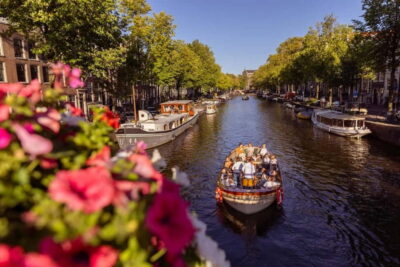
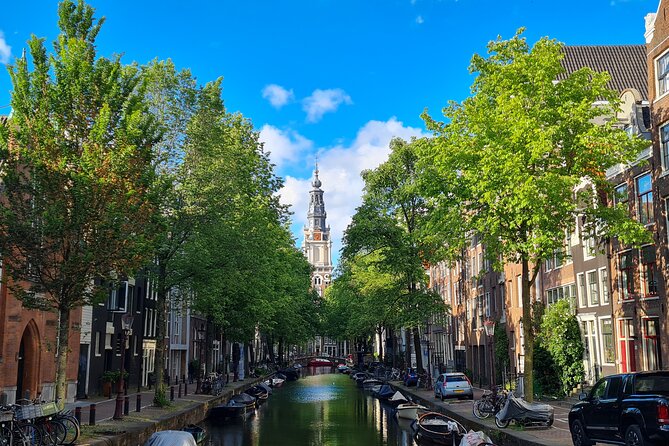
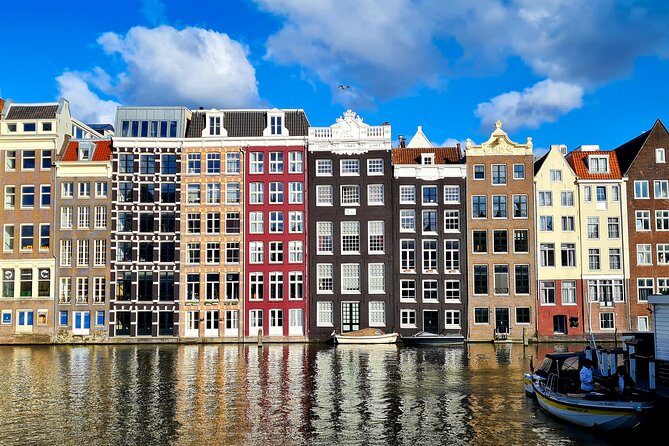
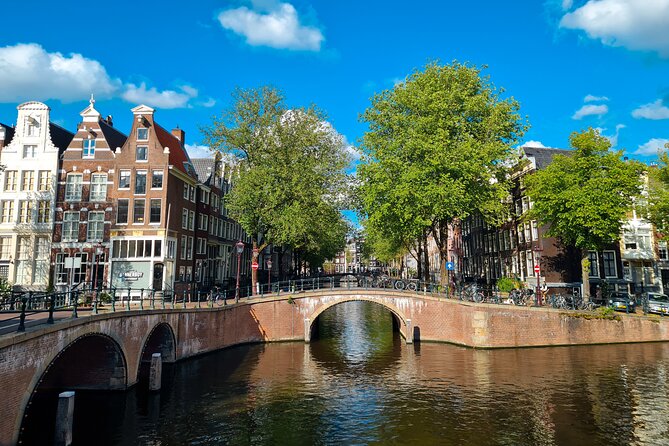
The Canal Ring (Grachtengordel) is where you see the classic Amsterdam half-circle canal layout around the old center. This is described as the 17th-century expansion area, where you’ll find the typical canal houses that were once merchant homes.
What to notice: the guide helps you read the differences. Even though the houses share similarities, they’re slightly different, and those details can hint at the building era.
If you take photos, do it here—this part is where your camera will feel like it’s finally getting the city’s signature look.
Museumplein and Rijksmuseum area: squares, big museums, and a classic photo perspective
You end with Museumplein. It’s described as Amsterdam’s biggest and likely most impressive square, bordered by the Rijksmuseum and the Concertgebouw. Nearby you’ll find the Van Gogh museum, the Stedelijk museum (contemporary art), and additional museums including the Moco museum and the Diamond museum.
This stop includes time to enjoy views, plus a ride through the famous bicycle tunnel under the Rijksmuseum where you might hear street music. You’ll also head toward Museumplein for a strong view of the back of the Rijksmuseum, completed in 1885 and designed by Pierre Cuypers.
Why it works as the finale: by now you’ve seen Dam Square, canals, neighborhoods, and memorial sites. Ending at a major cultural square gives your eyes a “big picture” finish and makes it easier to plan museum stops afterward.
Pickup, tickets, and how to plan for your 2-hour window
This experience offers pickup. You’ll wait in front of your hotel and look for the blue pedicab. You’ll also use a mobile ticket, and it’s offered in English.
A helpful planning note: average booking demand runs high, with tours commonly booked about 77 days in advance. If your dates are fixed, earlier booking gives you more choice.
And since the tour requires good weather, it’s smart to be flexible. If rain disrupts things, you’ll be offered a different date or a refund.
Comfort tips that make your ride go smoother
- Dress for the weather, even in summer. Wind and quick showers happen in the city.
- If it’s cold, ask yourself if you’ll be okay sitting still. You can pull the waterproof blanket on if needed.
- Wear shoes you can walk in later. This tour helps you avoid long walking, but you may still want comfortable footwear for quick steps and short photo stops.
- Bring your phone camera setup: you’ll have several photo moments (bridges, canal views, memorial area) where it helps to be ready.
Who should book this Amsterdam Pedicab City Tour?
Book it if:
- You want a guided orientation to central Amsterdam in a short time.
- You prefer less walking and more picture-ready stopping.
- You care about context: why neighborhoods look the way they do, and how Amsterdam changed over centuries.
- You want private time to ask questions and set your own pace within the ride.
Skip it (or consider something else) if:
- You want mostly museum interiors. Rembrandt House Museum entry isn’t included, and most stops here are outside passes.
- You’re visiting on shaky weather days and hate schedule changes. The tour needs good weather.
Should you book this Amsterdam pedicab tour?

Yes, if you’re aiming to start your Amsterdam trip with a clean mental map and you value a guide who explains what you’re seeing in plain terms. The private setup for up to 2 people, the stop-and-photo pacing, and Bram de Haan’s use of old maps and photographs make this more than just transport.
I’d treat it as a smart “first-day, short-time” option—especially if you want Dam Square, the canal district, Jewish quarter landmarks, and the Museumplein area all in one organized circuit without burning half your day on transit and footwork. If you’d rather spend your time inside museums, pair this with at least one follow-up museum visit later (since the tour itself focuses on viewing and context).
FAQ
How long is the Amsterdam Pedicab City Tour?
It runs for about 2 hours.
How much does the tour cost?
It costs $237.65 per group, up to 2 passengers.
Is this tour private?
Yes. It’s a private tour/activity, and only your group participates.
Where do we meet the guide and pedicab?
Pickup is offered. You wait in front of your hotel and look for the blue pedicab.
What language is the tour offered in?
The tour is offered in English.
What is included, and what is not included?
Included is private transportation. Snacks are not included.
Are museum entrances included?
Admission is listed as free for most stops, but Rembrandt House Museum entry is possible but not included in this tour.
What happens if it rains?
The experience requires good weather. If it’s canceled due to poor weather, you’ll be offered a different date or a full refund. Waterproof blankets are provided.
What are the weight limits and group limits?
The maximum total passenger weight is limited to 210 kg, and there is a maximum one pedicab available per timeslot.
What is the cancellation policy?
You can cancel for a full refund up to 24 hours in advance of the experience’s start time. If you cancel less than 24 hours before, the amount paid is not refunded.
Amsterdam Highlights in a Single Day





More Tours in Amsterdam






More Tour Reviews in Amsterdam






Just added: fresh Amsterdam tour reviews





City Tours, compared.
 ★ 4.475 Minute City Canal Cruise with Audio GuideFrom $1819,938 reviews
 ★ 4.3City Centre Canal Cruise including AudioguideFrom $1716,901 reviews
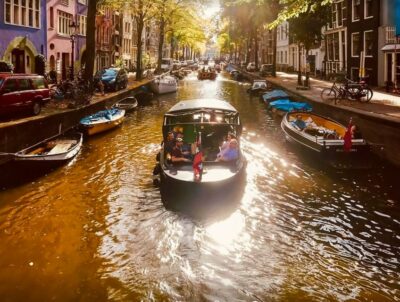 ★ 4.7Smoke and Lounge City Boat CruiseFrom $278,572 reviews
 ★ 4.3City Card with Free Entrance & Public TransportFrom $794,145 reviews
 ★ 4.6Van Gogh Museum Ticket and City Canal CruiseFrom $473,899 reviews
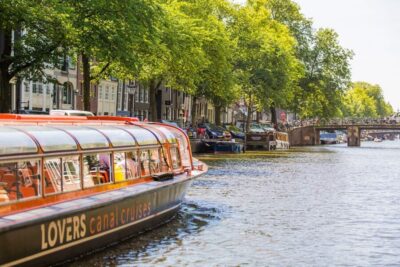 ★ 4.4City Canal Cruise and Heineken ExperienceFrom $443,133 reviews
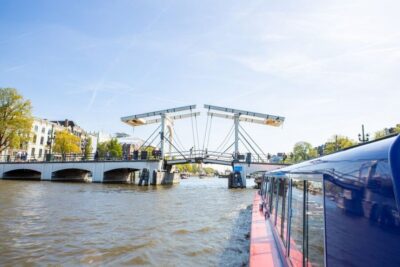 ★ 4.5City Canal Cruise and RijksmuseumFrom $472,226 reviews
 ★ 4.7Relaxed City Highlights Guided Bike TourFrom $341,069 reviews
Browse the lists this tour appears in