
Reviewed · CYCLING TOURS
Amsterdam in World War Two Cycle Tour
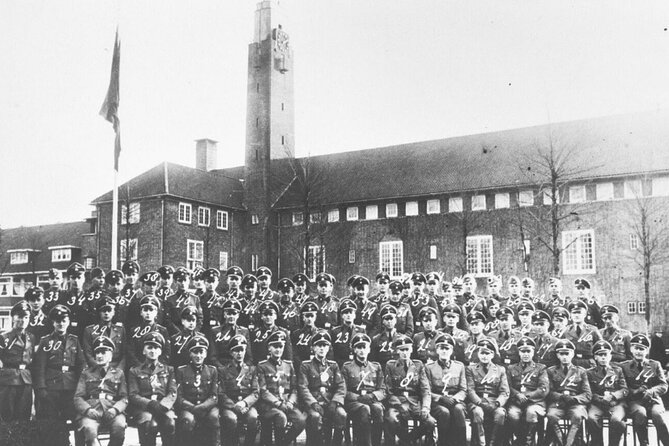
WWII history in Amsterdam has teeth. This bike tour maps the occupation’s machinery onto today’s streets, using period photos so you can see what changed—and what didn’t.
I especially love two things: small group size (up to six) and WWII photo side-by-sides at the exact spots. You also get a smart, practical way to cover Amsterdam South without getting stuck in foot-traffic slowdowns.
One possible drawback: this is heavy subject matter. You’ll be riding through neighborhoods tied to arrests, executions, and retaliation, so it helps if you’re ready for that.
In This Review
- Key highlights worth planning for
- Where the tour meets up—and why Amsterdam South feels different
- Cycling as a WWII learning tool: how the photo comparisons work
- Daniël Willinkplein at Victorieplein: the June 20, 1943 roundup context
- Merwedeplein and the Secret Annex story: Anne Frank’s neighborhood ties
- Waalstraat 48 and the Tilex Bar/Café Blek: Lex van Weren’s survival
- Cornelis Troostplein 23 and the PBA barracks: when institutions were repurposed
- Museumplein and the German stronghold near the concert hall
- Roelof Hartplein: a short coffee and restroom pause that keeps the ride moving
- Roelof Hartstraat photo shop and resistance-developed images
- Beethovenstraat and Apollolaan: executions, retaliation, and names you’ll remember
- Memlingstraat and Rubensstraat: SD HQ and the Hausraterfassungsstelle
- The safehouse at Rubensstraat/Gerrit van der Veenstraat and the Betrayal detail
- Olympiaplein and Parnassusweg: registration with help from Westerbork camp police
- Valeriusplein and the Amsterdam Lyceum: Luftwaffe HQ in a school building
- Emmalaan and Prins Hendriklaan: Queen Emma’s statue and the defiance flowers
- May 7, 1945 last-day tension: resistance, German troops, and shootings
- Price and value: $66.09 for a tight-group history ride
- Who should book this bike tour—and who should think twice
- Should you book Slagveldreizen.nl’s Amsterdam WWII cycle tour?
- FAQ
- FAQ
- How long is the Amsterdam in World War Two Cycle Tour?
- What time does the tour start?
- Where is the meeting point?
- How big is the group?
- Is the tour offered in English?
- Do I get a mobile ticket?
- Is cancellation free?
- FAQ
- Do I need my own bike?
Key highlights worth planning for
- Up to six riders means you get questions answered and the pace stays human.
- WWII photos matched to street corners make the past feel physical, not abstract.
- Amsterdam South streets with bike access let you reach places most visitors never properly slow down for.
- Rudy (and sometimes Peter) guiding on-the-ground brings local context and careful storytelling.
- You cover more ground by cycling than a long museum-style day of standing still.
More of Amsterdam at handlebar height
- Big Bike tour Amsterdam – See all in 3 unforgettable hours
★ 4.7 · 4,929 reviews - Small Group Guided Bike Tour of Amsterdam’s Hidden Gems
★ 5.0 · 3,936 reviews - Amsterdam: Off the Beaten Path Bike Tour in French
★ 4.9 · 1,632 reviews - Countryside Bike Tour from Amsterdam: Cheese, Clogs & a Windmill
★ 5.0 · 1,485 reviews
Where the tour meets up—and why Amsterdam South feels different
You meet at Tesselschadestraat 1 (1054 ET) with a start time of 11:00 am. From there, you ride into a part of Amsterdam that’s quieter than the postcard core, which matters because this tour works best when you can actually look at what’s in front of you.
The route is designed for biking. That means you can move quickly between meaningful sites while still stopping enough to absorb the details. The tour also returns to the meeting area, so you don’t need to worry about navigation or a one-way endpoint.
Time-wise, plan for about 2 hours 30 minutes to 3 hours 10 minutes. That’s a sweet spot for a focused history day: long enough to connect the dots, not so long that you lose concentration.
Cycling as a WWII learning tool: how the photo comparisons work
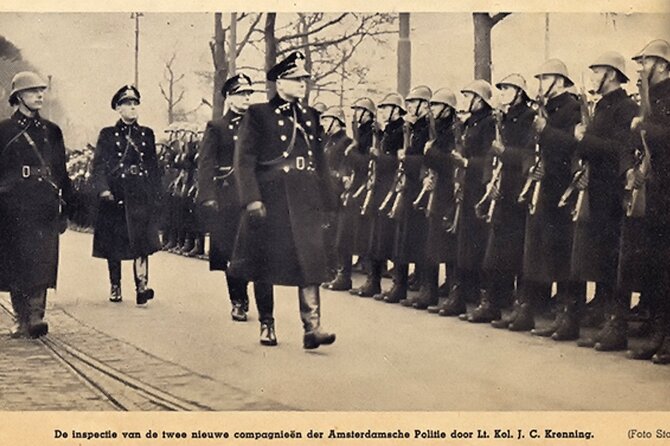
One reason this tour gets strong marks is the way it uses WWII-era photos at real modern locations. The guide will show you what the buildings and streets looked like during the occupation, then you look at the same viewpoints today.
That technique matters. Museums tend to frame history behind glass. Here, you’re seeing the geography of events—angles of streets, distances between key buildings, and the reality that many sites are still functioning parts of Amsterdam.
If you like history with texture, this format is a win. It also helps you remember. When you learn something while riding from location to location, your brain stores it like a route, not a list.
Daniël Willinkplein at Victorieplein: the June 20, 1943 roundup context
The tour’s story opens at Victorieplein, which was called Daniël Willinkplein back then. On June 20, 1943, a major raid struck Amsterdam. The guide connects it to the Judenaktion, when large groups of Jewish citizens were arrested.
At this stop, you get a clear chain of events: Jewish people were taken with help from Dutch police units (PBA) and police volunteers connected to the NSB, then transported for registration among other places to Olympiaplein, before being sent to Westerbork in the east of the Netherlands.
This part of the tour hits hard for a simple reason. It shows how coordinated the process was—arrest, registration, deportation. You’re not just seeing a sad memorial. You’re seeing how the system worked where you’re standing.






Merwedeplein and the Secret Annex story: Anne Frank’s neighborhood ties
Next comes Merwedeplein 37-II on the third floor. This is where the Frank family lived. In the summer of 1942, Otto Frank moved his family and other acquaintances to Het Achterhuis, the Secret Annex on the Prinsengracht—hidden behind ordinary life, on top of Otto’s working world.
You’ll also see a statue commemorating Anne Frank at Merwedeplein. And the tour doesn’t stop at the famous narrative. It connects the story to the physical places around it, including where publishing and the diary’s first edition entered the world after the war.
This is one of the most meaningful “you are here” moments on the route. You get a sense of how a family’s safety depended on secrecy, while the city around them was being reorganized by the occupiers.
Waalstraat 48 and the Tilex Bar/Café Blek: Lex van Weren’s survival
At Waalstraat 48, now Café Blek, the tour references the former Tilex Bar (linked to Tilly and Lex van Weren). Lex van Weren survived Auschwitz because he had to play his trumpet at executions.
That detail is brutal, but it also explains something important: survival stories aren’t always triumphant. Sometimes they come through forced roles inside impossible conditions.
What I like about placing this at a current café location is the contrast. You’re looking at a normal street life moment while holding a memory of what that street life could not protect people from.
Cornelis Troostplein 23 and the PBA barracks: when institutions were repurposed
At Cornelis Troostplein 23, you’ll hear about the PBA barracks. Before WWII, the complex was known as a “peace parish,” part of a Catholic setup that held two convents and a school.
Then spring 1942 changed the tone. The chief of the Sicherheitsdienst (SD) and Gestapo, Rauter, inspected the PBA. He met Reichsführer-SS Heinrich Himmler at Museumplein.
This stop helps you understand something subtle: the occupation didn’t just build new structures. It repurposed what already existed. It used administrative and physical space like a tool.
Museumplein and the German stronghold near the concert hall
The tour then moves into the Museumplein area, described as turned into a stronghold during the war. You’ll orient yourself based on the concert hall view and the housing on the left.
Here’s the key idea you’ll hear: German offices took over nearby buildings. The guide gives specific examples, including how the building that once housed the United States consulate became the Zentralstelle für Jüdische Auswanderung, the Central Jewish Emigration office. You also learn about neighboring buildings that housed the Ortskommandantur (town major) and the Feldgendarmerie (military police).
On the square itself, you’ll connect to the IJsclubterrein (the Amsterdam skating club) and the heavy work of occupation security: bunkers and Flak anti-aircraft batteries. After WWII, the bunkers were blown up, but the site’s wartime role lingers in the story.
Next to the concert hall, you’ll also hear about the NSB HQ Amsterdam. That’s another piece of how local collaboration sat next to the German machine.
Roelof Hartplein: a short coffee and restroom pause that keeps the ride moving
Before you hit the more residential resistance stops, the tour builds in a small reset at Roelof Hartplein near Café Wildschut. It’s a short break for coffee and a restroom visit, about 10 minutes, and the ticketed part is listed as free.
This break is practical, not just optional. It helps you stay alert for the next sections, where you’ll be tracking names, organizations, and rapid changes in the occupation.
This is also a good time to ask questions about how the stories connect. The tour pace works best when you keep the “who did what” timeline in your head.
Roelof Hartstraat photo shop and resistance-developed images
The next stop brings you to a spot where a photo shop stood next to the library building on Roelof Hartstraat. During the war, the Dutch resistance used the store and developed unique photos—images connected to the first roundup of Jews in Amsterdam by the SD/Gestapo and German police.
The tour doesn’t treat the photo shop like a random detail. It uses it to show resistance creativity and risk. Developing photos wasn’t a casual act. It meant working around surveillance and control.
Right after, you’ll find a small monument remembering Jews taken from this neighborhood. It’s the kind of marker that’s easy to walk past in normal sightseeing. On this route, it’s part of the sequence.
Beethovenstraat and Apollolaan: executions, retaliation, and names you’ll remember
At the corner of Beethovenstraat / Apollolaan, you’ll hear about violence that struck late in the war.
Around the end of October 1944, Herbert Oelschlägel, an SS officer and Gestapo agent, was executed by a Dutch resistance member. The retaliation followed quickly: the SD/Gestapo burned down two houses and executed 29 resistance fighters.
The guide also gives you the street’s wartime name: it was called Euterpestraat then. That matters because it helps you see the occupation rewriting everyday geography and identity.
You also hear about Gerrit van der Veen, leader of an important Dutch resistance group. Seeing a name tied to a street corner makes it stick—and it reinforces what the tour is really about: the resistance wasn’t a theory. It was people taking real risks.
Memlingstraat and Rubensstraat: SD HQ and the Hausraterfassungsstelle
On the corner of Memlingstraat / Rubensstraat, you’ll hear about two key offices of Nazi oppression.
One was the SD HQ Amsterdam, a SD Außenstelle under Willy Lages. The other was the Hausraterfassungsstelle, described as stealing the possessions of deported Jews, part of the Zentralstelle für Jüdische Auswanderung. The leader was a Dutch collaborator named Henneicke.
This is one of the most clarifying sections of the tour because it goes beyond arrest and deportation. It explains the property system too—how confiscation and records ran alongside deportations.
The resistance planned an attack with the goal of destroying files. You’ll hear that, in November 1944, the resistance sent a secret radio message to the Royal Air Force asking them to attack SD/Gestapo headquarters and the Hausraterfassungsstelle. The job was carried out by Group Captain Denys Gillam of 149 (Typhoon) wing.
If you care about the mechanics of power, this stop delivers.
The safehouse at Rubensstraat/Gerrit van der Veenstraat and the Betrayal detail
Still in this area, the tour points to where there was a resistance safehouse at Rubensstraat / Gerrit van der Veenstraat. The guide also encourages you to see Stolperstein markers for the address.
The story takes a sharp turn with a betrayal detail: in June 1944, this address was betrayed to the SD/Gestapo by a female informant referred to as V-Frau.
This is a point where many tours get vague. Here, the specificity helps you understand why resistance networks were fragile. One person’s secret could mean the end of a whole chain of protection.
And because you’re outside, you can also feel the risk in the ordinary urban layout. It’s not an abstract map. It’s streets you can walk yourself.
Olympiaplein and Parnassusweg: registration with help from Westerbork camp police
At Olympiaplein / Parnassusweg, you’ll learn what happened after arrests during the June 1943 raid.
The square is tied to how Jewish people arrested at the sports complex were registered by the SD/Gestapo, with help from Jewish camp police sent from Westerbork.
This is one of the tour’s hardest segments, and it’s also one of the most important for making sense of the process. It shows that the system wasn’t just one set of perpetrators. It used coerced structures too.
You also learn that the occupation built a paper trail and procedures. Registration sounds bureaucratic. Here, it’s the bridge between arrest and deportation.
Valeriusplein and the Amsterdam Lyceum: Luftwaffe HQ in a school building
At Valeriusplein / Amsterdam Lyceum, the tour points to a school building that became the headquarters of the Luftwaffe at the end of the occupation.
This stop lands well because it’s such a recognizable building type. Schools should be learning spaces. Occupiers turned them into command centers.
The value here is in the contrast. You see how quickly daily life can be converted into control infrastructure, even in plain sight.
Emmalaan and Prins Hendriklaan: Queen Emma’s statue and the defiance flowers
The tour closes with the Statue of Queen Emma at Emmalaan / Prins Hendriklaan. In the summer of 1940, people placed flowers at the statue as a direct act of defiance toward German occupiers.
The tour also ties this location to resistance photography. One of the resistance photographers, Charles Breijer, is mentioned in connection with a photo taken in 1944 of a guard at the headquarters of the Kriegsmarine.
It’s a good closing arc because it shifts the focus from forced systems to human choices, even small ones. Then you head toward the final wartime note.
May 7, 1945 last-day tension: resistance, German troops, and shootings
When the Germans surrendered on May 7, 1945, the tour explains how dangerous situations erupted between frustrated German troops and resistance fighters. You’ll visit a monument tied to victims of shootings on that last day.
From there, the guide leads you through Vondelpark to Leidseplein, where the route essentially circles back toward where it started.
That final ride matters. You’re ending in a living city park, not a sealed museum room. The contrast makes the story feel more real, and it leaves you with a different kind of memory than a ticketed exhibition.
Price and value: $66.09 for a tight-group history ride
The price is $66.09 per person for roughly 2.5 to 3.1 hours. For central Amsterdam, that can sound high until you factor in what you’re actually getting: a focused route, period photos matched to exact locations, and a small group with a guide who handles a dense storyline.
You’re not paying for a general sightseeing loop. You’re paying for careful context at specific addresses connected to arrests, secret hiding, resistance photography, German office spaces, and wartime strongholds.
Two other value signals help too:
- Maximum of six travelers keeps it from turning into a bus-style history lecture.
- The tour is English and uses a mobile ticket, which tends to reduce friction on arrival days.
Also, the reviews highlight the ride’s practicality and safety, plus the guides’ depth. You’ll hear names like Rudy (and sometimes Peter) often, and that continuity seems to matter for a complex topic.
Who should book this bike tour—and who should think twice
This is a great fit if you:
- want WWII Amsterdam outside museums
- like learning through street-level context
- enjoy photography-based before/after comparisons
- prefer a smaller group over crowded big-van tours
You should think twice if you:
- don’t ride comfortably in a city bike environment
- aren’t ready for repeated mentions of arrest, deportation, executions, and retaliation
- want a light, carefree sightseeing vibe
This tour is practical history. It moves. It stops. And it expects you to look.
Should you book Slagveldreizen.nl’s Amsterdam WWII cycle tour?
Yes, if you want your Amsterdam history to feel grounded in real neighborhoods and real addresses. The combination of tight group size, WWII photos tied to where you stand, and a guide with local ties (Rudy, with Peter as a second guide in some runs) makes it feel like a guided walk turned into something faster and more spatial.
Book it especially if you’re staying in Amsterdam long enough to handle a 3-hour ride and you want a serious story beyond the standard museum route. Just bring a bike you’re comfortable riding and a mindset ready for heavy details.
FAQ
FAQ
How long is the Amsterdam in World War Two Cycle Tour?
The tour runs about 2 hours 30 minutes to 3 hours 10 minutes.
What time does the tour start?
The start time is 11:00 am.
Where is the meeting point?
You meet at Tesselschadestraat 1, 1054 ET Amsterdam, Netherlands.
How big is the group?
The tour has a maximum of six travelers.
Is the tour offered in English?
Yes, it’s offered in English.
Do I get a mobile ticket?
Yes. The tour includes a mobile ticket.
Is cancellation free?
Cancellation is free up to 24 hours in advance for a full refund. If you cancel less than 24 hours before the start time, the amount paid is not refunded.
FAQ
Do I need my own bike?
The experience is a bike tour, and the guidance you’ll see from riders is to bring your bike.
Amsterdam From the Bike Saddle

More Tours in Amsterdam





More Tour Reviews in Amsterdam






Just added: fresh Amsterdam tour reviews





Cycling Tours, compared.
 ★ 4.7Big Bike tour Amsterdam – See all in 3 unforgettable hoursFrom $344,929 reviews
 ★ 5.0Small Group Guided Bike Tour of Amsterdam’s Hidden GemsFrom $403,936 reviews
 ★ 4.9Off the Beaten Path Bike Tour in FrenchFrom $431,632 reviews
 ★ 5.0Countryside Bike Tour from Amsterdam: Cheese, Clogs & a WindmillFrom $591,485 reviews
 ★ 4.8Hidden Gems & Highlights Guided Bike TourFrom $441,404 reviews
 ★ 4.5Windmill, Cheese, and Countryside E-Bike TourFrom $551,308 reviews
 ★ 5.0Amsterdam Highlights Bike or E-Bike TourFrom $451,171 reviews
 ★ 4.7Relaxed City Highlights Guided Bike TourFrom $341,069 reviews
Browse the lists this tour appears in