
Reviewed · TOURS
Amsterdam in World War II Tour
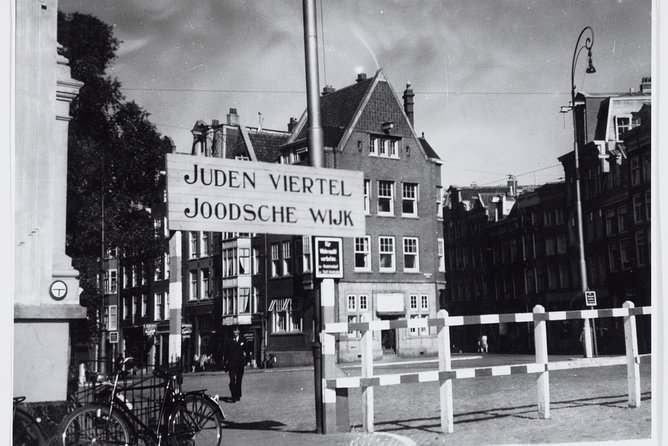
Amsterdam turns streets into a WWII classroom. This small-group walk follows the German occupation (1940–45) through places that still carry the weight of Jewish persecution and Dutch resistance. What makes it work is the way retired historians translate hard history into clear street corners, with context you can actually picture as you walk.
I like that the group stays tiny (up to 8), so you can hear every detail and ask questions without your guide having to shout over everyone. I also like the human touch from guides such as Peter or Ben, who use photos and notes to help you connect what you see today with what happened here then. One drawback: the tour stays outside and the subject matter is heavy, so if you want a lighter, museum-only day, this may feel too intense.
In This Review
- Key Things You’ll Notice on This WWII Amsterdam Walk
- Why This WWII Walking Route Feels More Real Than Museum Time
- How the Tour Runs With Retired Historians (and Why the Group Size Matters)
- Stop-by-Stop: Occupation Sites, Jewish Streets, and Postwar Echoes
- Start With the Occupation Footprint Across Amsterdam
- Outside Anne Frank House: The Story Without the Museum Detour
- Statue of Multatuli: A Shortcut to Seeing Change Over Time
- Magna Plaza (Former Post Office): When Paperwork Became Punishment
- Nieuwe Kerk Area and Mozes en Aäronstraat: Street-Level Naming as Memory
- Dam Square: May 1945 and the Ways Amsterdam Remembered
- Sofitel Legend The Grand Amsterdam (Former City Hall): The Welcome Moment in May 1940
- Ending at the National Holocaust Names Monument
- Price and Value for a 3 to 3.5 Hour Small-Group Experience
- Practical Tips for a Comfortable Walk (So You Don’t Miss Anything)
- Who Should Book This WWII Amsterdam Tour (and Who Might Want Something Else)
- Should You Book Amsterdam in World War II Tour?
- FAQ
- How long is the Amsterdam in World War II tour?
- How many people are in the group?
- Do we enter Anne Frank House during this tour?
- Are tickets included for the stops?
- Where do the tour start and end?
- What if the weather is bad or I need to cancel?
Key Things You’ll Notice on This WWII Amsterdam Walk
- Max group size of 8 means slower pacing and more back-and-forth
- Retired historians lead the tour, often with period photos and supporting materials
- Anne Frank House is only viewed from outside, not a museum visit
- Dam Square gets real context for May 1945 events and later memory
- You end at the National Holocaust Names Monument, so the story lands where it belongs
Weighing your options? Here is how a few other Amsterdam tours compare.
- Amsterdam: Heineken Experience Ticket including 2 Drinks
★ 4.6 · 36,014 reviews - Amsterdam Classic Saloon Boat Cruise with Drinks and Cheese
★ 5.0 · 31,825 reviews - Amsterdam Luxury Canal Cruise + Unlimited Drinks & Bites option
★ 5.0 · 30,518 reviews - Amsterdam: Rijksmuseum Entry Ticket
★ 4.7 · 29,512 reviews
Why This WWII Walking Route Feels More Real Than Museum Time
Amsterdam in World War II isn’t told as a list of dates. It’s told as geography—how occupation policies, deportation routes, propaganda, and survival played out street by street.
I love that you don’t just learn that Dutch Jews were targeted. You learn how the city’s institutions and locations were pulled into the machinery of occupation, and how the postwar city changed around those same places. That’s why the walk format matters. You start to feel why locals remembered what they saw, and why monuments exist in the first place.
And yes, it gets sad. But it’s also structured, with stops placed so you’re not hit with everything at once. The guides keep the pace and narration in a way that helps you keep up without feeling rushed.
How the Tour Runs With Retired Historians (and Why the Group Size Matters)
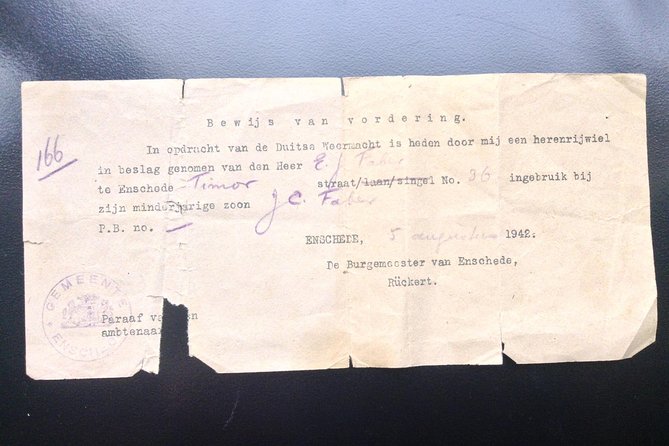
This tour is led by three retired historians who focus specifically on the German occupation of the Netherlands during the Second World War. In practice, that means you get explanations that stay grounded and specific—because the guides aren’t reading from a script.
Guides you may hear from include Peter and Ben, both praised for how prepared they are. People also mention that they show photos from the occupation period, plus maps and written materials you can take home. That approach is more than nice extras. It helps your brain anchor details so they don’t blur together after the tour.
The group size cap (up to 8) changes the experience in two big ways:
- You walk slowly, and the guide can adapt to the slowest pace in the group.
- You can actually ask questions, especially when something about Jewish heritage, resistance, or specific street locations sparks curiosity.
Stop-by-Stop: Occupation Sites, Jewish Streets, and Postwar Echoes
You’ll start in the morning at Prinsengracht 263 (9:30am), then walk toward the Holocaust Names Monument area. The route is designed so you’re seeing the city as a chain of connected places, not isolated landmarks.



Start With the Occupation Footprint Across Amsterdam
Your first long segment focuses on key sites and monuments tied to the Nazi occupation of Amsterdam (1940–45). This isn’t theory. It’s a guided path through the kinds of places where occupation decisions became real for the city’s residents—administration, public spaces, and the everyday “stage” where fear and control played out.
Even if you know WWII broadly, this part helps you swap “country-level history” for “city-level history.” Amsterdam stops feeling like a postcard, and starts feeling like a place where real people lived through an engineered nightmare.
Outside Anne Frank House: The Story Without the Museum Detour
You’ll then meet the Anne Frank House area from the outside. You hear the story about the German attack and the Jewish refugees, but you do not visit the museum as part of this experience.
This is an important choice. If you mainly want the guided context and don’t want to spend time waiting or buying tickets for the museum, this format can be ideal. It also keeps the day’s focus on the broader WWII thread around Amsterdam, rather than turning it into a single-venue visit.
If you do want museum time, you’ll need to plan for that separately since the Anne Frank House admission isn’t included here.
Statue of Multatuli: A Shortcut to Seeing Change Over Time
The walk also includes the Statue of Multatuli, with a stop near the Raadhuisstraat and the bridge over the Singel. This may sound like the kind of thing you’d skip on other tours, but here it plays a purpose: it’s a quick way to look at how Amsterdam changed after the war.
That matters because WWII history isn’t frozen. The city rebuilt, repurposed spaces, and created new landmarks over older scars. This stop gives you a breather while still keeping you in the story.
Magna Plaza (Former Post Office): When Paperwork Became Punishment
At Magna Plaza, you learn that it used to be the post office of Amsterdam during WWII. Dutch postmen were executed by the Germans, and the stop connects an ordinary civic function to the brutal enforcement of occupation.
This is one of those moments where you realize how total the Nazi system was. It didn’t only target people in hiding or on battlefields. It penetrated regular life—mail, work, and bureaucracy—and turned them into traps.
Nieuwe Kerk Area and Mozes en Aäronstraat: Street-Level Naming as Memory
The tour then touches the Nieuwe Kerk area and the street between the Royal Palace and the New Church, the Mozes en Aäronstraat. The point here is that street names and nearby religious landmarks can act like memory tools, even when you’re just walking by in modern shoes.
You’ll get the WWII story connected to that stretch, which helps you understand why the Jewish quarter and central Amsterdam neighborhoods are still talked about in relation to persecution and community life.
Dam Square: May 1945 and the Ways Amsterdam Remembered
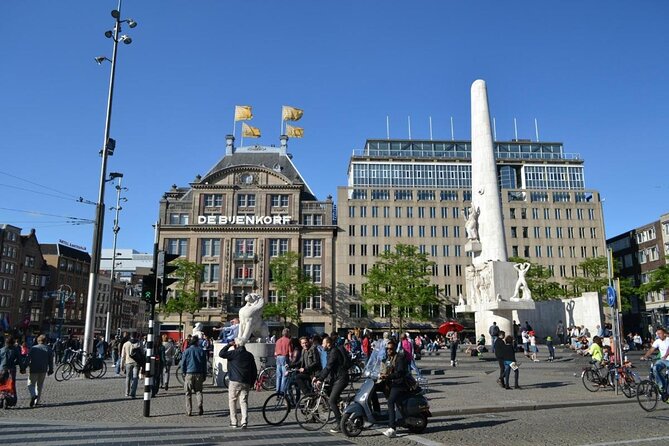
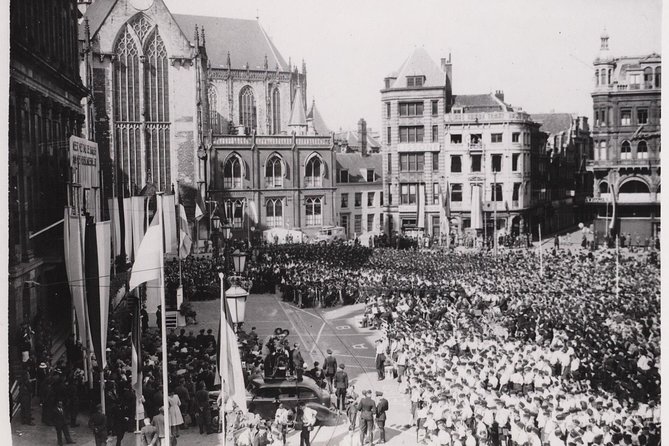
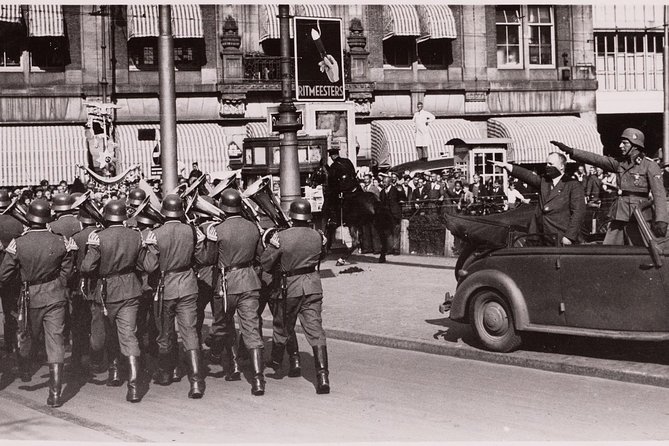
At Dam Square, the guide focuses on why this space mattered during the occupation. You’ll hear about the shooting incident on May 7, 1945, two days after the German surrender. You’ll also learn about Dutch volunteers being recruited here for the “crusade against Bolshevism,” plus the way May 4 remembrance fits into postwar memory and the story tied to the WWII monument.
Dam Square can feel like a busy, commercial centerpiece in normal life. On this walk, it becomes something else: a stage for late-war chaos and immediate post-surrender decisions.
Sofitel Legend The Grand Amsterdam (Former City Hall): The Welcome Moment in May 1940
You finish at or near Sofitel Legend The Grand Amsterdam, also known as The Grand. Here, the key detail is that the hotel was the City Hall during WWII, and German troops were welcomed by Dutch civil servants on May 15, 1940.
That fact hits hard because it’s not just about German actions. It forces you to think about Dutch institutions and choices at the start of occupation. It’s the kind of stop that makes the later suffering feel even more complex and real.
Ending at the National Holocaust Names Monument
Your tour ends at the National Holocaust Names Monument, close to the Portuguese Synagogue and not far from the city hall area. Ending here matters. The story doesn’t just stop when you’re back on a tram. It lands at a place built for remembrance, where names turn history into people.
Price and Value for a 3 to 3.5 Hour Small-Group Experience
At $46.44 per person, this tour sits in a reasonable range for a focused, guided walking experience in central Amsterdam. The value isn’t only the guide—it’s the way you get structured context across multiple key locations without needing to manage lots of separate ticket purchases.
Also, most stops have free admission, and the tour is built around walking and interpretation rather than “pay-per-stop” museum hopping. The one notable exception is that Anne Frank House is not included, and you don’t go in during this experience.
If you’re trying to do a WWII-focused day without spending most of your time inside timed-entry lines, this format can be a smart use of time. You still get the big anchor sites, plus supporting streets and civic locations that many general tours miss.
Practical Tips for a Comfortable Walk (So You Don’t Miss Anything)
This is about 3 hours, sometimes up to 3.5 hours, and you walk slowly. Wear comfortable shoes. The pace is gentle, but you are on your feet through multiple central-city stops.
It’s also weather-dependent. Good weather is required, and if conditions are poor, you’ll be offered a different date or a full refund. That’s a big deal in Amsterdam because rain can turn “slow walking” into “slippery walking,” and you don’t want that when the stories are emotionally intense.
One thing I’d plan for: bring a layer. People describe it as chilly and windy at times, and you’ll likely appreciate being able to stay comfortable without cutting the tour short.
Who Should Book This WWII Amsterdam Tour (and Who Might Want Something Else)
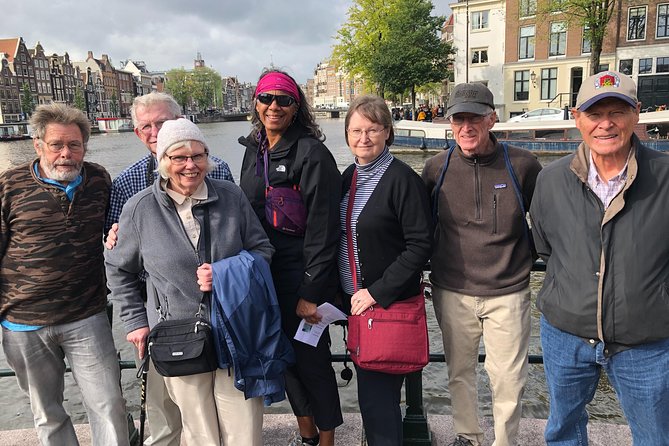
Book it if you:
- Want city-specific WWII context, not just general European WWII highlights
- Prefer small groups and guided walking with room for questions
- Care about Jewish heritage in Amsterdam and how the occupation reshaped everyday life
- Like guides who use photos and maps to connect past and present
Consider skipping if you:
- Want a mostly upbeat Amsterdam day with light cultural stops
- Prefer museum entry over outdoor viewing
- Are looking for a short, casual overview rather than a guided historical route
Should You Book Amsterdam in World War II Tour?

Yes—if you’re even slightly serious about WWII and you want the story to feel tied to real addresses, this tour is a strong bet. The small group size, the retired-historian approach, and the way the route moves from occupation, to Jewish-targeted spaces, to final remembrance at the Holocaust Names Monument all work together.
If you’re sensitive to heavy topics, plan your day around this. Start rested, wear comfortable shoes, and give yourself time afterward to decompress.
FAQ
How long is the Amsterdam in World War II tour?
It runs about 3 hours to 3 hours 30 minutes.
How many people are in the group?
The tour has a maximum of 8 travelers.
Do we enter Anne Frank House during this tour?
No. You start outside Anne Frank House and hear the story, but the museum is not visited. Admission is not included for Anne Frank House.
Are tickets included for the stops?
Anne Frank House admission is not included. The other listed stops have admission tickets marked as free.
Where do the tour start and end?
The tour starts at Prinsengracht 263, 1016 GV Amsterdam at 9:30am. It ends at the National Holocaust Names Monument near the Portuguese Synagogue and not far from the city hall.
What if the weather is bad or I need to cancel?
The experience requires good weather. If it’s canceled because of poor weather, you’ll be offered a different date or a full refund. Free cancellation is available up to 24 hours in advance for a full refund.
More Tours in Amsterdam




More Tour Reviews in Amsterdam





Just added: fresh Amsterdam tour reviews




Tours, compared.
 ★ 4.6Zaanse Schans, Edam, Volendam & Marken Bus TourFrom $3215,034 reviews
 ★ 4.8Amsterdam Anne Frank: Small-Group Walking Tour & Local GuideFrom $2912,789 reviews
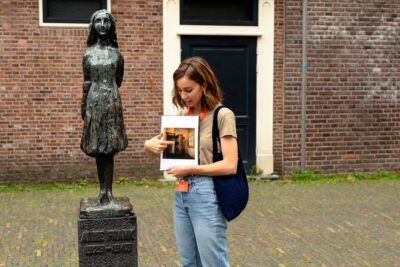 ★ 5.0Anne Frank’s Story – Guided Walking Tour through AmsterdamFrom $3911,619 reviews
 ★ 4.6Johan Cruijff ArenA Tour with Optional GuideFrom $328,954 reviews
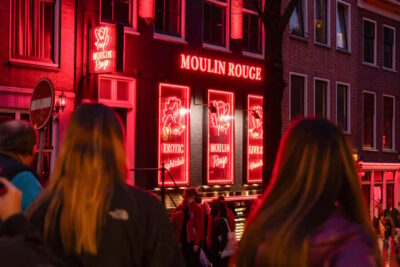 ★ 4.9Red Light District Tour in DE/EN/IT/ES/FRFrom $287,136 reviews
 ★ 4.7Big Bike tour Amsterdam – See all in 3 unforgettable hoursFrom $344,929 reviews
 ★ 4.4Guided Zaanse Schans, Windmills & Cheese TourFrom $224,826 reviews
 ★ 4.0Windmill Tour from Amsterdam, Including Volendam & MarkenFrom $374,572 reviews