
Reviewed · MUSEUMS
Amsterdam: Houseboat Museum Entry Ticket
A floating home with a past. On board the Hendrika Maria, Amsterdam’s Houseboat Museum turns a 1914 cargo ship into a lived-in home story from 1967, and the visit feels both practical and personal. I loved the clear, hands-on walk through how a family of four lived when the boat was still a freight barge, and I also enjoyed the 1970s interior look that makes the whole place feel like a time capsule. One heads-up: the boat is tight, and the stairs are steep, so it may be awkward if you don’t do stairs well.
You’ll tour an actual houseboat—so don’t expect wide hallways or museum-style flow. Instead, you’re moving through real rooms and real corners, where details matter: colors, layout, and even old navigation-minded sailing gear.
The experience is also quick compared with big museums. If you expect a long, wandering afternoon, plan your expectations around a shorter, story-focused visit—though if you slow down and read/listen, there’s plenty to notice.
In This Review
- Key things to know before you go
- The Hendrika Maria: a 1914 freight ship turned houseboat
- Inside the 1970s interior: why the colors and layout feel real
- How a family of four lived aboard a freight barge
- The mast and leeboard: practical sailing gear you can actually see
- The museum route: what the tour feels like in real time
- Space, stairs, and comfort: plan for the boat’s real constraints
- Price and value: is $12 a good deal here?
- Languages and how you’ll experience the commentary
- Where this fits in your Amsterdam day plan
- Who should book this ticket (and who should pause)
- Should you book the Amsterdam Houseboat Museum ticket?
- FAQ
- How long does the Houseboat Museum visit take?
- What is the Houseboat Museum located on?
- Is the entrance ticket price $12?
- What’s included in the ticket?
- Are food and drinks included?
- Can I take photos inside?
- What languages are available during the visit?
Key things to know before you go
- Real ship, real conversion story: A 1914 freight vessel turned into a houseboat in 1967
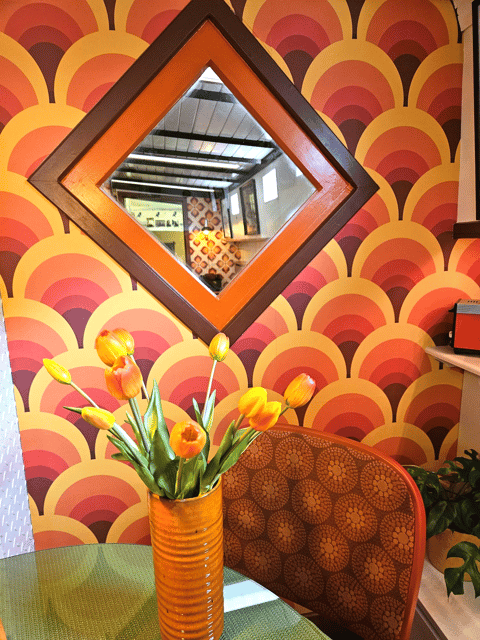
- The look is part of the point: interior design stays close to its 1970s usage period
- A family-of-four perspective: you’re shown how people actually lived on board
- Practical sailing details: a sailing mast and leeboard are still there to explain how it worked
- Tight layout: space can feel limited as you move through rooms
- Photography rules: photos allowed, but flash isn’t permitted inside
Still deciding? A few more Amsterdam tours worth a look
- Amsterdam: Heineken Experience Ticket including 2 Drinks
★ 4.6 · 36,014 reviews - Amsterdam: Rijksmuseum Entry Ticket
★ 4.7 · 29,512 reviews - Amsterdam: Icebar Entry Ticket with 3 Drinks
★ 4.2 · 14,562 reviews - Amsterdam: The Upside Down Experience Entrance Ticket
★ 4.4 · 11,918 reviews
The Hendrika Maria: a 1914 freight ship turned houseboat
This museum is housed on a single boat: the Hendrika Maria. It started life as a cargo ship in 1914, used for freight work—then it was converted into a residential houseboat in 1967. That date matters because it marks a clear before-and-after. You’re not just looking at decor; you’re seeing how one kind of life became another.
As you move around, the story doesn’t stay abstract. You’ll learn how the ship functioned when it was still used for transportation, including references to routes like sailings to Scandinavia for practical reasons. Even if you’re not a sailing-history person, the museum connects the dots: the layout and fixtures make more sense once you understand the boat’s original job.
And because this is the only Houseboat Museum in Amsterdam, it has a slightly different feel than a typical “collection” museum. It’s more like being given a guided walk through someone’s old neighborhood—only that neighborhood happens to be a ship.
Inside the 1970s interior: why the colors and layout feel real
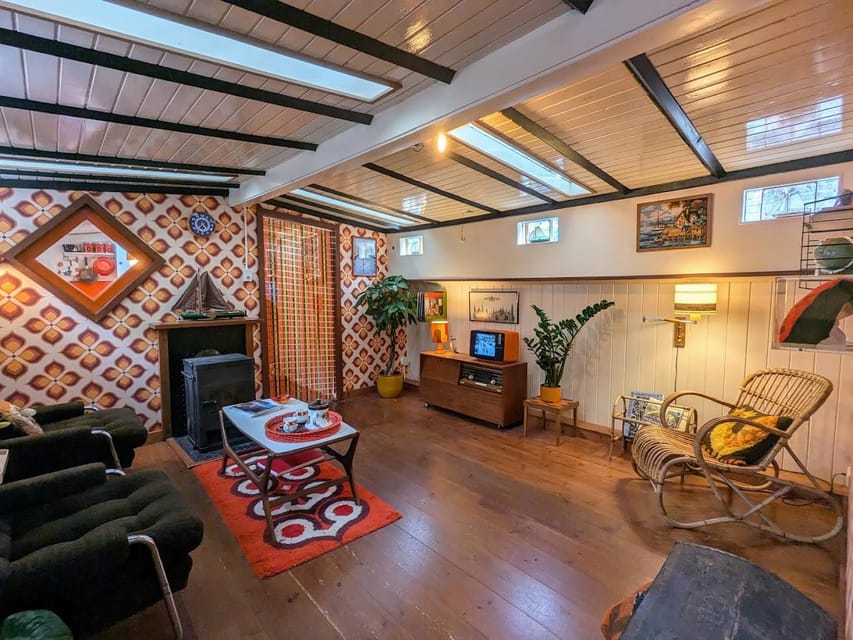
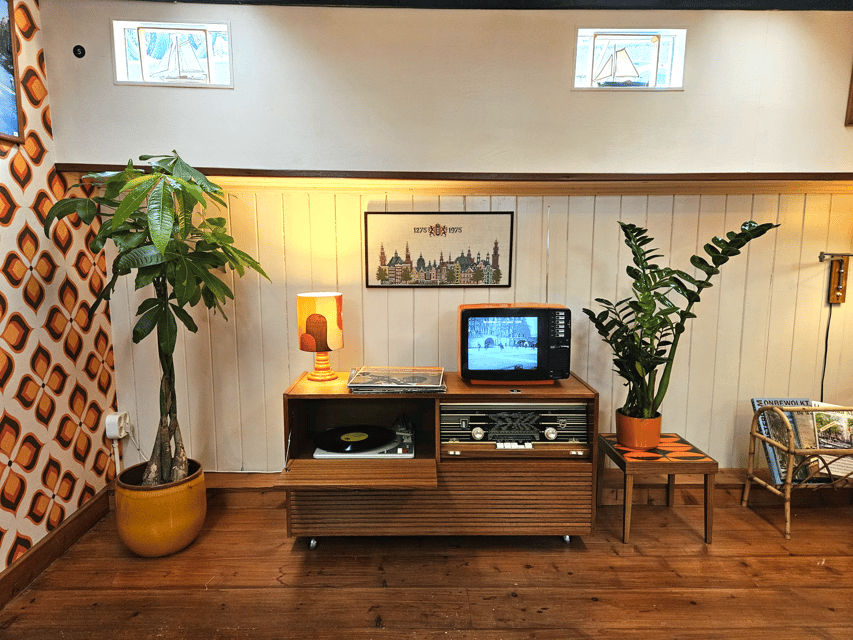
One of my favorite parts of this museum is how it stays visually true. The interior is described as original from the 1970s, when it began being used as a regular house. So yes, you’ll see that classic throwback palette—orange, yellow, and brown—plus the kind of practical furnishings and built-ins that made sense for tight quarters.
This is where the experience becomes more than photos and facts. The colors and the way rooms are arranged help you understand daily life. On a boat, you live with the shape you’re given. So instead of “staging” a modern home, the museum shows a home that evolved under real limitations: narrow spaces, limited storage, and everything close at hand.
You also get a sense of continuity. The museum doesn’t feel like it’s trying to impress you with a polished redesign. It feels like it’s keeping the character of a period when people adapted their living space to the boat they had.
How a family of four lived aboard a freight barge
The museum focuses on people, not just the vessel. You’ll see how a family of four used the ship as a home when it was still connected to freight life—then how living changed as it shifted into residential use.
What I like about this approach is that it forces you to picture real routines. On land, you can separate work areas from living areas with doors, hallways, and rooms that each have room to breathe. On a houseboat, those boundaries are tighter. The museum’s layout helps you understand that the boat wasn’t only transport—it was the place where life happened.
The commentary and interactive elements are built to connect history to lived detail. Expect a lot of shared knowledge as you go, not just a single lecture at the start.
Practical tip: slow down for the room-to-room transitions. In smaller spaces, it’s easy to rush past what matters most—like how you’d move around day to day, how storage and functions might be grouped, and where you’d naturally pause to work or eat.
More gallery time in Amsterdam
The mast and leeboard: practical sailing gear you can actually see
A fun detail here is that you’re not only walking through domestic rooms. The boat also has original sailing elements, including a sailing mast and a leeboard. The museum explains how these features were useful back when the boat went to places like Scandinavian countries for transportation.
That’s a big deal because it turns the boat from “a cute house” into “a functioning vehicle.” Even if you don’t know the sailing terms, seeing physical parts like a mast helps you understand why the interior and exterior setup is the way it is.
It’s also a good moment for photos (just remember: flash is not allowed inside). The boat’s structure gives you angles that don’t feel like a typical museum interior—more like you’re on a real vessel where the past still has hardware.
The museum route: what the tour feels like in real time
This experience is designed as an on-boat walkthrough with interaction and guided information. Since it’s in a real houseboat, the path is shaped by the boat itself. That means you’ll likely go through a sequence of rooms that feel compact and slightly winding—exactly what you want if you’re there for atmosphere and story.
Duration is listed as 1 day, with starting times depending on availability. In practice, the tour won’t feel like a full half-day museum marathon. One common takeaway from visitors is that it can be a short visit if you move quickly. If you want to get your money’s worth, treat it like a slow read: pause in each room, follow the spoken/interactive explanation, and look closely at the small details.
A helpful strategy is to decide what you care about most before you step aboard:
- If you care about living history: spend extra time on how a family used the space
- If you care about design: focus on the 1970s interior look and how the home functions in tight areas
- If you care about ship function: don’t rush past the mast and leeboard details
Space, stairs, and comfort: plan for the boat’s real constraints
I’m going to be direct about this: the museum is in a working-style houseboat layout, so space may be limited and there are steep stairs. This is the main consideration that can change your experience from great to stressful.
If you’re comfortable with steps and you don’t mind close quarters, you’ll probably enjoy the intimacy. On the other hand, if stairs are a challenge for you, this is worth thinking through carefully ahead of time. There’s no indication of an alternate route, so don’t assume you can avoid the steep sections.
Also, because it’s a boat, you’ll feel the movement of an environment built for water life. Even when it’s stable, the layout is different from a typical interior museum, and that can be part of the charm—or part of the annoyance, depending on your comfort level.
Price and value: is $12 a good deal here?
The entry ticket price is listed at $12 per person. For a compact, story-based museum, that can be a great value if you like “small scale, big meaning” experiences. The strongest value comes from the fact that you’re not just reading about a houseboat—you’re standing inside a specific converted ship, with a defined time period and physical features to match the story.
That said, this isn’t a sprawling museum with dozens of rooms and hours of wandering. If you go in expecting a long visit, the price can feel high. If you’re open to a focused tour—where the goal is learning how people lived—$12 feels more reasonable.
My rule of thumb: treat it like a “stop with payoff,” not a main event you fill your whole day with. Pair it with other Amsterdam waterfront sights and you’ll likely feel satisfied. Make it the only activity you planned, and you might wish you had allowed more time for browsing/lingering.
Languages and how you’ll experience the commentary
The museum is hosted with staff who can speak multiple languages, including English, French, Traditional Chinese, German, Spanish, Portuguese, Italian, and Dutch. That’s a nice practical advantage in Amsterdam, where people often mix languages on short tours.
You’ll get a lot of shared knowledge through the visit, and the museum is described as interactive. In other words, it’s not only about reading plaques. You’re being guided through the ship’s layout, with explanations tied to how life worked on board.
If you’re traveling in a group and you want everyone to understand, this language flexibility helps. If you’re solo, it’s also reassuring—you can still expect the story to land, not get lost in translation.
Where this fits in your Amsterdam day plan
This stop works best when you build your day around water and old-city texture. Amsterdam is full of canals, historic houses, and maritime references, and this museum adds a rare angle: domestic life inside a former cargo vessel.
If you like:
- history that feels tactile (not behind glass only)
- small places with specific stories
- learning how design changes when transportation changes
…you’ll likely enjoy it.
If you’re more in a “big-ticket sights all day” mindset, treat this as a short, meaningful break. It’s also a good option when the weather is tricky. You’re inside a ship-like space with guided storytelling, rather than stuck outdoors.
Who should book this ticket (and who should pause)
This is a strong choice if you want a hands-on look at how ordinary people adapted a ship into a home. The family-of-four angle and the preserved 1970s interior details are exactly the kind of thing that makes a visit memorable.
It’s also a good fit for travelers who like practical history—the kind where you can see tools, layout, and everyday choices.
I’d pause if:
- stairs and tight spaces are a challenge for you
- you prefer long attractions with lots of room to roam
- you want a meal/comfort break as part of the experience (food and drinks aren’t included)
If that’s you, you can still have a great time—but you’ll want to plan around comfort and timing.
Should you book the Amsterdam Houseboat Museum ticket?
Yes, I think you should book if you’re excited by how a specific boat was converted and used as a home. For $12, the real value is the combination of the boat’s identity (Hendrika Maria), the 1967 conversion story, and the preserved 1970s interior feel. It’s short, so it’s best when you pair it with other Amsterdam sights rather than relying on it to fill your entire day.
FAQ
How long does the Houseboat Museum visit take?
The experience is listed as lasting 1 day. Starting times depend on availability, and the visit itself is typically shorter since it’s on a single boat with limited space.
What is the Houseboat Museum located on?
The museum is on the Hendrika Maria, a 1914 cargo ship that was converted into a residential houseboat in 1967.
Is the entrance ticket price $12?
Yes, the entry ticket price is listed at $12 per person.
What’s included in the ticket?
The ticket includes entrance to the Houseboat Museum.
Are food and drinks included?
No. Food and drinks are not included.
Can I take photos inside?
Yes, photography is allowed. Flash photography is not permitted inside the museum.
What languages are available during the visit?
The host or greeter is available in English, French, Traditional Chinese, German, Spanish, Portuguese, Italian, and Dutch.
More Amsterdam Museums






More Tickets in Amsterdam






More Tour Reviews in Amsterdam




Just added: fresh Amsterdam tour reviews





Museums, compared.
 ★ 4.2Red Light Secrets Museum Entry TicketFrom $175,722 reviews
 ★ 4.5Amsterdam’s Weirdest Museum: Ripley’s Believe It or Not!From $264,920 reviews
 ★ 4.6Van Gogh Museum Ticket and City Canal CruiseFrom $473,899 reviews
 ★ 4.5Van Gogh Museum Ticket & Canal CruiseFrom $473,304 reviews
 ★ 4.4NEMO Science Museum TicketFrom $252,979 reviews
 ★ 5.0Van Gogh Museum Amsterdam Exclusive Tour w/ Reserved EntryFrom $1731,760 reviews
 ★ 4.0Moco Museum Amsterdam Admission Ticket with Banksy and moreFrom $271,745 reviews
 ★ 5.0Van Gogh Museum Tour Reserved Entry Semi PrivateFrom $1731,437 reviews
Browse the lists this tour appears in