
Reviewed · AMSTERDAM FOOD TOURS
Amsterdam : Guided Cultural Food Tour
Food and history walk well together. This Amsterdamliebe cultural food tour turns major sights into quick, understandable stories, so you walk away knowing what you just saw and why it matters. I like the small group size (max 15), which keeps the pace relaxed and makes questions feel easy. I also like that it’s English-guided, with clear explanations that connect the city’s past to what you’re looking at right now.
One thing to plan for: several big landmarks on the route are brief looks only, and tickets for places like the Anne Frank House, Westerkerk, and Begijnhof are not included. You’ll get context and orientation, but if you want full entry, you’ll need to sort that separately.
In This Review
- Key things I’d highlight before you go
- Why This 2.5-Hour Food-and-History Walk Works
- Group Size, Pace, and the Snack Factor
- Start at National Monument: How the City’s Story Begins
- Dam Square and the Royal Palace Angle (Without Getting Lost)
- Royal Palace Amsterdam and Oude Kerk: Monarchy Meets the Oldest Church
- Beurs van Berlage and Magna Plaza: Trade Power to Post Office Past
- Multatuli Statue: The Colonial Story Behind the Money
- Jordaan and the Nine Little Streets for Food and Walking Tips
- Quick Looks at Anne Frank House, Westerkerk, and Begijnhof
- Price and Value: What You’re Really Paying For
- Who This Tour Fits Best
- Should You Book This Amsterdamliebe Tour?
- FAQ
- How long is the Amsterdam guided cultural food tour?
- How much does it cost per person?
- Is the tour in English?
- How big is the group?
- What’s included in the price?
- Are tickets included for every stop?
- Where do you meet, and where does the tour end?
- Do I need to show up with a physical ticket?
- Does the tour run in any weather?
Key things I’d highlight before you go
- Max 15 people keeps it personal, not a cattle-car tour
- 2.5 hours walking is long enough to connect dots, short enough for a busy day
- Snacks included means you can actually enjoy the food part without hunting for a bite right away
- A tight loop from Dam to Spui helps you cover key neighborhoods efficiently
- Multiple “not-included” sights are quick visual stops, not full museum visits
Still hungry? More Amsterdam food walks and tastings
- Amsterdam: Traditional Dutch Syrup Waffle Making Workshop
★ 4.8 · 4,093 reviews - 10 Tastes of Amsterdam: Food Tour by UNESCO Canals and Jordaan
★ 5.0 · 3,020 reviews - Amsterdam: Light Festival Cruise + Stroopwafel & Hot Choco
★ 3.7 · 1,577 reviews - Amsterdam: Premium Henri Willig Cheese Tasting Experience
★ 4.7 · 1,106 reviews
Why This 2.5-Hour Food-and-History Walk Works

Amsterdam can feel like a series of postcard backdrops. This tour fixes that. It uses food-story pacing to give you a simple narrative: how the city formed, where its power came from, and how everyday places grew out of that.
You’ll also notice the guide keeps you moving at a human tempo. There are 12 main stops, but they’re short—just right for staying alert on cobblestones. I like that the focus isn’t on fancy theory. It’s on what you can see, plus the meaning behind it.
Group Size, Pace, and the Snack Factor
This is a small-group tour capped at 15 travelers, which matters in Amsterdam. In big groups, you’re mostly dodging bodies and hoping you catch a sentence over the street noise. Here, the guide can actually speak to you like a person.
The duration is about 2 hours 30 minutes, and you’ll be on your feet the whole time. That’s not extreme, but it is real walking. If you’re doing Amsterdam on a tight schedule, plan for this to be a “get oriented” block: you’ll start at Dam Square and finish near Spui, close to more dining options.
Snacks are included, and that’s a big practical win. Food tours without snacks often turn into a lot of stopping and waiting. With snacks in the mix, you can keep your energy up and still enjoy the cultural stops.
Start at National Monument: How the City’s Story Begins
You begin on the steps at the National Monument by Dam (the tour lists it as admission ticket free). It’s a natural starting point because it frames the city as more than canals and bicycles—it ties Amsterdam to national identity.
From there, your guide lays out how Amsterdam’s roots reach back to the 13th century. Even if you’ve been to Amsterdam before, this kind of timeline helps you stop seeing the city as random streets. You start noticing cause and effect: power, trade, and politics shaping where people live and what gets built.
Other plates and glasses worth crossing Amsterdam for

Dam Square and the Royal Palace Angle (Without Getting Lost)

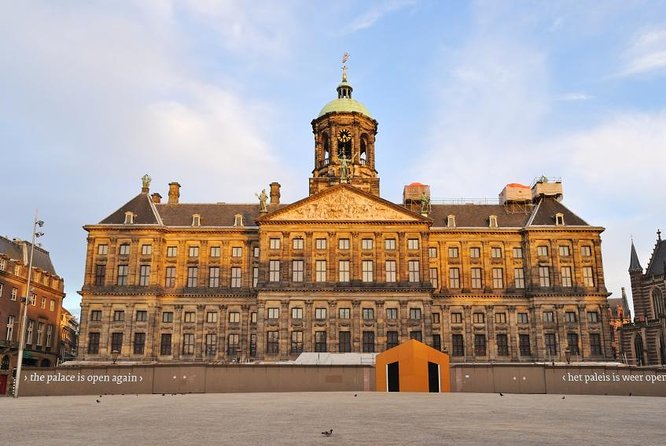
Next up is Dam Square, again marked as admission ticket free. This is Amsterdam’s central stage, and the tour uses it well. You learn how the city grew from a small fishing village into the place that became known for wealth and influence.
You’ll also walk past the royal palace story and spend time thinking about World War II victims as you’re near the National Monument. That’s a meaningful pairing with the “food and culture” theme. It reminds you that cities eat and trade and build—but they also suffer, remember, and change.
One consideration: since you’re on public streets, you’ll be reading history while also navigating crowds. It’s not difficult, but it does mean you should expect to move with the flow.
Royal Palace Amsterdam and Oude Kerk: Monarchy Meets the Oldest Church

Then it’s onto Royal Palace Amsterdam (admission ticket free on the tour route). The key value here is not just the building itself. It’s the discussion of the role of monarchy in contemporary times, so the palace stops being a static photo background and becomes part of the living political story of the Netherlands.
After that comes Oude Kerk, the oldest church on the tour route (also listed as admission ticket free). This stop adds a surprising connection: the guide talks about how the area that became the red light district formed in the 14th century. Whether you’re curious, cautious, or just plain curious about Amsterdam’s layers, this is one of the better stops for getting context quickly.
If you’d rather keep things strictly “pretty Amsterdam,” this stop might feel heavier. But it also makes the city make sense.
Beurs van Berlage and Magna Plaza: Trade Power to Post Office Past

At Beurs van Berlage, you get a clear lesson on Amsterdam’s trade history and the Golden Age (listed as admission ticket free). The point isn’t to memorize dates. It’s to understand why this city looked the way it did—wealth didn’t appear out of nowhere, and architecture often reflects that.
Next is Magna Plaza, described as the impressive former post office. It’s a short stop on purpose, but it’s useful. Modern shopping spaces often sit inside older structures, and realizing that helps you read Amsterdam’s “new” places as part of older stories.
If you like architecture, you’ll enjoy this pairing: big trade ambitions first, then how those buildings get reused once the era shifts.
Multatuli Statue: The Colonial Story Behind the Money

A statue stop can sound like filler, but the Multatuli statue is used for a clear reason: it turns attention to the darker side of colonialism and how it fueled Dutch riches—along with criticism.
You’ll also hear about Multatuli, one of the important Dutch authors referenced on this route. That combination—history plus literature—helps the topic feel more human. Instead of only reading political summaries, you’re tied to someone who pushed back through writing.
If you’re sensitive to heavy themes, note that this part of the tour is honest. Still, it stays framed as context for why Amsterdam became what it became.
Jordaan and the Nine Little Streets for Food and Walking Tips
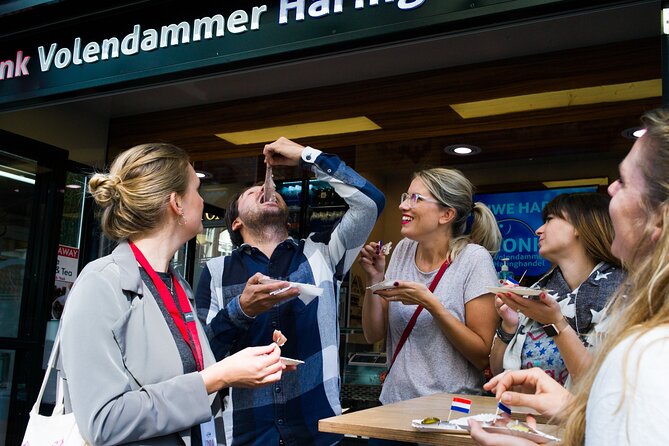
Now you get into neighborhood mode: the Jordaan (admission ticket free) and the 9 Little Streets (Negen Straatjes). This is where the tour shifts from major-history facts into practical “how to enjoy the city” guidance.
In the Jordaan stop, you learn about the neighborhood’s story and how the cute little houses came to be. Then at the Nine Straatjes area, the guide gives tips for bars, restaurants, and shopping. That’s the part I think most visitors actually want. You see the pretty streets, sure—but you also leave with ideas for what to do next.
One smart detail: these stops feel designed for your second act. Once you understand the neighborhoods’ background, picking where to eat becomes simpler. You’re not asking what’s good; you’re choosing from places that fit the vibe you just learned.
Quick Looks at Anne Frank House, Westerkerk, and Begijnhof
The tour includes three major stops that are more like orientation than full visits.
First: a brief view of the Anne Frank House. The tour lists admission as not included, so you’re not getting entry here. Still, it’s a useful moment because it puts a globally known site into the wider map of Amsterdam streets and makes the location click.
Next: Westerkerk, another big church stop with admission not included. You get the chance to see it in person and understand why it’s considered one of the biggest and most beautiful churches in Amsterdam, without committing time to entry.
Finally, Begijnhof. This is one of those places where the “feel” matters. The tour notes that you can try to spot the church hidden inside. That’s a key idea for how you should approach it: don’t rush. Even on a short stop, take a slow look and notice how courtyards and entrances change the mood of a street.
If you want full access and deeper time inside these places, treat this tour as the opener. Plan to come back later when you can slow down and buy tickets.
Price and Value: What You’re Really Paying For
At $102.41 per person, this isn’t a bargain-basement walking tour. But for Amsterdam, it’s also not outrageous—especially with what’s included.
You’re getting:
- a guided walk for about 2.5 hours
- snacks
- an included 1.50€ tourist tax
- a small max group size (15)
- a route that covers key sights across neighborhoods
The value here is efficiency plus interpretation. You’re not just collecting names of landmarks—you’re getting the story behind why each one exists, how the city changed, and what themes connect the stops (power, trade, colonial history, and the day-to-day city life you’re walking through).
If you’re the type who likes structure—someone to point, explain, and keep you from wandering in circles—this price starts to make sense. If you prefer totally free roaming with a map and guidebook, you might feel like you can do parts yourself. But you’d lose the guided connections that make the city click.
Who This Tour Fits Best
This is a strong match for you if:
- you want a history-plus-food intro without spending all day on museums
- you like asking questions and getting direct answers
- you’d rather cover a lot of Amsterdam in a focused route than pick just one neighborhood
It can be less ideal if:
- you need lots of time inside major sights (because some are brief look stops)
- you’re avoiding walking or cobblestones for long stretches
Language is English, and the tour lists that most travelers can participate. It also mentions service animals are allowed, which is helpful to know if that affects your planning.
Should You Book This Amsterdamliebe Tour?
If you want an Amsterdam “first read,” I’d book it. The route takes you from National Monument through Dam Square and on into neighborhoods like Jordaan and the Nine Straatjes, while still giving context at every step. That mix of culture and practical food-neighborhood tips is exactly how you turn sightseeing into a trip.
I’d book it even more confidently if you’re planning meals around the areas you’ll visit after the tour. Finish near Spui, then follow the guide’s suggested area flow to keep your day moving.
Just go in knowing the tradeoff: you’re getting orientation and stories, not full timed entries to every major stop. If that’s your style, you’ll likely love the way the city comes together in one smooth walking loop.
FAQ
How long is the Amsterdam guided cultural food tour?
The tour lasts about 2 hours 30 minutes (approx.).
How much does it cost per person?
The price is $102.41 per person.
Is the tour in English?
Yes, the tour is offered in English.
How big is the group?
The tour has a maximum of 15 travelers, keeping it an intimate walking experience.
What’s included in the price?
You get the 2.5-hour walking tour, a guide, snacks, and 1.50€ tourist tax.
Are tickets included for every stop?
Not all stops include admission. The tour lists Anne Frank House, Westerkerk, and Begijnhof as admission ticket not included, while other listed stops are marked free.
Where do you meet, and where does the tour end?
You start at National Monument Dam, 1012 JS Amsterdam and end at Art Amsterdam Spui, Spui 20HS, 1012 XA Amsterdam on Spui Square.
Do I need to show up with a physical ticket?
You’ll have a mobile ticket.
Does the tour run in any weather?
It requires good weather. If it’s canceled due to poor weather, you’ll be offered a different date or a full refund.
More Tours in Amsterdam






More Tour Reviews in Amsterdam






Tasting Amsterdam, Stop by Stop



Just added: fresh Amsterdam tour reviews





Amsterdam Food Tours, compared.
 ★ 4.8Traditional Dutch Syrup Waffle Making WorkshopFrom $234,093 reviews
 ★ 5.010 Tastes of Amsterdam: Food Tour by UNESCO Canals and JordaanFrom $1023,020 reviews
 ★ 3.7Light Festival Cruise + Stroopwafel & Hot ChocoFrom $311,577 reviews
 ★ 4.7Premium Henri Willig Cheese Tasting ExperienceFrom $211,106 reviews
★ 5.0Amsterdam Traditional Dutch Syrup Waffle Making WorkshopFrom $27960 reviews
★ 4.7Premium Henri Willig Cheese Tasting ExperienceFrom $211,106 reviews
★ 5.0Amsterdam Traditional Dutch Syrup Waffle Making WorkshopFrom $27960 reviews
 ★ 4.9Zaanse Schans, Cheese Tasting & Volendam TourFrom $20679 reviews
 ★ 4.0Zaanse Schans and Cheese Tasting Guided Tour from AmsterdamFrom $45661 reviews
 ★ 4.7Dutch Cheese Tasting Experience with WineFrom $23658 reviews
Browse the lists this tour appears in