
Brunch on canal water is the best kind of detour. This Amsterdam Brunch Cruise with Bubbles mixes a short guided ride through famous waterways with a proper spread of artisan sandwiches and pastries, plus Prosecco and beer. You’re floating past big names and small details in just about an hour.
I especially like the small-group size (max 12). That makes it easier to chat with the captain-guide, like Lex and Julian, who both come across as friendly and genuinely invested in sharing what you’re seeing. I also like that the brunch is handled well: artisan sandwiches and pastries, coffee and tea, orange juice, water, and the option of Prosecco and Heineken.
One thing to plan for: it’s time on the water, so you’ll want warm layers even when the sky looks grey. And while you’ll pass major sites like the Anne Frank House area, this isn’t set up as an admission-heavy stop—you’re mainly seeing it from the canal.
In This Review
- Key Things I’d Actually Remember From This Cruise
- A One-Hour Canal Brunch That Fits Real Travel Days
- The Price: Why $59.15 Feels Reasonable Here
- What You Get for Your Money: Brunch, Bubbles, and a Real Guide
- Boarding Point: Start at Amstel 51F and Float Back Again
- Stop-by-Stop: What You’ll See and Why Each Place Matters
- Herengracht: Grand Canal Belt Views Without the Fuss
- Reguliersgracht: The 7 Bridges Shot You Can Actually Make
- Jordaan: Working-Class Design, Garden-Style Street Names
- The Anne Frank House Area: A Respectful Pass, Not an Admission Stop
- Westerkerk: The Tower, the Renaissance Shape, and the Crown Story
- Prinsengracht: A More Modest Canal Between Worlds
- Canal Ring (Grachtengordel): UNESCO Scale You Can Picture
- Amstelkerk: A Church With a Time-Bending Twist
- Magere Brug (Skinny Bridge): The Film-Famous Narrow Drawbridge
- H’ART Museum / Hermitage Annex: Art in a Building That Used to Be a Nursing Home
- Blauwbrug: Blue Railings, Paris Inspiration, and Imperial Crowns
- Drinks and Brunch: The Relaxed Part That Makes the Hour Feel Worth It
- Who This Cruise Fits Best (and Who Might Want Something Else)
- Should You Book the Amsterdam Brunch Cruise with Bubbles?
- FAQ
- FAQ
- How long is the Amsterdam Brunch Cruise with Bubbles?
- What does the tour cost?
- What’s included with the brunch?
- Are Prosecco and beer included?
- Is the guide offered in English?
- Where do I meet for the cruise?
- Do I need a printed ticket?
- Can I cancel for a full refund?
Key Things I’d Actually Remember From This Cruise
- Prosecco and Heineken with your brunch plus coffee, tea, orange juice, and water
- Max 12 people, which keeps the mood relaxed and the questions coming
- The 7-bridges view at Reguliersgracht for that rare one-shot photo moment
- Iconic bridges like Magere Brug (Skinny Bridge) and Blauwbrug, seen up close from the water
- UNESCO canal-ring facts you can picture fast, including the scale of the bridge-and-canal network
- Bring warm clothes, because wind on the water can surprise you
Dinner, drinks and a boat: more Amsterdam evening cruises
- Amsterdam: Evening Cruise with Optional Wine and Snacks
★ 4.4 · 22,178 reviews - Amsterdam: Covered Canal Booze Cruise with Unlimited Drinks
★ 4.7 · 5,435 reviews - Amsterdam: Original Pizza Dinner Cruise + Unlimited Drinks
★ 4.5 · 2,668 reviews - Amsterdam: Canal Booze Cruise with Unlimited Drinks Option
★ 5.0 · 2,130 reviews
A One-Hour Canal Brunch That Fits Real Travel Days
Amsterdam has a million ways to sightsee. This works because it’s short, social, and structured without feeling rushed. You’re still doing the classic canal-cruise thing, but with food and bubbles in the mix, so the time passes quickly and comfortably.
At about an hour on the water, it’s a solid option on a day when you also want museums, neighborhoods, or just wandering without a strict schedule. And because it’s a small group, you’re less likely to feel like you’re part of a moving crowd.
Also, you get a guide in English (and Dutch). That bilingual setup matters if your group includes different language comfort levels.
The Price: Why $59.15 Feels Reasonable Here
At $59.15 per person, the obvious question is: what am I buying beyond a boat ride? In this case, you’re not paying just for views—you’re paying for guided narration and a planned brunch service.
The included food and drinks are the real value driver. You get artisan sandwiches and pastries, plus coffee, tea, orange juice, and water. On top of that, the cruise serves Prosecco and Heineken. That’s a lot of “extras” folded into one ticket, which helps this feel more like a hosted experience than a basic cruise.
And because the boat keeps the group small (up to 12), you’re more likely to get a conversational style of storytelling, not just a fixed script you hear while everyone tunes out.
What You Get for Your Money: Brunch, Bubbles, and a Real Guide
Here’s the included menu-style breakdown:
- Artisan sandwiches and pastries for brunch
- Coffee and tea
- Orange juice and water
- Prosecco and Heineken beer
The best part is how the service feels. The setting is laid-back but still a little special—fresh attention to details, like a well-set table with a charm that makes the hour feel like more than a quick activity. If you want a morning that feels easier and a bit more celebratory, this hits that note.
If you’re picky, you’re likely to find something that works. The brunch selection includes both savory and sweet items, with fruit and options like yogurt showing up in the spread. And the orange juice is the kind of detail that makes you feel like someone thought about quality, not just quantity.
More time afloat around Amsterdam





Boarding Point: Start at Amstel 51F and Float Back Again
The meeting point is Amstel 51F, 1018 EJ Amsterdam. The cruise ends back at the same place, which is handy. You’re not left trying to reorient and find your way after a windy boat ride.
Because it’s near public transportation, it’s easier to pair with other plans. I like activities that don’t force a long detour at the end of the day.
Also, you’ll receive confirmation at booking, and you use a mobile ticket—so you don’t have to hunt for paper.
Stop-by-Stop: What You’ll See and Why Each Place Matters
Herengracht: Grand Canal Belt Views Without the Fuss
The cruise begins with Herengracht, one of the showpiece canals of Amsterdam’s canal belt. This is where the canal houses tend to look more elegant and built for wealth. Even from water level, you can spot the contrast in style and scale compared with more working-class areas.
This stop is a good “warm-up” for the rest of the route. It helps you get your bearings fast: the canal ring isn’t just pretty, it’s also organized like a network. Herengracht is part of why Amsterdam’s architecture reads so clearly once you’re on the water.
Reguliersgracht: The 7 Bridges Shot You Can Actually Make
Next comes Reguliersgracht, highlighted for a rare view: seven bridges in one continuous sightline. If you’ve ever tried to chase Amsterdam photos from street level, you know how often the best angles are blocked by buildings, trees, or traffic.
From the boat, that “one-after-the-other” bridge perspective is the point. It’s a photo moment that feels earned, not forced. It also gives you a nice break in the sightseeing rhythm—look up, then look out again, and you’ll start noticing the small spatial tricks the city uses.
Jordaan: Working-Class Design, Garden-Style Street Names
You’ll pass into the Jordaan area, which was designed for Amsterdam’s growing working class. The name comes from the French word jardin, meaning garden—reflected in street names that connect to plants and trees.
This neighborhood also has smaller houses and a different street pattern from the main canal-belt grid. The idea was cost control: the streets followed an older ditch pattern that was already there.
From the water, I like Jordaan because it feels less like a museum backdrop and more like a lived-in neighborhood. It gives context for how the canal belt connected different parts of the city, not just the wealthy.
The Anne Frank House Area: A Respectful Pass, Not an Admission Stop
You’ll glide past Prinsengracht #263, the former home of Anne Frank. During the Second World War, the Frank family went into hiding in the back house of this building.
The key thing for planning: this cruise includes the stop, but it doesn’t come packaged as a ticketed museum visit. So you’ll get the location and historical context from the canal, not the full indoor experience.
If you want the complete Anne Frank House visit, plan it separately. If you just want to connect the story to the real street location, this is a meaningful way to do it without rushing.
Westerkerk: The Tower, the Renaissance Shape, and the Crown Story
Next is Westerkerk (Westerchurch), a Renaissance-style church built between 1620 and 1631. The tower is famous for two reasons: it’s the highest church tower in Amsterdam at 87 meters, and it’s mentioned in Anne Frank’s diary.
There’s also the imperial crown on top, dated 1637. It was a gift from Maximillian I and linked to Amsterdam’s right to use the crown in the city arms, connected to support in times of war.
From the water, towers like this read differently than they do from the street. You’re closer to the vertical lines, so the scale and silhouette come through quickly—especially when the guide points out what to look for.
Prinsengracht: A More Modest Canal Between Worlds
Then you move to Prinsengracht, described as more modest than the other canals. Where Herengracht leaned upper-class, Prinsengracht worked as a transitional canal between the wealthy canal belt and surrounding working-class neighborhoods like Jordaan.
You can often see that in the houses: they look less wide and less decorated, with a “sober” feel compared with the grander canal streets.
This is a good stop for understanding Amsterdam’s social map. You’re not just admiring buildings—you’re seeing how design reflected class and cost.
Canal Ring (Grachtengordel): UNESCO Scale You Can Picture
You’ll cruise through the canal belt (Grachtengordel), which has been a UNESCO World Heritage site since 2008. What I like is that you’re given numbers that help you picture the scale:
- 165 canals
- About 100 km of waterways
- Average depth around 2.6 meters
- 1680 bridges across them
You can keep that “bridges everywhere” mindset while you’re onboard. It also makes Amsterdam’s canal system feel less like random beauty and more like an engineered city network.
Amstelkerk: A Church With a Time-Bending Twist
You’ll also pass Amstelkerk (dating from 1668). The interesting part is that it began as a wooden, temporary church for residents of the newly constructed canal belt. Plans for a permanent stone church were never carried out—so the temporary church remained for almost 350 years.
Today, the church hosts cultural events. So it’s not just an architectural relic; it’s still part of local life.
From the water, churches like this can feel quietly impressive. Not loud or dramatic, but grounded and very Amsterdam.
Magere Brug (Skinny Bridge): The Film-Famous Narrow Drawbridge
One of the most memorable visuals comes at Magere Brug, also called the Skinny Bridge. It’s the oldest still working, partly wooden drawbridge in Amsterdam and a national monument.
The “skinny” name is literal. In the 17th century, the city council chose a cheaper, narrow design because funds were tight. That meant people could hardly pass each other. The current bridge dates to 1934, and car traffic hasn’t been allowed since 2003.
It’s also one of Amsterdam’s most famous bridges and has appeared in films, including James Bond. This is the kind of stop where you feel the gap between what you’ve seen in photos and what you actually notice from water level—spacing, proportions, and the bridge’s rhythm.
H’ART Museum / Hermitage Annex: Art in a Building That Used to Be a Nursing Home
You’ll pass the H’ART Museum, which is connected to the Hermitage in St. Petersburg. It’s located in the Amstelhof building, which dates to 1681 and was originally a nursing home for about 300 years.
In 2007, it was converted into a museum, with some rooms maintained and restored. The Hermitage brand is shared between Amsterdam and Russia, and together the two Hermitages hold one of the largest art collections in the world.
Even if you don’t go inside, this stop makes a point: Amsterdam doesn’t just keep old buildings—it repurposes them.
Blauwbrug: Blue Railings, Paris Inspiration, and Imperial Crowns
The cruise finishes with Blauwbrug (Blue Bridge), named for an earlier drawbridge with blue railings. The current bridge dates from 1883 and was inspired by Pont Neuf in Paris.
On top of the bridge, you’ll see imperial crowns matching those connected to the Westerkerk and the city arms. The story ties back to Maximillian I, and the idea that Amsterdam’s support mattered for trade.
If you’re the type who likes symbols and details, Blauwbrug is a good closer. It adds a little “wait, that’s here too?” feeling as you wrap up.
Drinks and Brunch: The Relaxed Part That Makes the Hour Feel Worth It
This cruise is at its best when you treat it like a moving breakfast. You’ll get coffee and tea, plus orange juice and water. And yes, the Prosecco and beer are part of the experience.
What makes the food feel good is that it’s not thrown at you in a rushed way. The selection includes variety—sandwiches, pastries, and items like fruit and yogurt—so different tastes are covered. In small groups, that matters because you’re not all eating the same thing.
One more practical note: if you’re used to Amsterdam walking tours, water wind is different. Dress warmer than you think. Even when the sky is grey, the experience can still be great, but your body may not agree unless you plan for it.
Who This Cruise Fits Best (and Who Might Want Something Else)
This cruise is a strong fit if you want:
- A guided canal experience in about an hour
- Brunch with Prosecco and beer alongside sightseeing
- A smaller group where you can ask questions and actually hear the guide
It’s also a good choice for couples and friend groups who want a shared activity that doesn’t feel like a strict tour route.
You might consider a different option if you’re looking for a long, museum-style visit, especially for indoor stops like major historical sites. This one is built for views, context, and a calm meal on the water.
Should You Book the Amsterdam Brunch Cruise with Bubbles?
I’d book it if you want an Amsterdam highlight that’s both easy and memorable: canal views, classic bridges, and a real brunch service, all guided in English by a captain-guide who clearly cares. The combination of food + short ride + small group makes it feel like good value at $59.15, not just a novelty.
If you hate cold weather, pack warm layers and you’ll be fine. If you want a deep dive into one single landmark, plan that separately and use this cruise as your “connect the dots” outing.
FAQ
FAQ
How long is the Amsterdam Brunch Cruise with Bubbles?
It lasts about 1 hour.
What does the tour cost?
The price is $59.15 per person.
What’s included with the brunch?
You get artisan sandwiches and pastries, plus coffee, tea, orange juice, and water.
Are Prosecco and beer included?
Yes. Prosecco and Heineken beer are served as part of the experience.
Is the guide offered in English?
Yes, the guide provides the experience in English (and Dutch).
Where do I meet for the cruise?
You meet at Amstel 51F, 1018 EJ Amsterdam. The tour ends back at the meeting point.
Do I need a printed ticket?
No. The tour uses a mobile ticket.
Can I cancel for a full refund?
Yes. Free cancellation is available if you cancel up to 24 hours in advance for a full refund.
More Boat Tours Around Amsterdam





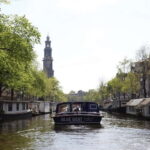
More Tour Reviews in Amsterdam


Dinner Afloat: More Evening Cruises

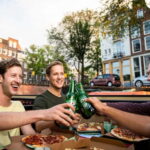
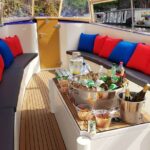


Just added: fresh Amsterdam tour reviews





Dinner & Party Cruises, compared.
 ★ 4.4Evening Cruise with Optional Wine and SnacksFrom $2322,178 reviews
 ★ 4.7Covered Canal Booze Cruise with Unlimited DrinksFrom $185,435 reviews
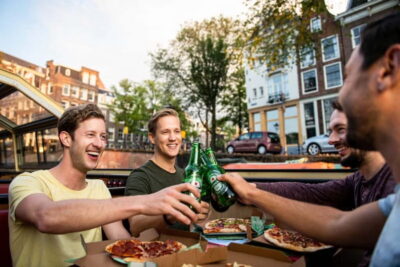 ★ 4.5Original Pizza Dinner Cruise + Unlimited DrinksFrom $392,668 reviews
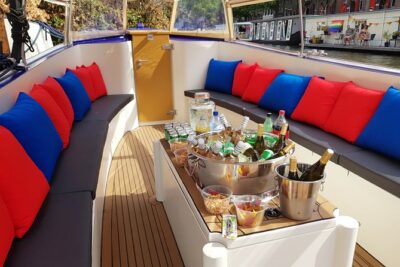 ★ 5.0Canal Booze Cruise with Unlimited Drinks OptionFrom $262,130 reviews
 ★ 4.4Pizza Cruise with New York Pizza & DrinksFrom $281,840 reviews
 ★ 4.4Dinner Cruise with 4-Course MenuFrom $1051,579 reviews
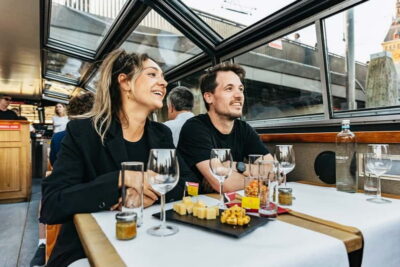 ★ 4.5Cozy Cheese & Wine Cruise Tasting ExperienceFrom $391,156 reviews
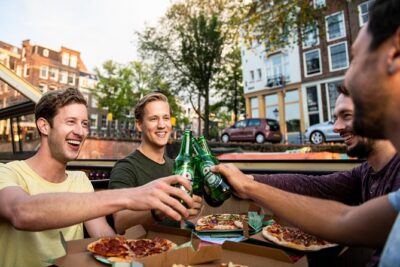 ★ 4.5Amsterdam The Original Pizza Cruise with Unlimited DrinksFrom $391,147 reviews
Browse the lists this tour appears in