
Reviewed · AMSTERDAM
Amsterdam: 3-Course Typical Dutch Menu at In de Waag
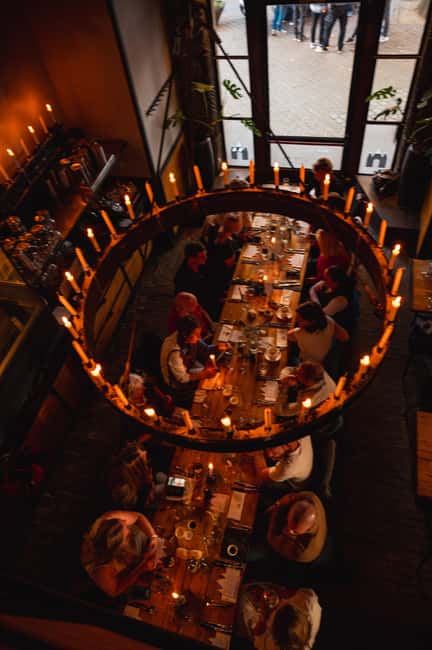
Three courses, 300 candles, one old city gate. This candlelit dinner at Restaurant-Café In de Waag happens inside Amsterdam’s Waag—a building that started life as a city gate between 1425 and 1488—and it turns a simple meal into something you’ll remember. I like the way the atmosphere does the heavy lifting: 300 real candles glow in grand chandeliers and make the whole room feel intimate and calm.
You’ll also appreciate the classic Dutch menu itself: small croquettes to start, hutspot with slow-braised beef for the main, and olive oil cake with vanilla ice cream to finish. One thing to consider: the term typical Dutch can feel more like a set-menu format than a wide spread of specialties, so if you’re hunting for lots of different regional flavors, this might feel a bit single-note.
In This Review
- Key points to know before you go
- Why the Waag building makes dinner feel special
- The 3-course menu: what you’ll eat and what it means
- Starter: small Dutch croquettes
- Main: hutspot with slow-braised beef and red wine gravy
- Dessert: olive oil cake with vanilla ice cream
- Waag Pale Ale pairing: when beer is more than an add-on
- What the service feels like in this small-group dinner
- Timing, pacing, and how to plan the day
- The biggest trade-off: set-menu limits and expectations
- Value check: is $43 per person fair for Amsterdam?
- Who should book this dinner (and who might skip it)
- Should you book In de Waag’s 3-course Dutch menu?
- FAQ
- What’s included in the 3-course typical Dutch dinner?
- Can I pair my meal with Waag Pale Ale?
- What dishes are served for the starter, main, and dessert?
- Is the restaurant wheelchair accessible?
- How big is the group?
- Is there a cancellation deadline?
Key points to know before you go
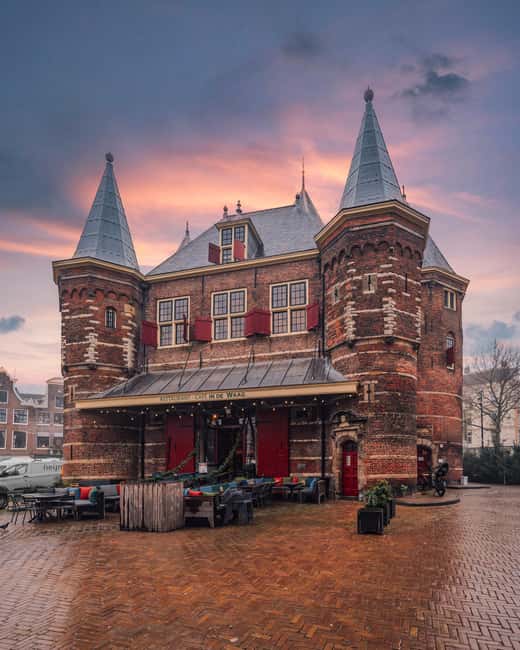
- Dinner in a city gate: The Waag building dates to the 15th century and still reads like a monument.
- 300 real candles: The lighting is part of the experience, not just decoration.
- Set menu with named dishes: Croquettes, hutspot with beef and red wine gravy, then olive oil cake with vanilla ice cream.
- Optional house beer pairing: Waag Pale Ale is lightly spiced and easy to drink.
- Small-group feel: Limited to 6 participants, so service stays personal.
- Accessible: Wheelchair accessible.
Weighing your options? Here is how a few other Amsterdam tours compare.
- Amsterdam: Heineken Experience Ticket including 2 Drinks
★ 4.6 · 36,014 reviews - Amsterdam Classic Saloon Boat Cruise with Drinks and Cheese
★ 5.0 · 31,825 reviews - Amsterdam Luxury Canal Cruise + Unlimited Drinks & Bites option
★ 5.0 · 30,518 reviews - Amsterdam: Rijksmuseum Entry Ticket
★ 4.7 · 29,512 reviews
Why the Waag building makes dinner feel special

Amsterdam can be loud, crowded, and rushed. This is the opposite. When you’re dining at Restaurant-Café In de Waag, you’re seated inside one of Amsterdam’s oldest non-religious buildings, and the room carries that old-stone feel without trying too hard.
The building’s backstory matters. Built as a city gate between 1425 and 1488, the Waag carries the sense that trade and movement once flowed right through the walls you’re eating in. That context changes the way you experience the meal. Instead of “another dinner reservation,” it feels like stepping into a working piece of the city’s timeline.
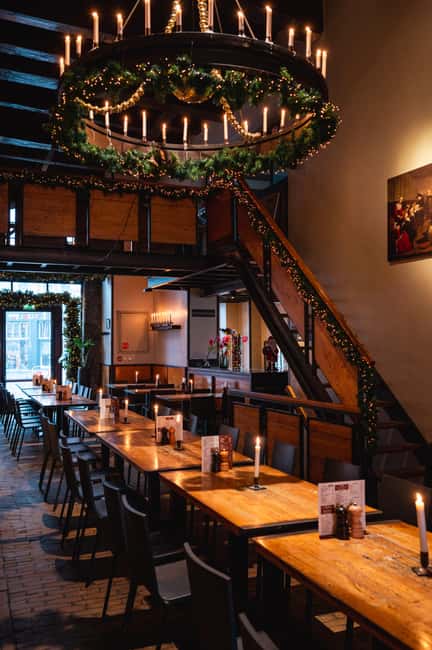
The candle setup is also a big deal. You’re not looking at fake ambience. The dining area is illuminated by 300 real candles in grand chandeliers, which makes photos and conversation both better. Even if you’re not a candle person, the lighting softens everything and gives you that rare travel moment where you can slow down and actually taste.
The 3-course menu: what you’ll eat and what it means
This isn’t a choose-your-own-adventure menu. It’s a straightforward 3-course typical Dutch dinner, designed to give you a clean slice of Dutch comfort food in a single sitting.
Starter: small Dutch croquettes
Your starter is three small Dutch croquettes. Croquettes are one of those foods that explain a lot about Dutch home-style eating: crispy outside, filling inside, and usually meant to be eaten by hand with no fuss. The “small” format also works well for pacing. You get a snacky hit of flavor, then you don’t feel stuffed before the main.
If you like classic bar-food energy—but served in a nicer setting—this is the right opening. It’s also a good option if you’re the type who orders wine early; croquettes go well with anything from beer to something more serious.






Main: hutspot with slow-braised beef and red wine gravy
The main is hutspot: mashed potatoes paired with slow-braised beef and red wine gravy. Hutspot is a Dutch staple that feels both hearty and comforting. It’s not fancy in presentation, but the combination makes sense: creamy mash + rich meat + a sauce that adds depth.
This is the course that turns the meal into a true Dutch dinner rather than just “European comfort food.” If you’re curious about what Dutch cooking tastes like when it’s built for warming you up, this is it. And because the beef is slow-braised, the flavor profile is deeper and more rounded than you’d expect from something that sounds purely rustic.
Practical note: mashed potatoes can be heavy, especially after croquettes. If you’ve been walking all day, pace yourself with water, and consider saving your biggest appetite for the main.
Dessert: olive oil cake with vanilla ice cream
Dessert is olive oil cake with vanilla ice cream. This one is surprisingly smart in a set menu. Olive oil cake tends to stay moist and flavorful, and the vanilla ice cream adds the contrast you want after a savory meal.
It also keeps the meal from going too sweet or too heavy. If you like desserts that taste like real baking (not just sugar), this should land well.
Waag Pale Ale pairing: when beer is more than an add-on
The menu can be paired with Waag Pale Ale, the restaurant’s house-brewed beer. The description says it’s lightly spiced and easy to drink. That combination is exactly what you want with Dutch comfort food: something flavorful enough to match the sauce and beef, but not so intense that it fights the potatoes.
Even if you don’t drink much beer, I think it’s worth trying at least once here. In a place like this, the beer pairing feels integrated into the meal rather than an afterthought. Plus, it’s optional—so you can go without if you’d rather stick to other drinks.
Because the set is fixed, pairing choices are one of the few ways you can personalize the experience. If you do add the beer, aim to sip it through the main course. That’s where it can do its best work.
What the service feels like in this small-group dinner
This is a small-group setup, limited to 6 participants. That matters more than it sounds. When a room is packed, service becomes fast and scripted. Here, the vibe is calmer, and you have time for the staff to explain dishes as they arrive.
One of the most consistently praised details is that staff explain the courses while serving. That simple act changes the meal. You stop eating blindly and start noticing what each dish is trying to do. It also helps if you’re not familiar with hutspot or Dutch croquettes.
There’s also a practical advantage to a set dinner: you don’t have to spend your limited vacation time scanning menus in a busy dining room. You choose what you want included, then you relax.
Service quality is one of the reasons this experience holds a strong reputation, with an overall rating of 4.6 from 15 bookings. That kind of consistency usually means you’re not gambling on an unknown spot.
Timing, pacing, and how to plan the day
The experience runs for 1 day, with starting times based on availability. That means you can slot it around your sightseeing without needing a whole tour schedule built around it.
A set 3-course dinner also gives your day structure. You’ll likely eat in three distinct beats: starter, main, dessert. In candlelight, it often feels slower in the best way. You’ll want to build in time beforehand so you’re not rushing from a museum into your seat.
If you’re doing a day of canals and museums, I recommend treating this as your winding-down meal. The romantic lighting and historic setting work especially well after you’ve done something active.
The biggest trade-off: set-menu limits and expectations
The biggest consideration is that this is a specific 3-course set. That’s great for people who want a classic Dutch dinner with minimal decision-making. It’s less great if you want a broad buffet of Dutch specialties or a menu that surprises you beyond the three named courses.
Also, “typical” can be subjective. Some people expect more variety in what makes a dish distinctly Dutch, especially when they see labels like typical menu. If you’re the type who wants many different Dutch flavors in one evening, you might feel you’re getting a tight slice rather than a full tour of the country’s food.
My advice: come for the experience as much as the menu. The Waag building and candlelit setting are part of the value. If you treat it like a historic dinner-theater night with comfort-food classics, you’ll likely feel satisfied.
Value check: is $43 per person fair for Amsterdam?
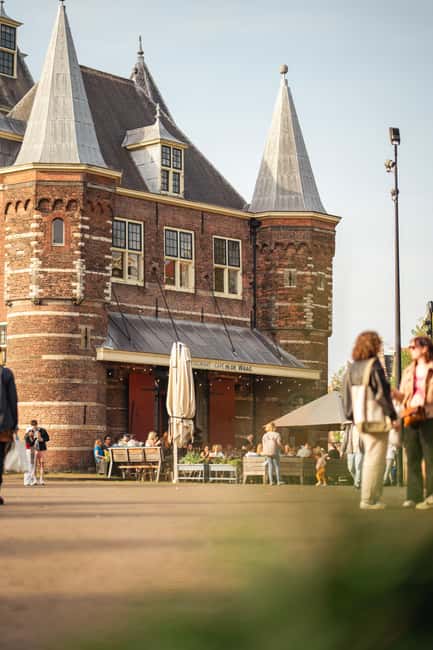
At $43 per person for three courses, this can feel like solid value in Amsterdam, especially because you’re eating inside a 15th-century city gate. You’re not just paying for food—you’re paying for the location, the atmosphere, and the fixed meal structure that keeps things smooth.
You also have an optional add-on: Waag Pale Ale. If you drink beer and you like lightly spiced styles, that pairing can make the price feel even more justified because the restaurant isn’t just offering food; it’s offering a designed match for the meal.
Is it the cheapest dinner in town? No. But if you’re trying to balance budget with a memorable night, this price point often lands in the “reasonable treat” zone. The small-group limit to 6 participants also suggests you’re paying for a calmer, more personal dining room experience—not a mass-production setup.
Who should book this dinner (and who might skip it)
This experience is a good fit if you want:
- A romantic, candlelit dinner without planning complexity
- Dutch comfort food classics in a clear set menu format
- A calm evening inside a historic city gate setting
- A meal where staff take time to explain what you’re eating
I think you should consider skipping if:
- You’re hunting for a huge menu variety across multiple Dutch specialties
- You want a completely flexible order-by-choice dining experience
It also makes sense for couples, anniversaries, and anyone who wants a “one reservation” payoff that feels special.
Should you book In de Waag’s 3-course Dutch menu?
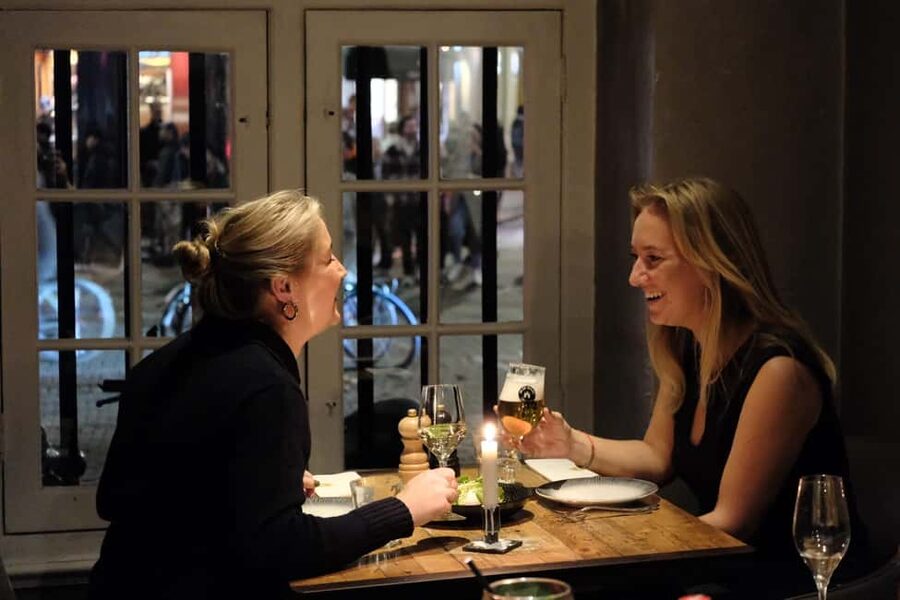
Book it if you want a night that feels genuinely different from standard restaurant dinners. The 300 real candles, the 15th-century Waag building, and the comfort-food trio of croquettes, hutspot, and olive oil cake are a clean, satisfying plan.
Don’t book it if you’re expecting a wide Dutch food showcase. This is focused. The menu is fixed, and the value comes from the setting and classic dishes together.
If you’re trying to decide last-minute, my practical rule is simple: if you want Dutch comfort food in a historic, candlelit room with small-group service, this is a strong pick.
FAQ
What’s included in the 3-course typical Dutch dinner?
It includes a traditional typical Dutch 3-course dinner, with the specific courses being Dutch croquettes, hutspot with slow-braised beef and red wine gravy, and olive oil cake with vanilla ice cream. Waag Pale Ale is optional.
Can I pair my meal with Waag Pale Ale?
Yes. The menu is available with the restaurant’s house-brewed Waag Pale Ale as an optional pairing.
What dishes are served for the starter, main, and dessert?
Starter: three small Dutch croquettes. Main: hutspot with slow-braised beef and red wine gravy. Dessert: olive oil cake with vanilla ice cream.
Is the restaurant wheelchair accessible?
Yes, the experience is listed as wheelchair accessible.
How big is the group?
It’s limited to a small group of 6 participants.
Is there a cancellation deadline?
You can cancel up to 24 hours in advance for a full refund.










