

Reviewed · CANAL CRUISES
Amsterdam: 1-Hour Canal Cruise in the Evening
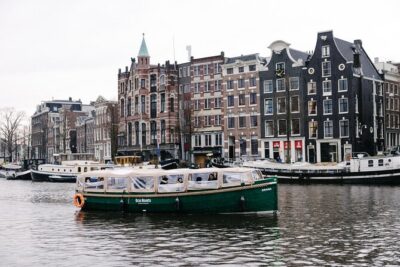
Amsterdam at night feels like a slow-motion movie. This 1-hour cruise is a practical way to see the canals and bridges as the city turns on its lights, with a live skipper sharing story-driven history instead of just facts. You start near the Jordaan and slip through classic waterways like the Prinsengracht and the Amstel, so you get that famous Amsterdam feel without spending your whole evening on a walking route.
Two things I really like: the small-group setup keeps the energy friendly, and the onboard touches (especially the warm blankets) make even a chilly evening feel manageable. One drawback to keep in mind: windows can fog up in cooler weather, which can mean weaker photos if you’re hoping for crystal-clear shots.
If you’re short on time—or you want an easy first evening—this is a smart pick. Just plan to dress for wind, and don’t cut it close at the dock. A few passengers had trouble finding the exact meeting point in dark or rainy conditions.
In This Review
- Key things to know before you go
- Why an evening canal cruise beats a daytime one
- The boat experience: blankets, bar access, and what comfort really means
- Getting oriented fast: the Jordaan and Prinsengracht start
- Passing the canal belt: UNESCO-level planning, seen from the water
- Negen Straatjes and the houseboat museum moment
- Amstel River and the bridges: Skinny Bridge and more
- Singel canal and the Flower Market: smaller details that matter
- Museums and canal-house life: what you see without stepping inside
- Price and value: is $27.57 worth one hour?
- Who this cruise is perfect for (and who should skip it)
- Practical tips to make your evening smoother
- Should you book Amsterdam’s 1-hour evening canal cruise?
- FAQ
- How long is the canal cruise?
- Is the tour offered in English?
- Are warm blankets and an onboard bar included?
- Where does the cruise depart?
- What areas will we see during the hour?
- What if the weather is poor?
Key things to know before you go
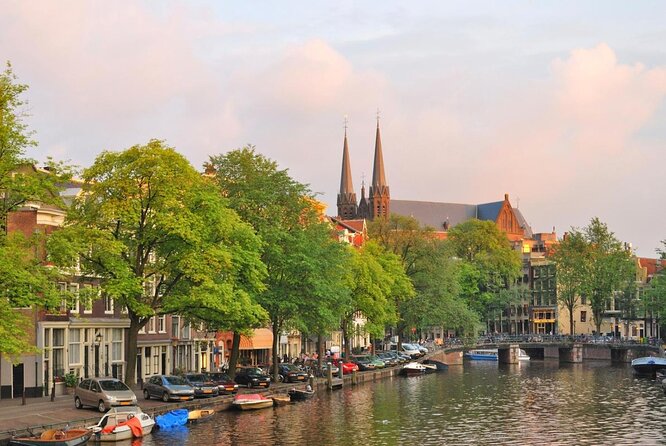
- A full live narration: the skipper tells stories while you glide by major canals and landmarks.
- Warm blankets on board: helpful when you’re cruising after dark.
- Onboard bar available: drinks are for purchase, and a relaxed vibe is part of the experience.
- Small-group feel: the tour caps at 48 people, so it’s not a massive cattle-car situation.
- Great for a first Amsterdam evening: you’ll learn what to look for when you walk later.
- Photo warning: steamed-up windows can make pictures harder in cold weather.
More time on the water: other Amsterdam canal cruises
- Amsterdam Luxury Canal Cruise + Unlimited Drinks & Bites option
★ 5.0 · 30,518 reviews - Amsterdam: Heated Canal Cruise with Unlimited Drinks & Bite
★ 4.5 · 21,431 reviews - Amsterdam: 75 Minute City Canal Cruise with Audio Guide
★ 4.4 · 19,938 reviews - Amsterdam: City Centre Canal Cruise including Audioguide
★ 4.3 · 16,901 reviews
Why an evening canal cruise beats a daytime one
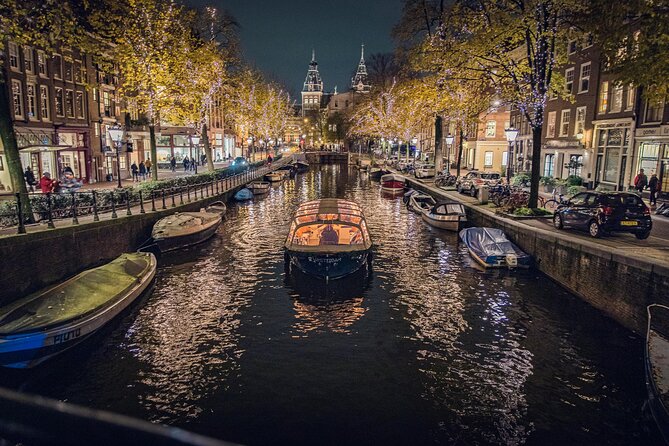
Amsterdam’s canals aren’t just scenery; they’re how the city grew, worked, and showed off wealth. At night, you get the same waterways with less traffic noise and more atmosphere. The bridges, canal belts, and housefronts look different when they’re backlit and reflected in the water.
This cruise is built for that “stand back and take it in” feeling. You’re on a boat for about an hour, so it’s long enough to see multiple areas, but short enough that you won’t feel trapped if you’re tired. In particular, I love when tours give you context you can use immediately. The stories here are aimed at helping you recognize what you’re seeing when you’re back on foot.
One more practical win: it’s a low-effort activity after a long day of museums. Even if you only do one organized thing, you still come away with a mental map.
The boat experience: blankets, bar access, and what comfort really means
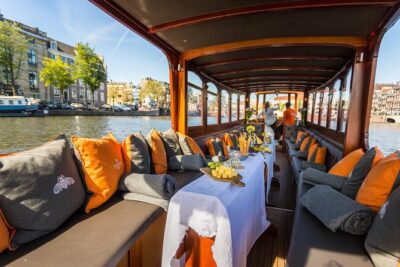
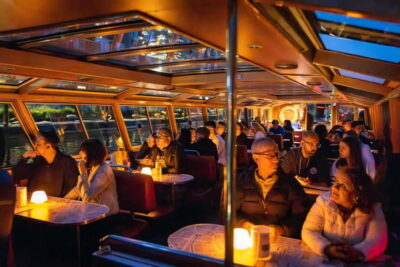
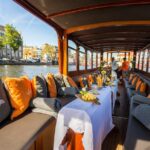
The biggest comfort detail is the warm blankets. That matters because this is an evening cruise, and Amsterdam nights can get cold fast—especially in winter or if there’s wind off the water. Several people pointed out how comfortable the ride felt on chilly evenings once blankets were available.
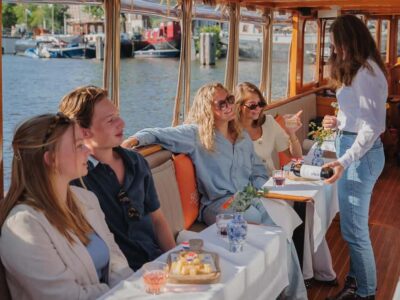
There’s also an onboard bar where drinks are available for purchase. That doesn’t turn it into a party boat, but it does add a relaxed mood. Some guests specifically liked the onboard provisions, and it’s a good reason to consider bringing a bit of cash or a card you’re comfortable using while you’re sightseeing.
Now the honest part: if you’re sensitive to cold or you’re traveling during late autumn/winter, plan for the fact that you may be in open-air or partially exposed conditions depending on the boat setup. A couple of negative comments mentioned feeling cold and uncomfortable, so dress in layers and don’t count on a single layer plus a thin jacket.
Also, if you care a lot about photography, watch the windows. People reported that windows can get steamed up, which makes it tough to take clear pictures. You can still enjoy the views, but if your goal is sharp shots, adjust your expectations and use phone/camera settings accordingly—or take more photos early in the trip before condensation builds.
Getting oriented fast: the Jordaan and Prinsengracht start
Your cruise begins and ends in the Jordaan area, which is one of Amsterdam’s most walkable neighborhoods. Even before you’re fully moving, it’s a smart start location because the surrounding streets and canals are packed with that classic “small canal, big charm” vibe.
You’ll hear a couple of theories connected to the Jordaan name. One is tied to the French word Jardin, meaning garden—another is a story connecting Prinsengracht being nicknamed Jordaan at one time, and the neighborhood taking the name from there. Whether you remember the etymology or not, it gives you a useful framing: Amsterdam neighborhoods often come from real geography and old nicknames, not random branding.
You also cruise close to the departure area at Prinsengracht 263. Even if you’re not doing the Anne Frank House visit, this timing works well because you’re in the same historical pocket of the city. Many people pair the cruise with the Anne Frank Museum next (the meeting point is set up for that kind of flow).
What this stop segment does best is orient you. After the first part of the cruise, you start recognizing the canal layout—the way the main canals form belts around the city and how neighborhoods sit within them. If you’re visiting for the first time, this is exactly the kind of early “map in your head” effect you want.
More time afloat around Amsterdam
Passing the canal belt: UNESCO-level planning, seen from the water
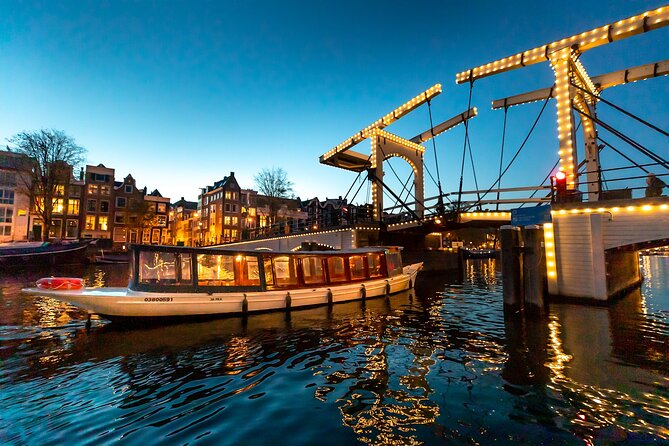
Amsterdam’s most famous “ring” is the canal belt: Herengracht, Prinsengracht, and Keizersgracht. The cruise route gives you a moving view of how those canals sit as concentric belts around the city, created during the Dutch Golden Age.
This is one of those moments where a short cruise can still feel satisfying. From the water, you get proportion. You see how the canals cut through the city fabric, and you understand why locals and visitors keep using the Venice of the North comparison.
As you float along, you’ll also get the idea of what makes these buildings special. The canal belt includes monumental 17th-century architecture, and the route aims to show you the “big picture” without dumping you into a museum. There’s even an interactive multimedia canal history museum (the Grachtenhuis) tied to this broader story. While you won’t go inside during a one-hour cruise, seeing it from the water helps you connect the exterior to the theme.
A practical tip for this segment: keep one eye on the canal banks, not just the bridge line. The best views often come from a mix of water reflection and the canal-house frontage—especially when lights kick on.
Negen Straatjes and the houseboat museum moment
This cruise also threads by areas that feel like Amsterdam’s everyday life, not just postcard landmarks. You’ll pass along the stretch tied to the negen straatjes (the Nine Streets), a historic shopping area in the city center. Even if you don’t plan to shop, it’s useful to see where people actually wander and browse.
There’s also a segment where you cruise with the houseboat museum on the Prinsengracht. That’s an important contrast to the grand canal houses. It reminds you the canals weren’t only for elite wealth; they were part of working, living, and experimenting. Amsterdam has always adapted, and the canal system is proof.
This part is also good for your evening walking plan. If something sparks your interest—like the look of the houseboats or the vibe of the Nine Streets—you’ll have a clear direction later.
Amstel River and the bridges: Skinny Bridge and more
The cruise doesn’t just focus on the ring canals. It also shifts toward the Amstel, Amsterdam’s biggest river. You’ll hear the classic origin story: fishermen built a dam, and Amsterdam grew around that. Whether you remember every detail, the key takeaway is that Amsterdam isn’t “flat fairy tale”—it grew out of engineering and water management.
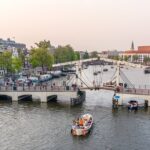
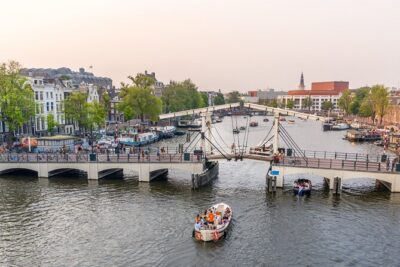
Then comes one of the most photogenic stops on the route: Magere Brug, nicknamed the Skinny Bridge. It’s a double drawbridge over the Amstel, and you’ll learn why it used to be narrow for pedestrians and how traffic drove changes over time. From the water, the bridge shape and the way it frames the canal become part of the show.
You also pass Blauwbrug, a historic bridge connecting the Rembrandtplein area to the Waterlooplein side, lying south to the Stopera. This helps you understand the geography of central Amsterdam—especially if you’re trying to connect sights in your head without constantly checking maps.
And don’t miss the Munttoren area. The tower connects to the Regulierspoort gate and once served a coin-minting role in earlier centuries. You might not get a full museum-like explanation during a short cruise, but you’ll come away seeing how Amsterdam used gates, walls, and water access as a system.
Singel canal and the Flower Market: smaller details that matter
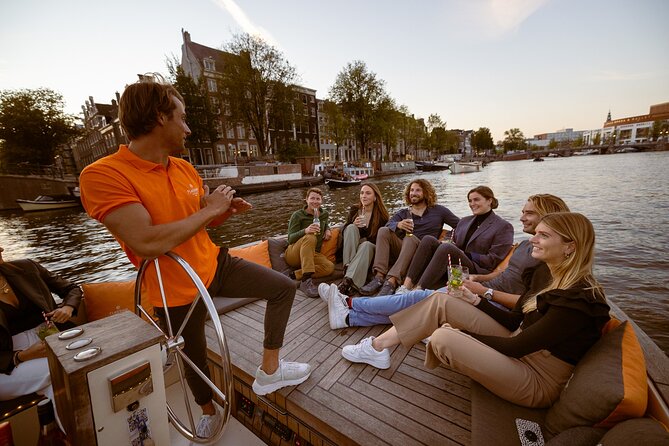
Another highlight along the way is the Singel. It used to encircle the city in the Middle Ages as a moat until expansion moved the boundaries. Today, it forms the inner-most canal in the semicircular ring around Amsterdam. This is the kind of detail that makes you feel like the city has layers. Even on a one-hour ride, you get a sense that Amsterdam’s shape changed as it grew.
Then there’s the Amsterdam Flower Market, the only floating flower market in the world. You see it from the water, and it’s seasonal—so even if your timing doesn’t match peak blooms, the market concept is worth understanding. It dates to 1862, and it sits in houseboats, which is a very Amsterdam solution to the simple problem of transport and commerce.
If you’re the type who likes to remember how things work, this stop helps. It’s not just a pretty postcard: it’s a history of logistics and a clever way to keep trade moving through a canal city.
Museums and canal-house life: what you see without stepping inside
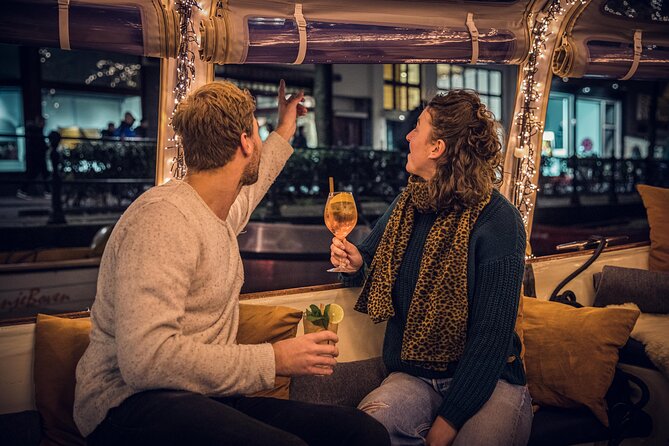
This one-hour evening tour gives you “visual previews” of several canal-world institutions. You’ll come across references to the Grachtenhuis (canal history museum on Herengracht) and the Willet-Holthuysen Museum, a canal house with period rooms.
Even if you don’t stop in, these glimpses are useful. They help you connect the architecture to a real story of wealthy canal living in earlier centuries. And because the ride is in the evening, the buildings often look warmer and more theatrical than they do in harsh daylight.
I also like how the narration ties these sights into a single theme: money earned, art created, and feasts celebrated across centuries. It’s not just the romance of waterways; it’s the human use of space—how people built, traded, and lived.
One caution: a few people said they wanted more specific details on which canals they were on and which buildings were significant. If you’re the kind of traveler who loves exact names and locations, bring a map of Amsterdam or save a walking plan in your phone. You can use the cruise narration as a starting point, then tighten the details afterward on foot.
Price and value: is $27.57 worth one hour?
At about $27.57 per person for roughly one hour, this sits in the “moderate price” zone for Amsterdam. The value comes from two things that matter in a city like this: (1) you’re seeing multiple key areas in one go, and (2) you’re getting a live guide story format, not prerecorded audio.
You’re also paying for comfort touches (warm blankets) and for a setup that keeps the group smaller. With a cap of 48 travelers, you generally get a more personal experience than the giant party boats you sometimes see.
The onboard bar is not included in the base price, and drinks are for purchase. That’s normal for tours like this, but it’s worth planning for if you’re budgeting. Also, snacks aren’t listed as included.
The main “value risk” isn’t the price—it’s your weather expectations and your ability to find the correct dock on time. A few negative experiences showed that when people struggled with the meeting point, they didn’t get the narrated cruise they paid for. So if you book, show up early, confirm the meeting area clearly, and don’t assume it’s obvious in the dark.
Who this cruise is perfect for (and who should skip it)
This cruise shines if you:
- want a first evening activity to learn the city layout fast
- like guided stories that help you connect the dots while you walk later
- travel in cooler weather and appreciate warm blankets
- want a comfortable, short outing without committing to a full-day plan
It might not be your best match if you:
- plan your entire trip around getting crisp, Instagram-level photos from inside steamy windows
- hate any chance of cold exposure late at night
- need very exact canal-by-canal commentary without prompts
If you love long, deep museum-style explanations, you’ll want to pair the cruise with at least one indoor stop later. But as a night “orientation plus atmosphere” move, it’s a solid use of your time.
Practical tips to make your evening smoother
- Dress in layers. Even with blankets, the air can feel chilly on the water.
- Arrive early and take your time finding the exact dock. Night + rain = confusion.
- If you care about photos, plan for window fog. Shoot early, then focus on the sights rather than fighting condensation.
- If you’re pairing this with the Anne Frank Museum, build your schedule with enough buffer. That whole area gets busy.
- Bring something to identify your meeting point quickly (mobile ticket on your phone helps).
And if you’re wondering what kind of narration you might get: guides can bring a lot of personality. One guide named Shakira stood out in reports for high energy and storytelling that helped people understand Amsterdam beyond surface sights.
Should you book Amsterdam’s 1-hour evening canal cruise?
Yes, if you want the best kind of short Amsterdam experience: a guided evening ride that helps you understand the city’s canal logic while you enjoy the lights.
I’d book it if you’re doing a first-time trip, have limited time, or want an easy activity that still feels meaningful. Just be realistic about two things: the comfort level depends on weather and the window conditions, and the best outcome requires you to show up clearly at the right dock.
If you can do that, this one-hour evening cruise is a smart ticket—equal parts orientation, atmosphere, and stories you’ll carry into your nighttime walk.
FAQ
How long is the canal cruise?
It lasts about 1 hour.
Is the tour offered in English?
Yes, it’s offered in English.
Are warm blankets and an onboard bar included?
Warm blankets are provided. An onboard bar is available, but drinks are for purchase.
Where does the cruise depart?
It departs near the Anne Frank House area at Prinsengracht 263.
What areas will we see during the hour?
You’ll cruise through major canal areas including the canal belt (Herengracht, Prinsengracht, and Keizersgracht), plus waterways like the Singel and routes along the Amstel with bridges such as Magere Brug and Blauwbrug. You’ll also pass by areas connected to the Negen Straatjes and the Amsterdam Flower Market.
What if the weather is poor?
This experience requires good weather. If it’s canceled due to poor weather, you’ll be offered a different date or a full refund.
More Boat Tours Around Amsterdam

More Tour Reviews in Amsterdam

Back on the Canals: More Amsterdam Cruises


Just added: fresh Amsterdam tour reviews





Canal Cruises, compared.
 ★ 5.0Amsterdam Luxury Canal Cruise + Unlimited Drinks & Bites optionFrom $1830,518 reviews
 ★ 4.5Heated Canal Cruise with Unlimited Drinks & BiteFrom $1821,431 reviews
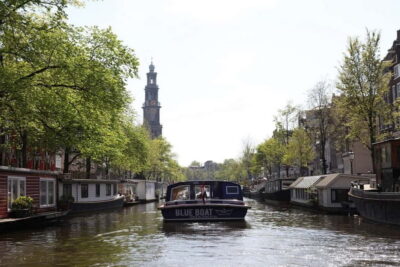 ★ 4.475 Minute City Canal Cruise with Audio GuideFrom $1819,938 reviews
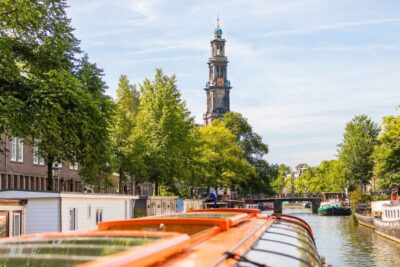 ★ 4.3City Centre Canal Cruise including AudioguideFrom $1716,901 reviews
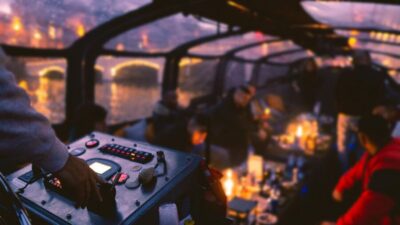 ★ 4.7Covered Canal Booze Cruise with Unlimited DrinksFrom $185,435 reviews
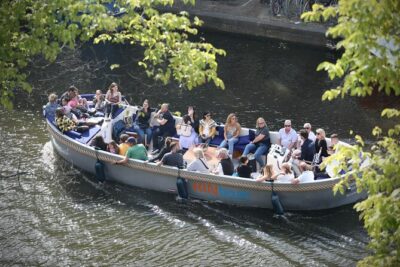 ★ 5.0Amsterdam Canal Cruise in Open Boat with Unlimited Drinks OptionFrom $214,976 reviews
 ★ 5.0Amsterdam Newest Canal Cruise with local guide and small groupFrom $214,735 reviews
 ★ 4.6Van Gogh Museum Ticket and City Canal CruiseFrom $473,899 reviews
Browse the lists this tour appears in