
Reviewed · AMSTERDAM
24 Jan: Organ Favourites at Westerkerk Amsterdam
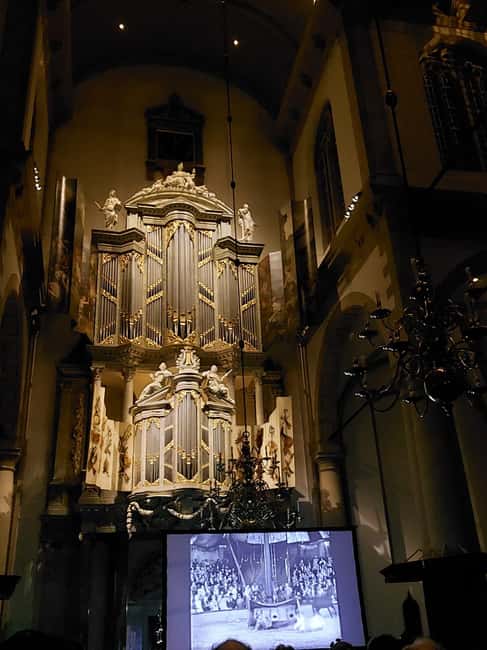
A candlelit church and a giant organ can feel unreal. In the Westerkerk, I like that you get both the setting and the sound at once: Evan Bogerd plays the monumental Duyschot Organ, and the music choices span Bach, Buxtehude, Wagner, Franck, and more. It’s a tight, one-hour format, so you hear a full slice of styles without turning your evening into a long commitment.
What I also like is the storytelling woven into the place. The Westerkerk isn’t just a pretty shell for concerts; Rembrandt was buried here, and the church clock chimes are tied to Anne Frank’s diary while she was in hiding nearby. One possible drawback: while the program is framed as candlelit, winter at this scale can mean you’ll feel the cold, and you should be ready if candles aren’t at full effect.
If you love organ music, this concert is an efficient way to experience Amsterdam’s most famous Protestant church interior. You’ll also get a clear view of the performance thanks to an on-screen feed of the organist, and the concert ends with Bach’s famous toccata in d minor.
In This Review
- Key points worth planning around
- Entering Westerkerk: why this church changes how you hear music
- The Duyschot Organ (1686): the real star of the show
- Evan Bogerd’s January 24 program: Bach, Buxtehude, Wagner, and more
- Rembrandt and Anne Frank inside one church: how the setting adds meaning
- What the concert feels like in real time: seats, cold, and how to follow along
- Price and value: is $26 worth it for an Amsterdam organ recital?
- Who this recital suits best (and who may want a different night)
- Should you book Organ Favourites at Westerkerk?
- FAQ
- How long is the Organ Favourites concert at Westerkerk?
- Who plays the Duyschot Organ?
- What organ will be played?
- Which piece does the concert end with?
- Is Westerkerk connected to Rembrandt and Anne Frank?
- Is the venue wheelchair accessible?
Key points worth planning around
- Evan Bogerd plays the Duyschot Organ, built in 1686
- Westerkerk grandeur in a major Amsterdam landmark church
- Rembrandt’s burial site and a memorial stone inside
- Anne Frank’s link to the church clock chimes, mentioned in her diary
- Organ shutters painted by Gerard de Lairesse (a Rembrandt acquaintance)
- The performance ends with Bach’s Toccata in d minor
Weighing your options? Here is how a few other Amsterdam tours compare.
- Amsterdam: Heineken Experience Ticket including 2 Drinks
★ 4.6 · 36,014 reviews - Amsterdam Classic Saloon Boat Cruise with Drinks and Cheese
★ 5.0 · 31,825 reviews - Amsterdam Luxury Canal Cruise + Unlimited Drinks & Bites option
★ 5.0 · 30,518 reviews - Amsterdam: Rijksmuseum Entry Ticket
★ 4.7 · 29,512 reviews
Entering Westerkerk: why this church changes how you hear music
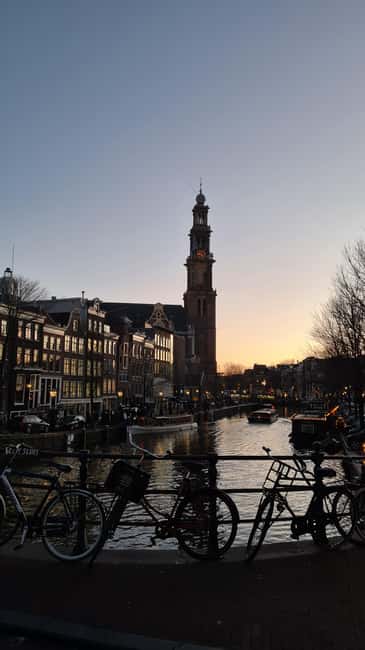
The Westerkerk is a big deal in the Netherlands, and you feel that fast once you’re inside. It’s the biggest built Protestant church in the country, which means the room has the kind of scale that makes sustained organ notes feel weighty, not just loud.
This is also where the church becomes more than a concert venue. Rembrandt was buried here, and that presence makes the walls feel less like “background” and more like part of the performance. If you like art history while you’re traveling, this recital earns its spot.
One practical tip: expect the concert to feel closer to a solemn experience than a casual one. That’s great for focus, but it also means your comfort matters. Dress in layers even if the schedule sounds romantic, because candlelight or no candlelight, you’re sitting in a historic stone space.
The Duyschot Organ (1686): the real star of the show
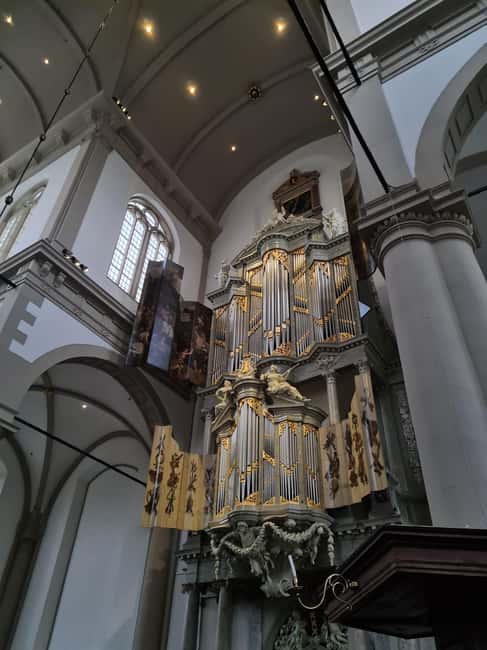
If you only know one thing about this recital, make it the organ. The Duyschot Organ dates to 1686, built during the Dutch Golden Age, and it’s a monumental instrument designed to fill a large hall with clarity and power.
A detail I love for first-time organ listeners: the organ shutters. They’re painted by Gerard de Lairesse, an acquaintance of Rembrandt van Rijn, which links music to Dutch art in a way that feels natural instead of forced. Even before the notes fully bloom, those painted panels give you something visual to look at, especially if you need an anchor while you settle in.
You’ll also get a big-screen view of the organist. That matters because an organ recital can be tricky to follow if you’re only watching hands and feet at a distance. With the on-screen feed, you can track what’s happening when the music shifts, and you’ll likely find yourself understanding the performance instead of just listening to it.
Evan Bogerd’s January 24 program: Bach, Buxtehude, Wagner, and more
This recital is built as an “organ favourites” selection, so it’s not one composer’s world for the full hour. You’ll hear Bach, Buxtehude, Wagner, and Franck, plus other favourites including Mussorgsky in the lineup.
Why that mix is good: organs can make everything feel majestic, so contrast keeps your attention. Bach and Buxtehude often deliver crisp structure, while other composers bring different emotional colors, even on the same instrument. It’s a way to experience range without losing the core sound of Baroque and classical organ traditions.
The concert you’re targeting on Saturday, January 24 is described as a rescheduled New Year recital. That’s worth knowing because rescheduled performances sometimes shift the feel of the event, but the heart of it stays the same: Evan Bogerd playing the mighty Duyschot, in the Westerkerk.
There’s also a clear ending point. The concert concludes with Bach’s Toccata in d minor, a showpiece that many people recognize instantly. If you’re going in hoping for a satisfying musical finish, that finale gives you one.






Rembrandt and Anne Frank inside one church: how the setting adds meaning
I don’t think this kind of recital works by history alone. What makes the Westerkerk special is that the stories aren’t generic trivia; they connect directly to the place you’re sitting in.
Rembrandt van Rijn was buried in the Westerkerk. That fact changes the atmosphere in a subtle way. You’re not only listening to a performance; you’re inside the kind of landmark where art, faith, and public memory overlap.
Then there’s Anne Frank, who was hiding nearby. Her diary includes mention of being soothed by the church’s clock tower chimes, which she refers to several times. It’s a striking detail because you can connect what you hear during the service to what someone else remembered while hiding—making those chimes feel less like ambient noise and more like a thread between time periods.
When you connect those dots, the recital becomes more than “music in a church.” It becomes the church as a living piece of Amsterdam’s story.
What the concert feels like in real time: seats, cold, and how to follow along
This is a one-hour concert, so the pacing is straightforward. Plan your evening around the full hour plus a little time to settle in, since you’ll want to get comfortable before the music ramps up.
Here’s the practical reality check: winter can be cold in historic interiors. One booking experience described the candles as not lit, and the overall vibe as cold and less engaging than expected. I’d treat candlelit as part of the concept, but not a guarantee. If candlelight atmosphere is the main reason you’re going, keep expectations flexible and bring what you need to stay warm.
Also, don’t underestimate the value of being able to see the organist on the big screen. If you’ve never watched someone play a pipe organ, the visual helps you understand how the sound is made. You’ll likely enjoy it more because you can connect hands, stops, and technique to what you’re hearing.
If you’re sensitive to chills, wear layers you can adjust quickly. In a seated, quiet concert, you don’t want to be thinking about your discomfort for the entire hour.
Price and value: is $26 worth it for an Amsterdam organ recital?
$26 per person for a one-hour recital in a major Amsterdam landmark is, in my book, strong value. You’re paying for three things at once: the venue, the instrument, and the performer.
The venue matters because the Westerkerk isn’t just any church. It’s the biggest built Protestant church in the Netherlands and it holds major art-historical connections like Rembrandt’s burial site. The instrument matters even more: you’re listening to a Duyschot organ built in 1686, and that’s not the kind of “swap in any church” experience.
Finally, you’re getting Evan Bogerd on the bench. Multiple bookings praised the performance as talented and memorable, which is what you hope for when the music is the main event. The on-screen organist view also adds value because it helps you follow the mechanics, not just the sound.
If you’re choosing between experiences in Amsterdam that last an hour, I think this one has a good chance of feeling meaningful rather than merely “nice.” The ticket price lines up with what you actually get: a real instrument, in a famous room, with a clear musical finish.
Who this recital suits best (and who may want a different night)
If you love classical music, especially organ and Baroque composers, this is a very sensible pick. Bach and Buxtehude in a church this size gives you the kind of clear structure and resonance that organ fans look for, and the toccata finale gives you a definite moment to remember.
It also suits you if you like art and Amsterdam history tied to real places. The Rembrandt connection and the Anne Frank clock chime detail don’t feel like an afterthought here; they’re part of the experience and they color how you listen.
But if you’re the type who expects every minute to be instantly gripping, read this as a “try it with the right expectations” event. One attendee found the music technically perfect but not captivating, even calling Bach less exciting than they hoped because they’d previously experienced a different performance that hit them harder. That doesn’t mean this recital is wrong; it just means your personal taste matters, especially with composers you already have strong feelings about.
Finally, if candlelit atmosphere is your top priority, you should be ready for the fact that conditions can differ day to day. Bring warmth. Then let the music and the room do the heavy lifting.
Should you book Organ Favourites at Westerkerk?
I’d book it if you want an efficient, high-impact Amsterdam experience with a real reason to be in that historic church. The combination of Evan Bogerd, the Duyschot Organ (1686), and the Westerkerk’s Rembrandt and Anne Frank connections makes this more than a generic concert night.
You might skip or rethink it if you’re sensitive to cold or you’re going specifically for an assured candlelight visual show. In winter, comfort comes first, and the atmosphere can depend on what’s actually happening that day.
If you’re flexible, warm up your expectations, and like the idea of hearing organ favourites ending with Bach’s Toccata in d minor, this is a solid choice for an hour well spent in Amsterdam.
FAQ
How long is the Organ Favourites concert at Westerkerk?
The concert duration is 1 hour.
Who plays the Duyschot Organ?
Evan Bogerd is the organist performing the recital.
What organ will be played?
The concert features the Duyschot Organ, built in 1686.
Which piece does the concert end with?
The concert concludes with Bach’s Toccata in d minor.
Is Westerkerk connected to Rembrandt and Anne Frank?
Yes. Rembrandt van Rijn was buried in the Westerkerk, and Anne Frank mentioned hearing the church’s clock tower chimes in her diary while she was in hiding nearby.
Is the venue wheelchair accessible?
Yes, the concert is wheelchair accessible.










